A homeowner in suburban Chicago unpacks the fall decor bin on the first cool weekend of September. Leaf garlands drape across the mantel. Ceramic pumpkins land on side tables. The living room still reads like August, and someone says the thing everyone thinks: We need new throws.
That instinct costs Americans roughly $3.8 billion a year on Halloween decorations alone, and it skips a question nobody asks out loud.
The textiles that would warm up the room almost certainly exist inside your home already. They're just in the wrong closet, the wrong room, or folded inside a duvet cover you haven't touched since March.
What registers as a throw blanket shortage is usually a distribution problem. Solving it takes about half an hour. It doesn't take a trip to a store you'd rather not name on your credit card statement.
Why Buying Is the Default
The retail calendar trains us to reach for a shopping cart when the temperature shifts. By late August, Target and HomeGoods have cleared summer inventory and installed floor-to-ceiling displays of amber, rust, and mustard textiles. The National Retail Federation reports that 47% of Halloween shoppers begin purchasing before October, and total spending on seasonal decorations hit $3.8 billion in 2024 alone.[1] This isn't random overspending. It's a structural response to a retail machine that links seasonal identity to buying new things.
But most homes already hold more textiles than the occupants can name from memory. Nobody checks the guest closet. Blankets bought for twice-a-year visitors live inside hall cupboards. Storage bins sit untouched because nobody remembers the contents.
The gap isn't between what you have and what you need. It's between what you have and what you can see. That's the whole problem.
What You Already Own
Most households never inventory their textiles by season. They buy blankets for specific rooms and those blankets stay there, regardless of how rarely those rooms get used or how poorly the fabric weight matches the season. The result is a home full of textiles, none of them in the right place when the temperature drops.
Summer textiles read as summer because of fiber and finish. Linen, lightweight cotton, open weaves. Autumn textiles signal the season through density and texture: wool, cotton flannel, heavyweight cotton, cable knits, felted finishes, deeper pile heights. The shift isn't about color palette alone. A cream cotton throw reads differently in October than a cream wool throw, even if they photograph identically.
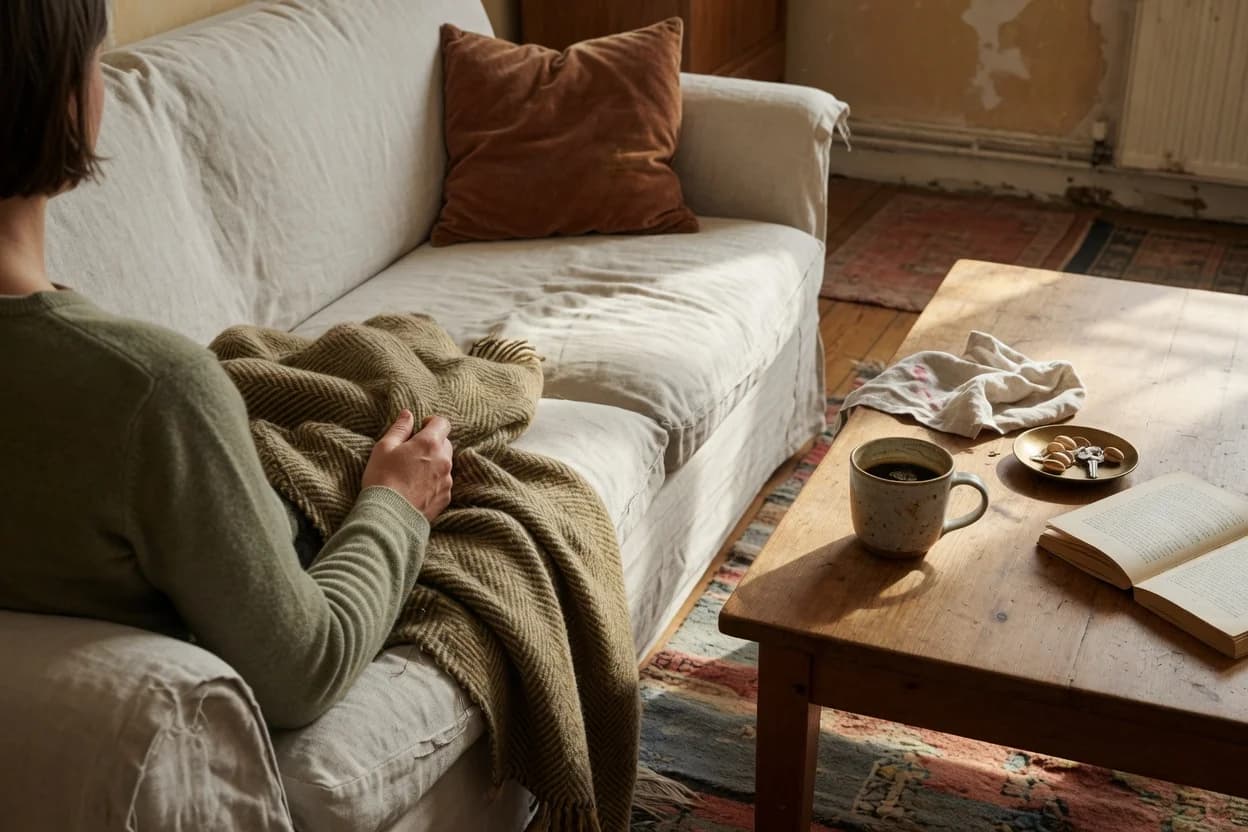
What most people discover during this exercise is that they own at least two blankets currently living in a bedroom that would transform the living room instantly. Put more precisely: the inventory already exists, but it's assigned to the wrong room by default. Bedrooms get blankets because that's where blankets go when you buy them. Nobody renegotiates the assignment.
This method has a real limit. If every textile in your home is the same weight because you live in a warm climate or you've only ever bought cotton throws, redistribution won't change the seasonal signal. You'll get more of the same, not a genuine autumn shift. In that case, buying one wool or heavyweight cotton throw does more than swapping ten light ones. But that scenario is rarer than most people assume. Check before you conclude it's yours.
The Three-Room Audit
Pull every textile from three rooms: the primary bedroom. The guest room or spare closet. Wherever you store off-season bedding. Dump them on the living room floor. Sort into two piles: lightweight (linen, voile, lightweight cotton, anything you'd use in July) and heavyweight (wool, flannel, cable knit, dense cotton, anything you'd reach for when the thermostat drops below 60).
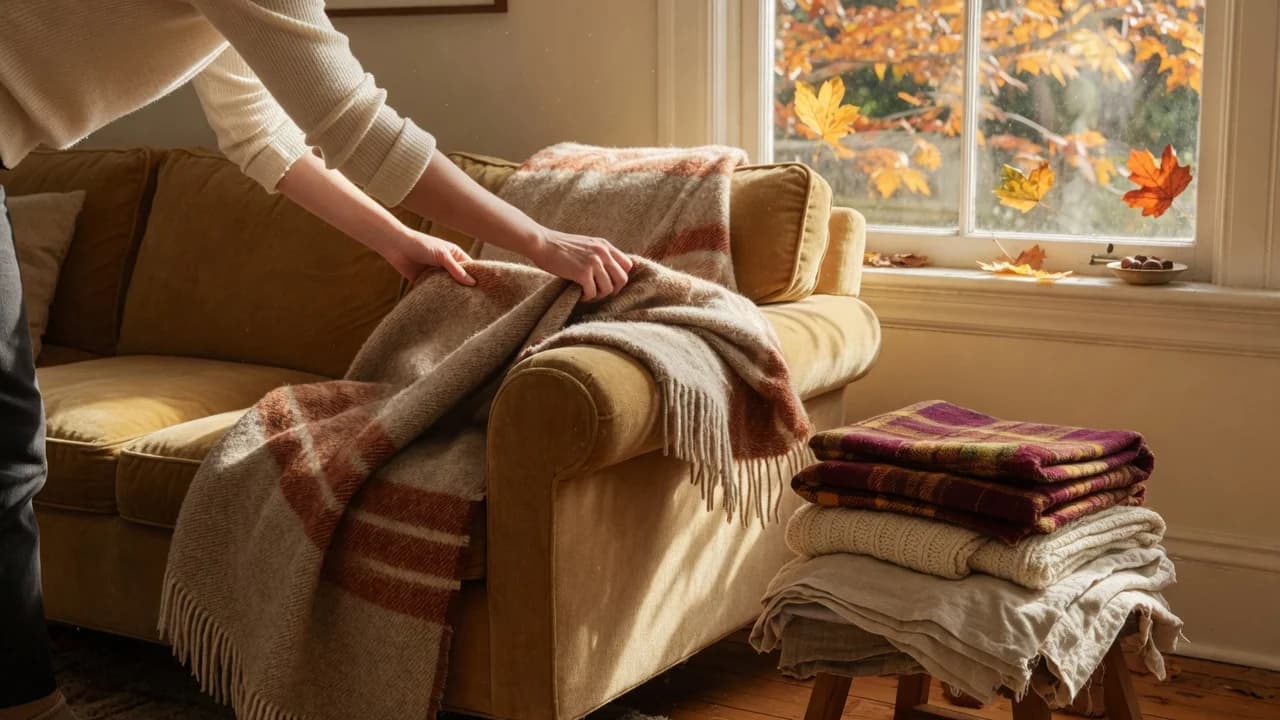
You'll find the heavyweight pile is bigger than you expected. Move the best two or three pieces to the living room: fold one over the sofa arm, drape another across a reading chair, stack one in a basket if you have one. In spring, reverse the flow.
This isn't about making the living room look like a catalog spread. Your linen closet is a better autumn decor source than any store. The goal is simpler. Put the heaviest, most tactile textiles where people sit when the light gets low and the furnace hasn't kicked in yet. Weight travels to where bodies gather, and the rest follows.
Three-Room Audit at a Glance
- Source rooms: primary bedroom, guest room or spare closet, off-season storage
- Sort criterion: weight and fiber, not color
- Heavyweight destination: living room seating areas
- Rotation cadence: swap direction reverses in spring
The whole process takes about thirty minutes if you know where your textiles live. And that's it. If you don't, the exercise still paid off: you just learned you have a storage problem, not a shopping problem. What else buys you that insight for free?
When a Swap Beats a Purchase
If you're comparing the cost of swapping against buying three new $40 throws at HomeGoods, the math favors the swap every time. You save roughly $120 and you don't add to the 11.3 million tons of textiles Americans sent to landfills in 2018, the last year the EPA published full data.[2] But the real argument isn't financial. Textiles already broken in feel better against skin than anything fresh off a retail shelf. A wool blanket washed three times in cold water and dried flat has a hand that no new throw can replicate.[3]
Buying new makes sense in two situations. First: the three-room audit confirms you own nothing heavyweight. Second: your pieces are worn past visual dignity with frayed edges and pilling that won't brush out, and one good wool throw will do more seasonal work than a stack of cheap acrylics.
But if you skip the audit and buy new throws anyway, the cycle plays out predictably. The new throws go on the couch while the old ones migrate to a closet. Next September you'll open that closet and find two autumn-weight blankets you forgot you owned, folded underneath the summer duvet. You'll have spent money solving a problem that wasn't a shortage. It was access.
What to Do This Weekend
Pull everything out of your bedroom closets this weekend. Sort by weight, not by room. Move the heaviest three pieces to where people sit, and put the lightest ones back where you found them. Do not buy anything first. Do not browse online. Do the audit, make the swap, then decide if the room still needs something. That's the swap. It costs nothing, takes half an hour, and it'll change the way the room feels more than anything you can buy in September.