You finish arranging the throw pillows, step back, and the room looks like a furniture showroom. Spotless. Correct. And cold.
Maybe you followed the catalog. Maybe you bought what the design site told you to. Now the room feels untouchable, like nobody actually sits down here without permission.
The answer depends on something most decorating advice skips: the materials themselves. Linen, wool, solid wood, clay. Or polyester, polypropylene, and wood-effect laminate. The difference isn't about which photographs better. It's about what those materials do after you bring them home.
A polyester throw looks the same on day 500 as it did on day one. A linen throw doesn't. And that gap is the whole game.
The problem isn't that you bought the wrong things. It's that the things you bought were engineered to stay perfect, and a room where nothing ever changes feels like a room where nothing ever happens. No dog jumped on that sofa. No coffee spilled on that rug. Nobody lives here.
Why the Room Looks Staged
Catalog photography has one job: make you believe the room is attainable. But those photos are fiction. Every cushion is fluffed. Every surface is bare. Nothing is worn, faded, or out of place.
The issue isn't that your room fails to match the photo. It's that it does match. A room that looks ready for its close-up looks like it's waiting for the photographer to leave.
Real rooms carry evidence. A wool rug with a subtle traffic path near the sofa. A linen slipcover softer on the seat than the arms. A wood table wearing a ring from last night's glass. These aren't defects. They're proof of use—and precisely what synthetic materials are designed to prevent.
Most people try to fix a staged room by adding more things. Another throw. A different vase. Third set of pillows. But the problem isn't quantity. It's that every object in the room is frozen in its original condition. The materials refuse to participate in the life of the house.
What you need are materials that age into the room rather than sitting inside it unchanged. That distinction separates natural fibers and solid wood from nearly everything else on the market.
It's Not About Style. It's About Material Behavior.
Put more precisely: the trouble isn't what you bought. It's that you bought objects engineered to resist change, and a room built from changeless objects cannot register a human presence.
Synthetic materials are manufactured for consistency. Every inch of a polypropylene rug is identical to every other inch. Every polyester cushion has the same surface friction, the same sheen. That precision makes them affordable and stain-resistant. It also makes them visually static. They don't develop. They persist, unchanged, until thrown away.
Natural materials behave differently. Wool fibers have a natural crimp that gives them spring-back after compression. A wool rug shows wear as subtle pile variation that reads as character, not damage.[1] Linen fibers soften with every wash. The weave relaxes. The surface develops what designers call a patina: visible evidence of use that makes the textile more appealing, not less.[2]
Solid wood oxidizes. Clay glazes craze. Unlacquered brass darkens where hands touch it most. Each material ages on its own terms, and that variation signals habitation.
This is the reframe: A room that feels lived-in isn't one you decorated less carefully. It's one you furnished with materials that get better the more you use them.
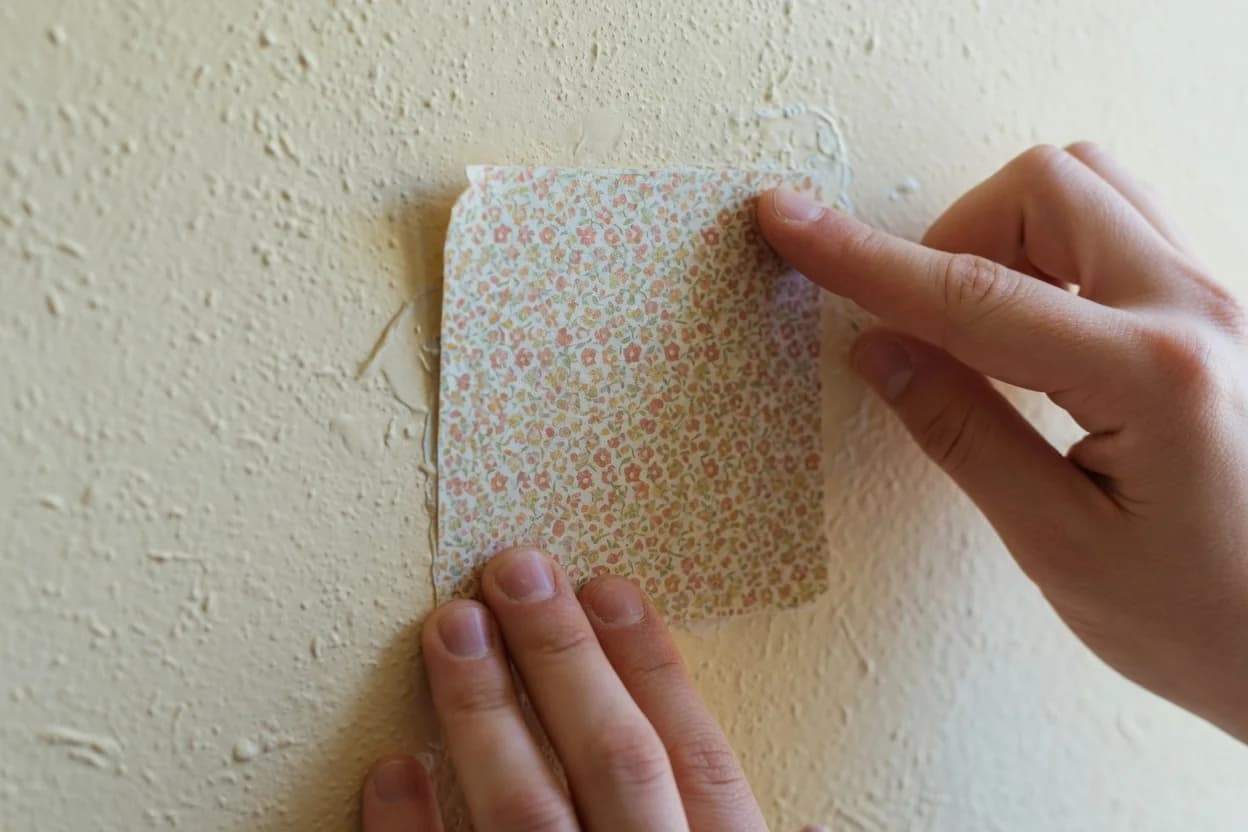
The mechanism is simple. Natural materials are microscopically irregular. Their surfaces create varied sensory input that synthetic uniformity cannot match—weave variation in linen, grain in wood, tonal shifts in clay.[3] Your eye moves across a natural surface differently. Your hand registers it differently. You may not name what you sense, but you feel it.
The Materials That Earn Their Place
If you do nothing else, swap the surfaces you touch most.
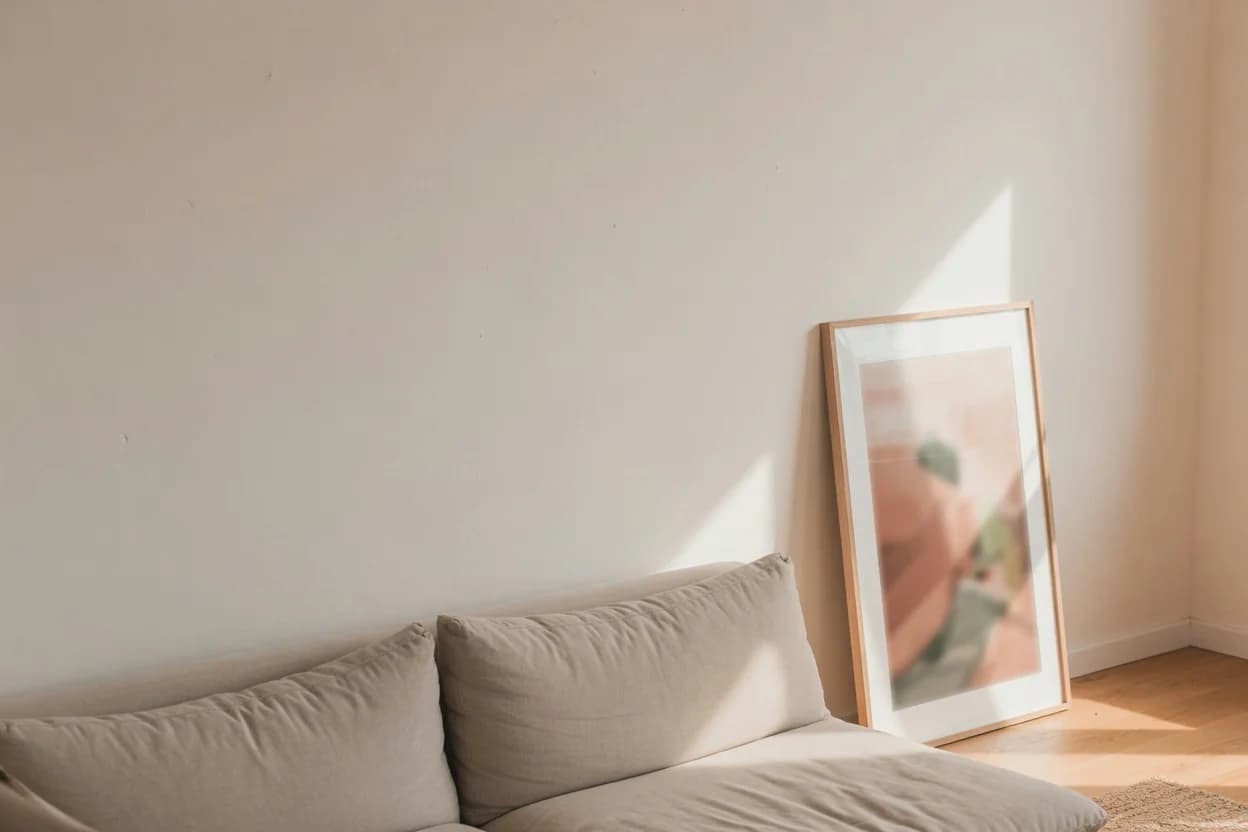
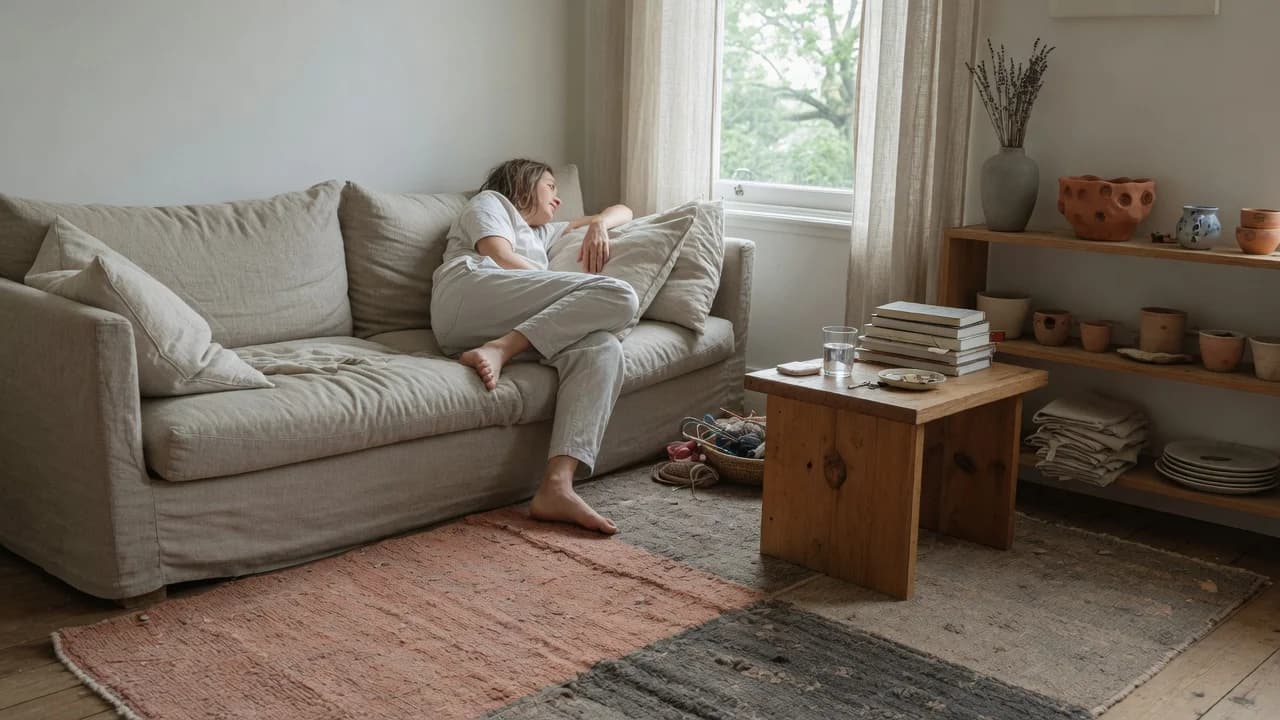
Start with textiles. A linen slipcover on a sofa changes the sensory experience of the entire room. Linen arrives crisp and gets softer. It wrinkles, and those wrinkles become part of the aesthetic—not something you steam out. Swap synthetic throw pillows for wool, cotton, or linen. One wool throw draped across a chair back shifts how the whole seating area reads.
Rugs come next. Wool fibers rebound from compression. Polypropylene crushes and stays crushed, especially in plush piles.[1] But the bigger point is how each ages. A wool rug develops depth over years. Traffic lanes look like paths through a life. A polypropylene rug in the same spot looks worn out. Practical move: if your living room rug is polypropylene and you're tired of how it reads, replace it with wool next time. If it sits in a low-traffic bedroom, put your money into textiles instead.
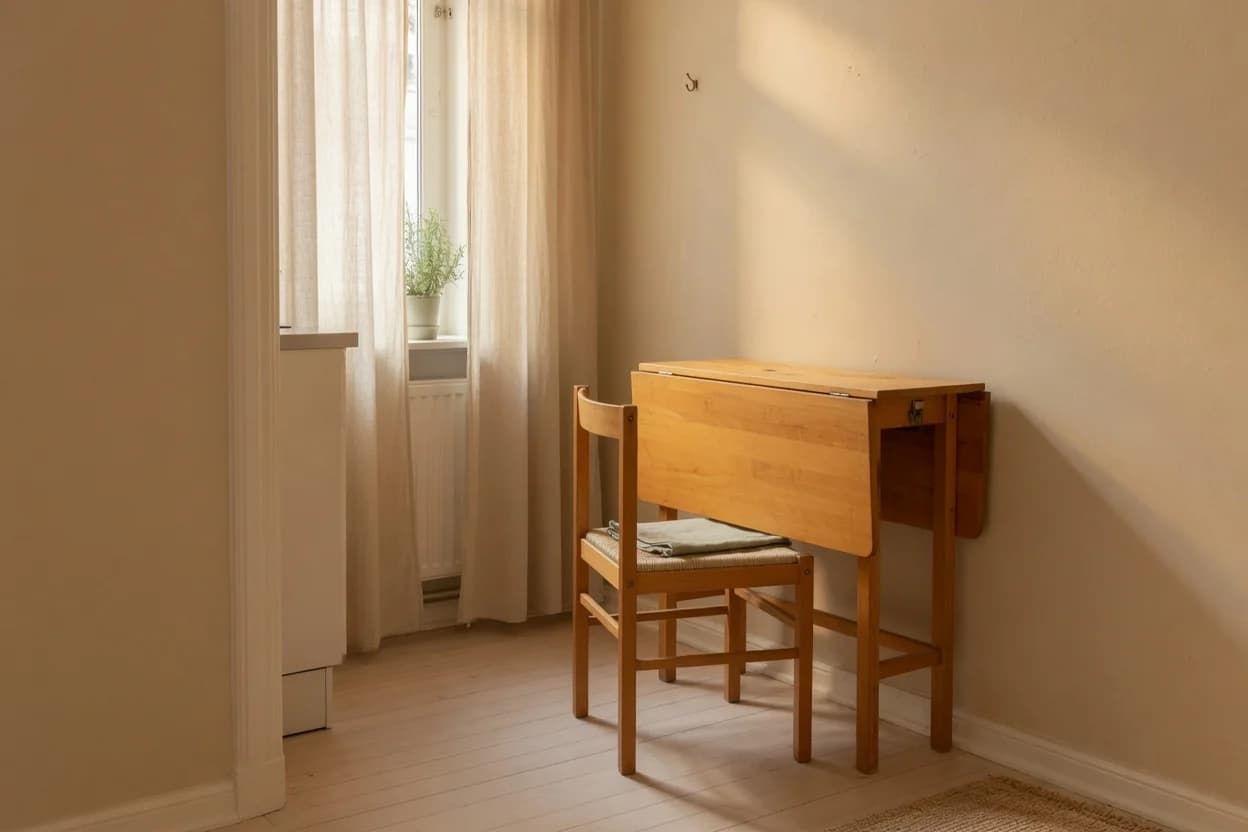
Then hard surfaces. A solid wood side table. A ceramic lamp base. A stoneware bowl on the coffee table. These are texture anchors. They tell the eye the room is made of real things. Open shelving with clay mugs and a wooden board does more for warmth than a shelf of catalog accessories.
Skip anything sold as "natural-look." Printed wood grain on MDF. Embossed stone-effect laminate. Polyester printed to mimic linen. These look like natural materials in thumbnail photos but behave like synthetics—no patina, no texture variation, no thermal depth. They fool the camera (and sometimes the buyer) but not the senses. And they never age into anything.
When Natural Materials Work Against You
Natural materials aren't universal. There are homes where they make less sense, and pretending otherwise sets you up for frustration.
High humidity is the biggest friction point. Linen absorbs atmospheric moisture. In a Gulf Coast or Southeast US home without consistent air conditioning, linen slipcovers can develop mildew within a season. Wool rugs in damp basements or screened porches can hold moisture and attract moths. In those conditions, polypropylene is genuinely useful: it repels water, resists mildew, and can be hosed clean.
Homes with young children and multiple pets face a different calculation. Linen stains. Wool requires spot-cleaning with wool-safe products. A polypropylene rug that tolerates bleach may be smarter for a playroom where spills are frequent and unpredictable. The trade-off is real: you get practical durability at the cost of the aging character natural materials provide.
Cost is the third filter. A custom linen slipcover runs several hundred dollars. Wool rugs cost more upfront than polypropylene equivalents. If budget is the constraint, pick one high-impact natural piece—a wool throw, a single linen pillow, a ceramic lamp—and let it anchor the room while synthetics handle the rest. One natural textile in a room of synthetics still changes the feel.
What you lose by going all-synthetic: the room stays frozen. It never accumulates evidence of life. And over time, that registers less as tidiness and more as vacancy.
Where to Start
Check your sofa first. The largest textile surface in most living rooms is the sofa. If it's upholstered in polyester or a synthetic blend, a linen slipcover or linen-cotton blend is the single highest-impact change you can make.
Check your rug. Polypropylene in a high-traffic living room? Consider wool when you replace it. Polypropylene in a low-traffic bedroom? Fine—redirect your budget to the sofa textiles instead.
Check your hard surfaces. Any solid wood, ceramic, stone, or clay within reach? If every surface is laminate or plastic, add one ceramic piece and one wood piece. A $30 stoneware planter and a wooden cutting board on the counter count.
The sequence: textiles first, rugs second, hard surfaces third. Don't try to do everything at once. Natural materials reveal their value over time anyway—that's the point.
And one thing this article isn't about: rustic or farmhouse style. Natural materials work in modern apartments, mid-century homes, and minimalist spaces. The material does the work, not the aesthetic.
If your room feels staged and cold, swap one synthetic textile for linen or wool and live with it for a month. Watch how it changes. That's the test.
If you live in high humidity or have young kids and pets, go selective. Put natural materials where they're seen and touched but not destroyed: a linen throw on a chair back, a wool pillow on a bed, a ceramic vase on a high shelf. Let synthetics cover the mess-prone zones.
If you're unsure where to start, the sofa textile is the answer. A linen slipcover changes what a room feels like more than any other single purchase.
Natural materials don't make a room feel lived-in because they look old. They make it feel lived-in because they look like they've been part of a life.