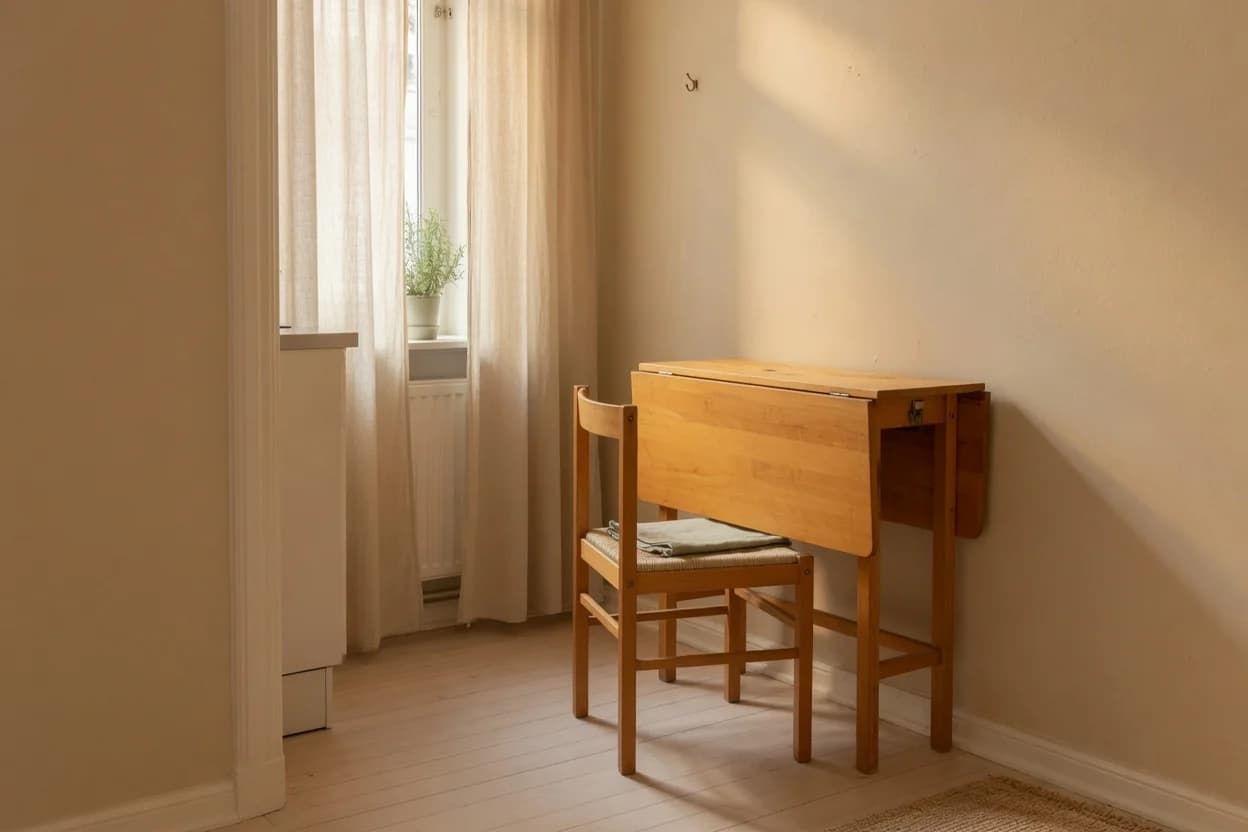
What do you do when the gap between your bed and the wall measures four inches and a traditional nightstand needs fourteen? Standard advice points to a floating shelf, the kind that anchors into drywall and vanishes beneath a lamp. But if you're renting or your stud finder reads empty air behind the drywall, that advice is a wall repair waiting to happen. Load-bearing capacity in drywall isn't about how pretty the bracket looks—it's about the anchor's shear rating, and whether you hit a wood stud behind the gypsum.
You've probably scrolled through the same listicles I have: ten pretty alternatives, none showing a stress test. The real question isn't what looks like a nightstand. It's what keeps 15 pounds of bedside gear from crashing onto your floorboards at 3 AM.
Most roundups skip the weight math entirely and leave you guessing whether a phone, a glass of water, and a hardcover book will bring the whole setup down. The answer depends on three things you won't find in a lifestyle photo: your wall material, your bed frame type, and your tolerance for repair work when an anchor lets go.
What You're Actually Asking Your Bedside Surface to Do
Before picking a mount, define the load. A realistic bedside payload includes a smartphone (0.5 lbs), a glass of water (1 lb), a paperback or tablet (1-2 lbs), a small lamp (2 lbs), and maybe a pair of glasses and a charging cable. That's 5 to 7 pounds at rest. Reach for something while half-asleep and you momentarily double the force through leverage—especially on a shelf deeper than 6 inches. That's the number most anchor packaging ignores.
You also need to decide what matters more: leaving the walls untouched, or having a surface that supports a real lamp. Renters often face lease clauses that block drilling. Homeowners in older buildings contend with plaster and lath, which behaves nothing like modern drywall. And anyone with a bed that floats in the middle of the room—no wall within 12 inches—has to look entirely beyond wall-mounted options. And no wall? Wall-mounted is off the table.
What I'd measure first: the exact width of the gap beside your bed, the height of your mattress top from the floor, and whether your bed frame has a side rail at least 1.4 inches tall. Those three dimensions rule out half your options before you buy a single bracket.
Wall-Mounted Shelves and Floating Nightstands
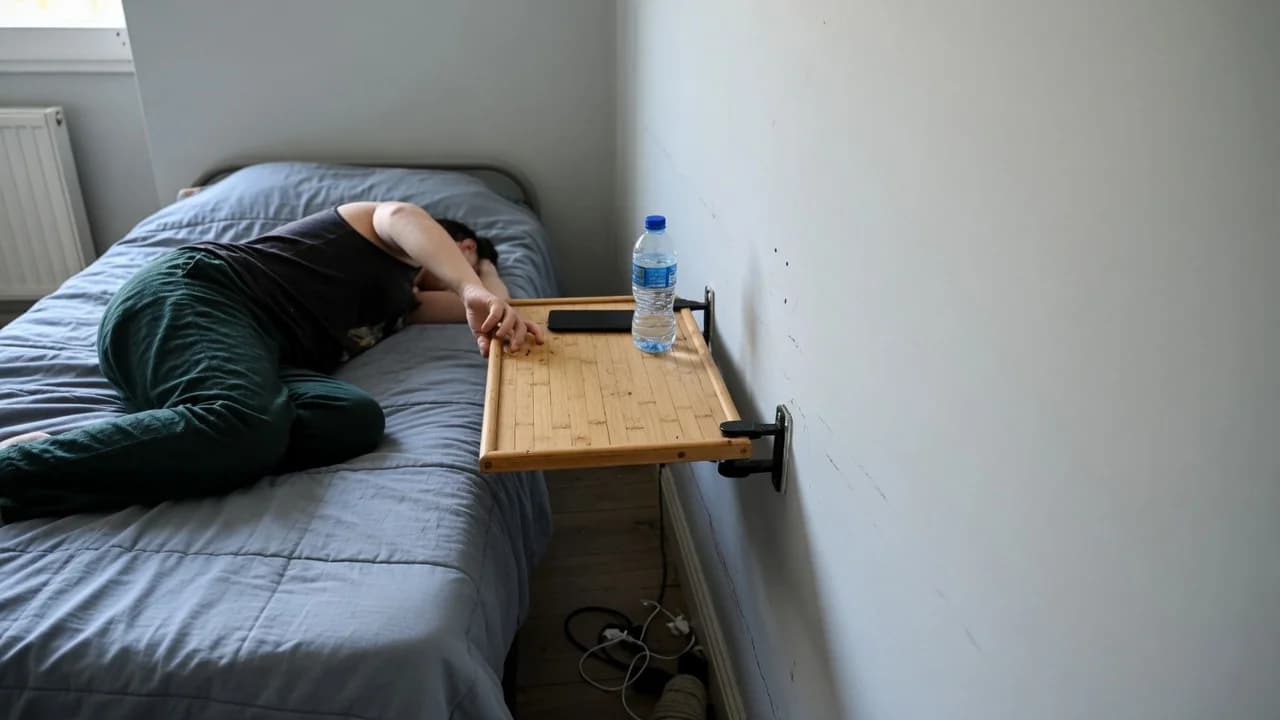
A wall-mounted shelf or floating nightstand—IKEA's GRÅFJÄLLET, a simple bracketed plank—does exactly what a nightstand does without touching the floor. The catch: all the load transfers through fasteners into your wall. The right bedside surface doesn't need legs—it needs a load path that keeps 15 pounds of books, phone, and water glass from crashing down at 3 AM. It's not the shelf. It's the anchors.
That framing misses something. The failure mode here isn't the shelf collapsing downward. It's pull-out—the top anchors getting yanked forward when weight sits near the front edge, or when you push yourself up from bed against the shelf. In drywall, pull-out resistance comes from the anchor type, not the screw length. And that pull-out is what fails.
If you hit a wood stud with a 3-inch construction screw, you've got 100-plus pounds of shear capacity per screw—enough for any bedside load. If you miss the stud, you're relying on anchors. Testing by Family Handyman's HomeLAB found that heavy-duty toggle bolts like the Toggler SNAPTOGGLE held 180 pounds before failure in half-inch drywall, while basic plastic expansion anchors pulled out under 80 pounds of tension[1]. A bracket shelf with two toggle bolts, each rated for 80-100 pounds in shear, provides a combined working capacity far above what a bedside setup demands—provided you install them correctly.
But toggle bolts require a ½-inch hole that leaves a permanent scar in the wall. For renters, that's often a non-starter. Molly bolts split the difference: a smaller hole, 50 to 75 pounds per anchor, no stud required. Self-drilling drywall anchors are less destructive but also weaker—typically 30 to 75 pounds per anchor in shear. That's enough for light loads if you use at least two and keep heavy items near the wall back.
If your shelf holds 15 pounds and sits 10 inches deep, the pull-out force on the top anchors can exceed 30 pounds per anchor at full extension. Divide your total expected weight by the number of anchors, then double it for a safety margin. If that number exceeds half the anchor's rated shear capacity, upgrade the anchors or find a stud.
Bed-Mounted Options That Skip the Wall Entirely
If drilling isn't on the table or your bed doesn't sit against a wall, bed-mounted alternatives solve the problem by attaching directly to your bed frame. They fall into two categories: clamp-on shelves and hanging caddies. The table below breaks down the four major zero-floor-space options by weight capacity and renter-friendliness.
| Solution | Floor Space | Weight Capacity | Installation | Renter-Friendly |
|---|---|---|---|---|
| Wall Shelf (bracketed) | Zero | 100+ lbs on studs; 30–75 lbs on anchors[1] | Drill, stud finder | No |
| Floating Nightstand | Zero | 20–50 lbs typical | Drill, leveling | No |
| Clamp-On Shelf | Zero | 35 lbs[3] | No tools, clamp-on | Yes |
| Bedside Caddy | Zero | 5–20 lbs[2] | Slide under mattress | Yes |
The BedShelfie FlexFit is the best-known clamp-on model. It uses a tool-free clamp that grips a bed rail at least 1.8 inches tall, with a bamboo tray measuring 13.75 by 9.5 inches. Rated for 35 pounds, it holds a 13-inch laptop, a water bottle, and a phone simultaneously[3]. For box spring beds, the Slide model tucks under the mattress with a similar weight limit. Thirty-five pounds catches most bedside clutter.
Bedside caddies take a softer approach. Fabric organizers with multiple pockets slide between the mattress and frame or strap to a bed rail. A comprehensive guide by Amerisleep notes that fabric caddies typically hold 5 to 10 pounds, while metal-framed versions can support 15 to 20 pounds[2]. The trade-off is surface area: you can't set a lamp on a caddy, and reaching into a pocket for glasses at 3 AM is less intuitive than grabbing from a flat surface. And no lamp on fabric.
One hard constraint: clamp-on shelves need a rail. Platform beds with flush side panels won't work unless you use the slide-under-mattress variant. And if your mattress sits directly on slats with no frame lip at all, bed-mounted options fall short. In that case, a slim, weighted floor stand—a C-table base slid under the bed—may work, though it breaks the "no floor space" rule.
Pick Your Mount by Morning Routine, Not by Pinterest
If your bedtime routine is a phone, a water glass, and maybe a book, a bedside caddy with a reinforced frame covers the load for $20 and zero wall damage. If you charge a laptop, use a lamp, or keep a CPAP machine at arm's reach, the clamp-on shelf's 35-pound ceiling and flat surface win. Clamp-on wins for anything heavier.
Wall-mounted shelves earn their spot when you've already got a lamp with a base that needs real estate, or when your bed rail is incompatible with a clamp. But before you drill, verify two things: you've located a stud (or you've bought toggle bolts rated for at least double your expected load), and your lease allows wall modifications. But most walls aren't that cooperative. Especially in rentals.
The alternative to all of this is leaving your phone on the floor, your water glass on a windowsill you can't reach, and your lamp across the room. It works until you knock the glass over at 2 AM or trip on a charging cable. That's the real cost of doing nothing: not inconvenience, but the accumulated friction of a bedroom that fights your sleep routine.
One more thing this guide won't cover: decorative repurposing that ignores weight limits. Stacking vintage suitcases or balancing a stool on two legs might photograph well, but if it can't survive a groggy reach for your glasses, it's set dressing, not furniture.
Get a clamp-on bedside shelf if your bed frame has a rail 1.4 inches or taller. It installs in seconds, holds 35 pounds, and leaves your rental deposit untouched. If your bed lacks a rail, try the slide-under-mattress version. Reserve wall-mounted shelves for cases where you can hit a stud and you own the walls—and even then, use toggle bolts rated for at least double your anticipated load.