Ask a paint contractor what matters most in a small rental and they'll mention the lease before they mention any color.
You're staring at off-white walls that make your apartment feel temporary. You want to know: commit to a bold color or stay neutral? The answer turns on three variables most paint-store conversations skip entirely: what your lease actually allows, what the science says about color in small rooms, and what repainting will cost you at move-out.
It depends. And the most expensive mistake renters make isn't choosing the wrong shade. It's choosing without knowing the invoice waiting at the end of the lease.
That tension, between a space that feels like yours and a security deposit you want back, is real. This article won't tell you to paint every wall greige and call it a day. What it will do is give you the numbers, the permission script, and the conditions where bold actually pays off.
What Your Lease Actually Says
Most standard US residential leases classify painting as an alteration, not a decoration. That distinction matters because alterations require written landlord approval. Decorating with command hooks does not.
Pull your lease right now. Look for sections labeled "alterations," "modifications," or "decorating." If the language says tenants cannot make changes without prior consent, painting without permission puts your security deposit at risk. Some leases go further and prohibit painting outright.
If the lease is silent or vague, assume the answer is no until you get a yes in writing. A verbal "sure, go ahead" from the landlord during a hallway conversation won't protect you when the property manager does the move-out inspection.
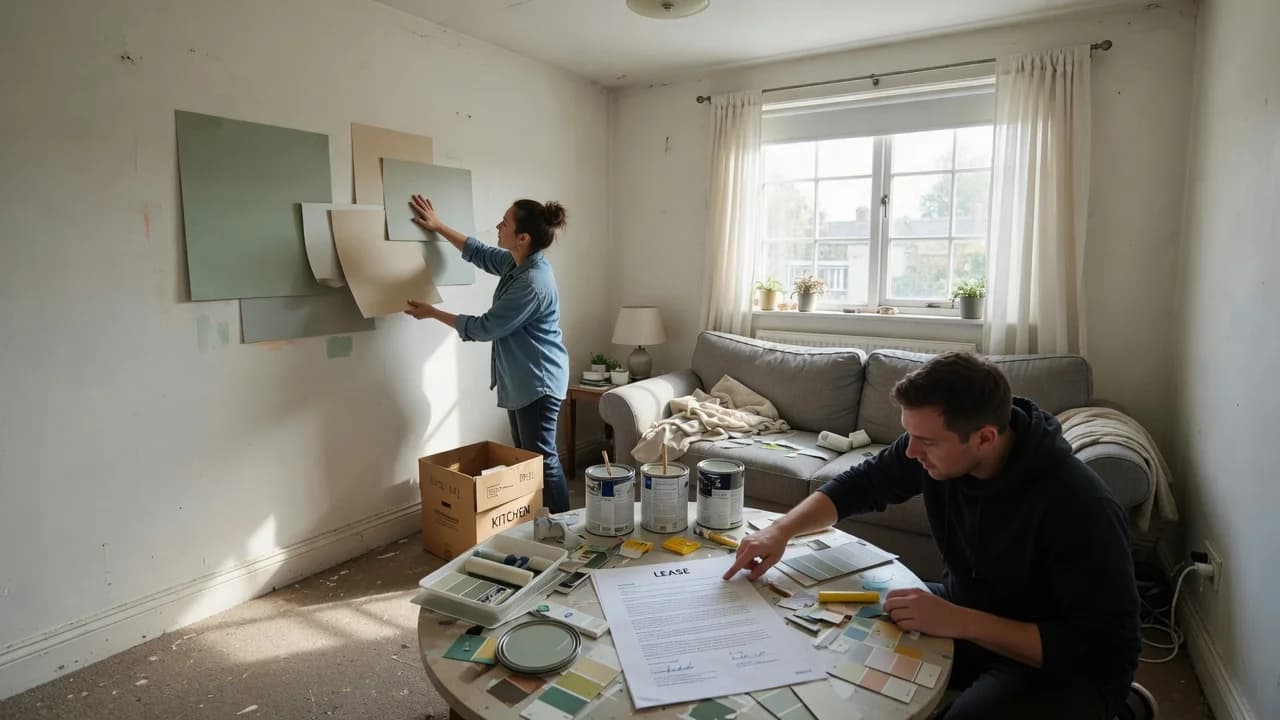
Your best move: send a brief email. State the room, the specific color with brand and name, and your plan to restore the original color before move-out or leave the new color if the landlord prefers it. Offer to use a professional painter. Attach a photo of the paint chip. Landlords say yes far more often to requests that look low-risk on paper.
And if the answer is no? Skip to the last section. You have options that don't involve a single drop of paint.
The Science Most Rental Guides Skip
Here's what everyone repeats: dark colors make small rooms feel smaller. Light colors make them feel bigger. It sounds right, and paint-store employees say it daily.
Here's what the research actually shows. A 2018 study published in the journal Perception tested how wall luminance affects perceived room dimensions. Brighter surfaces did appear farther away, supporting the basic idea. But the effect was modest, and the study found that luminance contrast between adjacent surfaces played only a minor role.[2]
Sherwin-Williams took a harder line. In a 2018 article titled "Debunking a Color Perception Myth," the company reviewed the available research and concluded that the difference in perceived room size between light and dark walls might be a couple of inches at most. The author noted that window placement, trim size, sightlines, and sheen all likely matter more than wall color alone.[3]
So why does every rental guide insist on neutrals? The science isn't the reason. The cost is. A dark wall doesn't doom your room to feeling like a closet. But it does set you up for a bigger bill when the lease ends. That's where this decision lives, not in optical illusions but in real dollars.
That framing misses something. The better question isn't "does dark paint shrink a room?" It's "does your specific room have the light to carry a darker color without feeling like a cave?" And that question has an actual measurement.
Paint manufacturers assign every color an LRV, or Light Reflectance Value, on a 0-to-100 scale. Zero absorbs all light. One hundred reflects all of it. Benjamin Moore's color marketing team recommends an LRV of at least 60 for small spaces to keep them feeling open and bright.[4]
LRV Quick-Reference for Small Rentals
LRV 0-30: Very dark. Absorbs most light. Needs strong natural or layered artificial light. Risky in rentals under 800 sq ft.
LRV 30-55: Mid-tones. Can work in south-facing rooms with good windows. Demands sampling at different times of day.
LRV 55-75: The rental sweet spot. Bright enough for most small spaces, dark enough to read as an intentional color.
LRV 75-94: Near-whites and soft off-whites. Safest choice for north-facing rooms and truly window-deprived spaces.
The Cost Arithmetic
Here's the number that should shape every rental painting decision. Painting a 600-square-foot apartment with a standard service, walls, ceilings, and trim, costs between $1,200 and $3,600 in most US markets.[1]
That's if you hire someone. DIY with mid-grade paint from Sherwin-Williams or Benjamin Moore runs about $150 to $300 for a single room, assuming two coats and basic supplies. A full apartment might hit $500 to $900 in materials alone.
The real risk of dark paint in a rental isn't the optical illusion, it's the invoice. Going from a dark wall back to landlord-white requires primer plus at least two, often three, finish coats. Paint contractors typically add 25 to 30 percent to the quote when covering a dark color with a light one. If your lease requires restoration to the original color and the original was a light neutral, that bold accent wall just added a few hundred dollars to your exit costs.
What if you ignore this? If you paint without permission and the landlord discovers it, they can deduct repainting from your security deposit. In most states, unauthorized painting is classified as damage beyond normal wear and tear. A full-unit repaint charged against your deposit can run $2,000 to $5,000, depending on your city and apartment size. For a 700-square-foot one-bedroom in Seattle or New York, the higher end of that range is a real possibility.
When a Bold Wall Backfires
Bold color advocates will point to Instagram. What they'll skip is what happened when the lease ended.
Dark wall colors fail in small rentals under four specific conditions. First: the original walls are a light neutral, landlord-white, Agreeable Gray, or similar, and your lease requires restoration. The primer-and-multiple-coats premium applies. Second: your room faces north and gets weak, bluish light. Dark colors in north-facing rooms can read as flat and muddy rather than dramatic, making the space feel genuinely smaller regardless of what the research says. Third: you're in a studio or a one-bedroom under 600 square feet, where a dark wall cuts the visual continuity that makes small open layouts feel livable. Fourth: your landlord didn't give written permission, and you're betting they won't notice.
That last one isn't a color question. It's a contract question. And losing a security deposit over a coat of paint is a bad trade.
So when does bold actually work? When the original wall color is already a mid-tone, LRV under 55, your landlord approves in writing, and you're willing to either repaint at move-out or negotiate to leave the color. A single accent wall in a south-facing living room with good natural light can look intentional and sophisticated. Just keep it to one wall. Dark on all four walls in a 500-square-foot rental is a decision you'll pay for twice: once in paint and once in deposit.
The Renter's Neutral Toolkit
If the math has steered you toward neutrals, you aren't settling. The right neutral in a small space does something a bold color can't: it makes the room feel bigger and brighter while staying completely reversible.
A handful of paint colors dominate the rental market for a reason. Sherwin-Williams Agreeable Gray, SW 7029, LRV 60, is the most popular greige in the country. It reads warm without going beige and cool without going blue. Benjamin Moore Revere Pewter, HC-172, LRV 55, is deeper and warmer, better for south-facing rooms where natural light is abundant. Sherwin-Williams Alabaster, SW 7008, LRV 82, is a warm white that works in north-facing rooms where pure white would look clinical.
What to look for when you're comparing paint chips at the store: a color's LRV number on the back of the card. Aim for 55 to 75 for walls, bright enough to bounce light, dark enough to feel like you made a choice. Eggshell or satin finish on walls; flat on the ceiling. And always buy a sample pot and paint a two-foot square before committing. Check it at 8 AM, noon, and 8 PM under your actual light bulbs. Colors shift.
One gallon covers about 350 to 400 square feet. A standard 10-by-12-foot bedroom with eight-foot ceilings needs roughly one gallon per coat. Budget two coats and a gallon of primer if you're changing the color significantly.
And here's where I'd start if I were renting: one accent wall in a deeper neutral, say, a charcoal with an LRV around 30, on the wall opposite the window. The dark wall recedes visually. The light walls on the sides reflect light toward it. The effect is depth, not darkness. And when you leave, repainting one wall costs a fraction of repainting four.
If You Can't Paint At All
Some landlords will not budge. The answer is no, permanently, in writing. That doesn't mean you're stuck with white walls and a vague sense of temporariness.
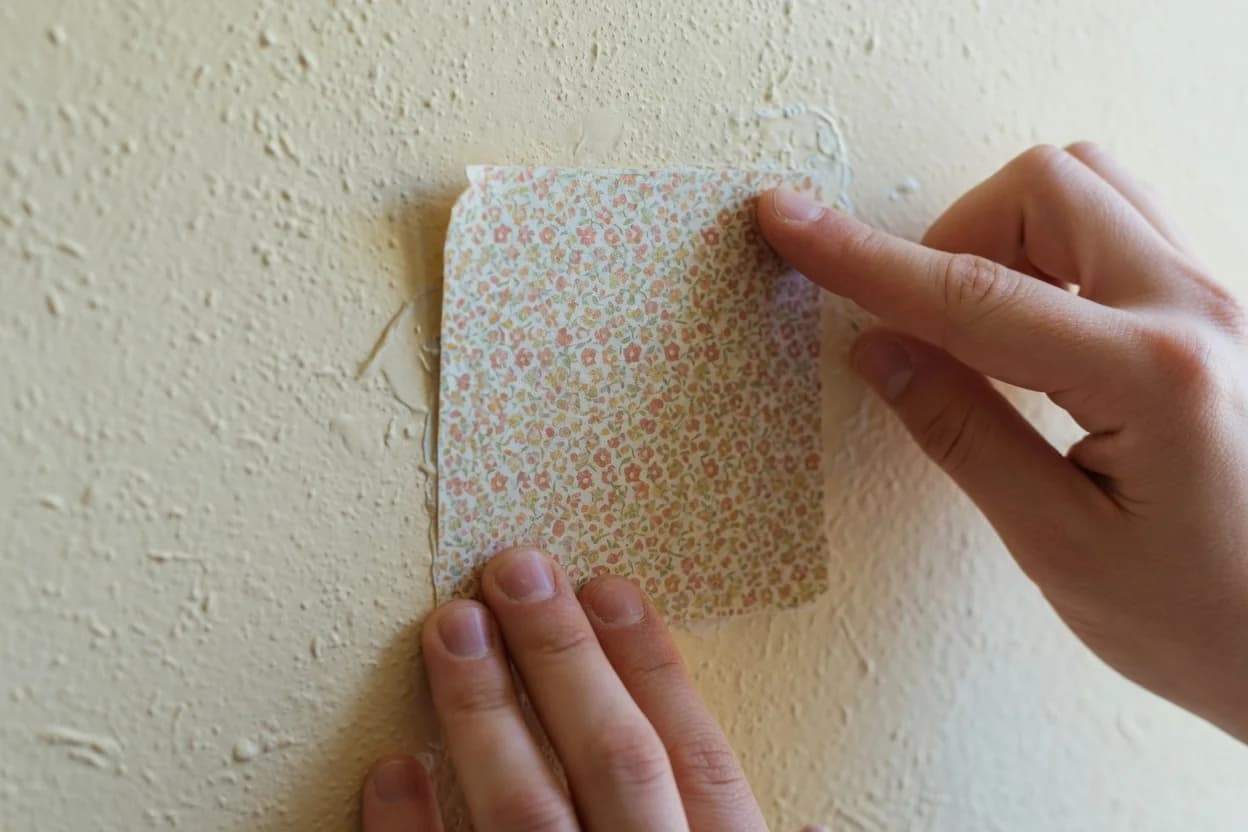
Removable peel-and-stick wallpaper has become the go-to for renters who want color without commitment. The technology has improved sharply in the last five years. Quality brands now remove cleanly from painted drywall without residue, provided the wall was properly prepped and the paint is in good condition. Clean the walls. Dust kills adhesion.
Not all removable wallpaper is equal, and the price differences reflect real differences in removal safety.
| Brand | Price (per roll) | Adhesive Type | Best For |
|---|---|---|---|
| Tempaper | $40-$60 | Acrylic removable | Latex/eggshell walls; cleanest removal |
| Chasing Paper | $35-$50 | Fabric-backed acrylic | Matte or problematic walls |
| Spoonflower | $40-$70 | Self-adhesive vinyl | Custom designs; smooth walls only |
| RoomMates | $20-$35 | Vinyl acrylic | Budget option; shorter-term use |
The rule of thumb: test a sample patch on an inconspicuous area and leave it for 72 hours before committing to a full wall. If the paint lifts when you remove the sample, stop. Your walls need a fabric-backed option or a different approach entirely. On matte paint, don't leave removable wallpaper up longer than 12 months, adhesive can cure and bond more aggressively over time.
You can also look at large-scale temporary art, textile wall hangings, or a leaning floor mirror to break up blank walls. None of these options gives you the full-room transformation of paint. But they give you zero move-out stress, and sometimes that's the smarter trade.
The Bottom Line
This week: Find your lease and read the alterations section. Draft the email to your landlord with a specific color, brand, and restoration plan.
This month: Get sample pots of three colors with LRVs between 55 and 75. Paint test squares and live with them for a few days. Pick the one that works at 8 PM under your lamps.
Before your lease ends: Know the restore plan. A bold accent wall needs $100 to $200 to revert. Neutrals in the 55-75 range might not need restoration at all.
The bold-or-neutral question isn't about taste. It's about your lease, your light, and your exit strategy.