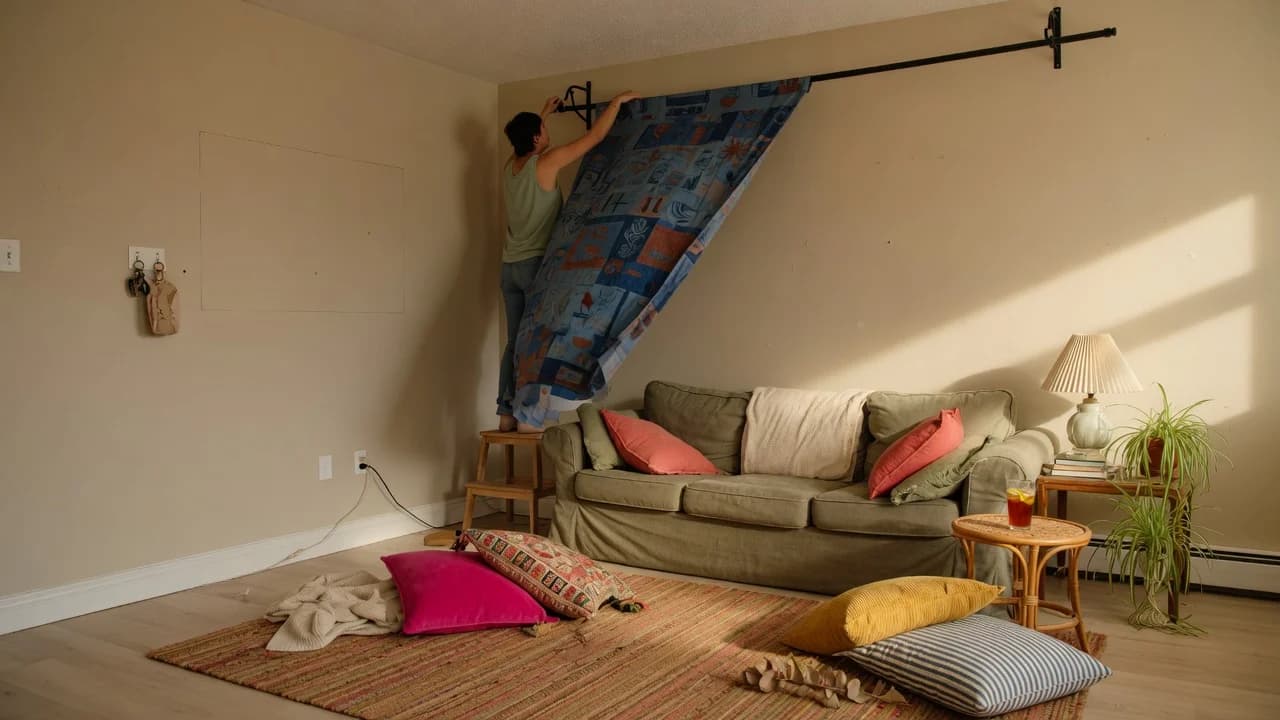
Since 2020, peel-and-stick removable wallpaper has moved from craft-store aisle to a category Home Depot stocks next to the paint—rewriting what renters can do with walls they can't paint. That shift also created a mismatch most product pages won't warn you about: your walls probably have texture, and peel-and-stick adhesives need smooth drywall to hold long-term.
The gap between a product's claims and your apartment's actual surface is wide enough to cost you your security deposit if removal goes wrong. Adding color without paint comes down to three variables you can check in the next ten minutes: your wall texture, the humidity level in your unit, and how much spackling you're actually willing to do before handing back the keys.
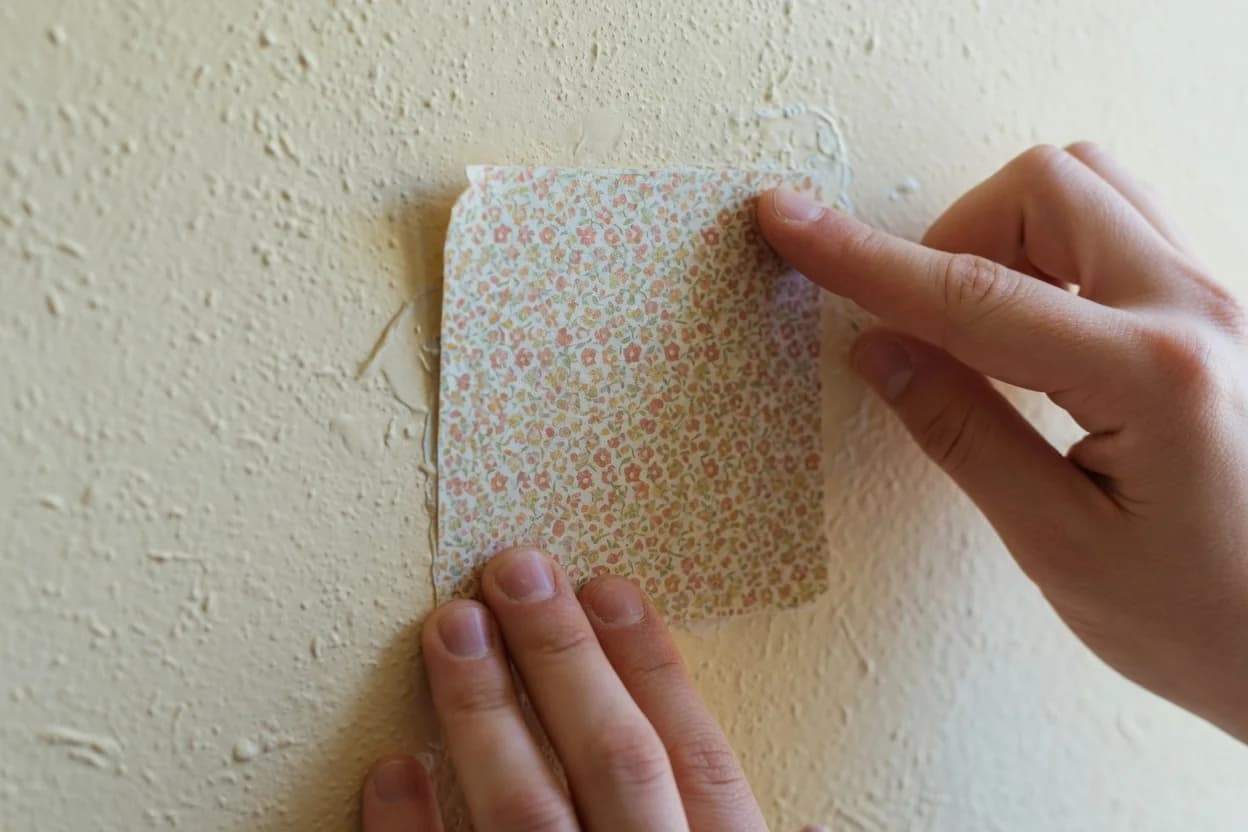
Put your palm flat against the wall and drag it slowly. If it feels like sandpaper, that's orange peel—the most common apartment texture and the boundary line where peel-and-stick starts to get unreliable. If you feel distinct ridges or cast shadows, you're in knockdown territory, and your options narrow to fabric, leaning art, and what designers call the fifth wall.
What Your Lease Actually Prohibits
Most standard U.S. apartment leases ban painting and permanent alterations. They rarely mention adhesive hooks, removable wallpaper, or tension rods. That gap between what the lease forbids and what it stays silent on is your operating space.
Small nail holes and pin holes fall under normal wear and tear, not tenant damage—a distinction the U.S. Department of Housing and Urban Development makes explicit in its guidance for property owners[1]. Faded or cracked paint is also normal wear and tear. What counts as tenant damage is gouges, fist-sized holes, or adhesive that strips paint down to bare drywall when you remove it. Your deposit is at risk from bad product choices and rushed removal, not from hanging things.
Put more precisely: your landlord can deduct for damage caused by negligence, not for evidence that someone lived in the unit. If you can restore the wall to its move-in condition with fifteen minutes of spackling and a paint-matched sample jar, you have more options than the lease wording suggests. The real barrier to adding color isn't the paint clause in your lease. It's the texture on your walls.
Removable Wallpaper: The High-Impact Option
When it works, nothing transforms a rental faster. Better Homes & Gardens tested 35 peel-and-stick wallpapers from 30 brands and found application quality varies enormously by material thickness and adhesive formulation[2]. The brands that survived six months of testing without peeling or bubbling all used thicker vinyl or woven substrates—not the thin, low-cost films that dominate Amazon search results.
Removable Wallpaper: What Determines Success
- Wall texture: Smooth or light orange peel only. Knockdown and popcorn will cause failure.
- Paint finish: Eggshell, satin, or semi-gloss hold best. Flat or matte paint risks tearing on removal.
- Material thickness: 6 mil or thicker. Thinner films telegraph texture and lift at edges.
- Brand testing: Wallshoppe ranked best overall by BHG; Pioneer Woman had the cleanest removal.
Wall prep makes or breaks the install. Wash with a degreaser like TSP, let dry 24 hours, and test a sample panel on the most textured section of your wall for 48 to 72 hours before ordering a full roll. If the sample edge lifts, the wall needs a primer coat first—or the product needs to be swapped for fabric. Skipping the sample test is the single most expensive mistake renters make with peel-and-stick.
Removing peel-and-stick wallpaper without damaging the wall underneath requires heat. Use a hair dryer on the lowest setting and pull slowly at a 45-degree angle. Four pairs of Large Command Picture Hanging Strips cost roughly $6 and hold 15 pounds—about 40 cents per pound of holding capacity, which is the cheapest damage-free hanging method available[3]. Pulling cold wallpaper off a painted wall is the most common way renters lose deposit money on an otherwise reversible project.
Fabric, Tapestries, and Hanging Art Without Holes
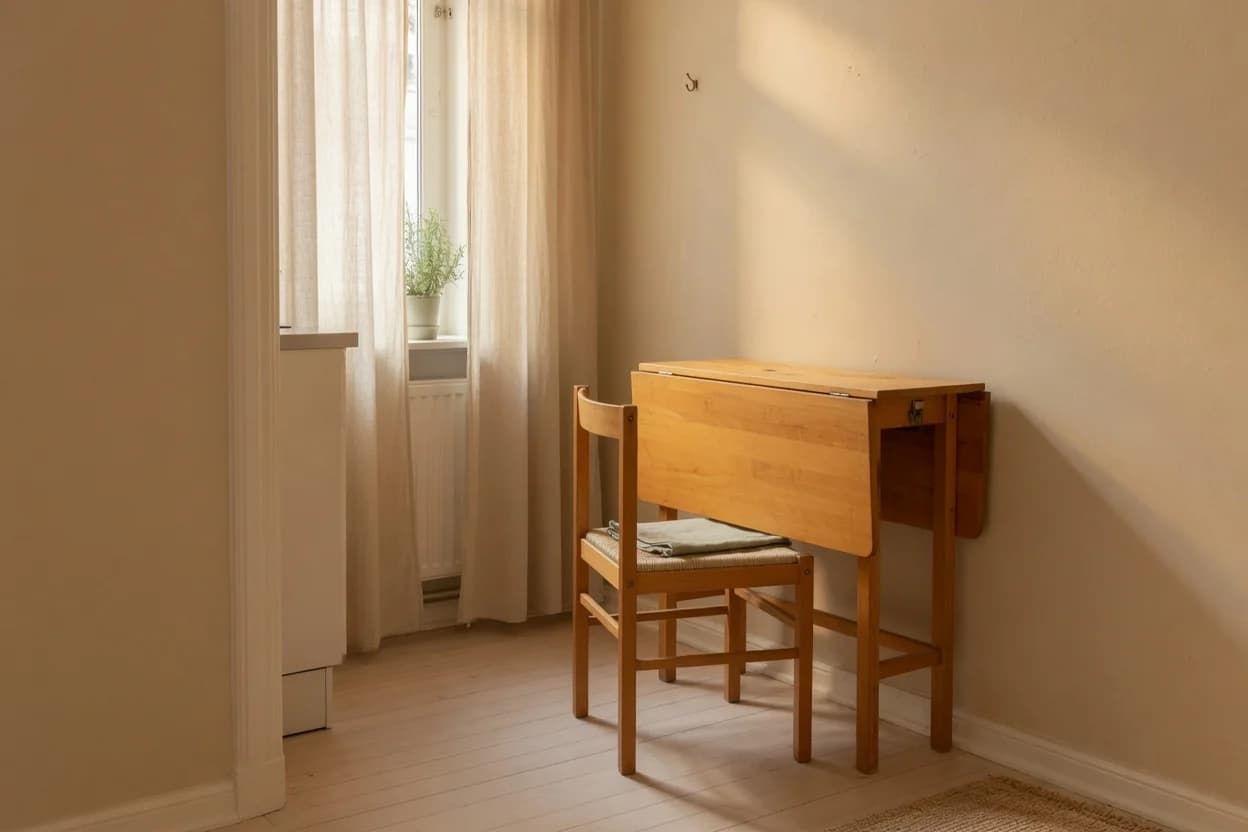
When wallpaper isn't an option—because of texture, humidity, or a lease that explicitly forbids even temporary adhesives—fabric wall hangings and mounted art do the same color work with zero surface risk. A large-scale tapestry or a stretched-fabric panel hung from a tension rod or a ceiling-mounted rail covers wall area, absorbs sound, and leaves no trace.
Which Hanging Method Fits Your Wall?
- Smooth wall, under 20 lbs: Command Picture Hanging Strips. Clean with alcohol first.
- Smooth wall, over 20 lbs: Freestanding display or lean against wall. Do not double-stack strips.
- Textured wall, any weight: Tension rod and fabric. Or ceiling-mounted track system.
- Bathroom or kitchen, any weight: Avoid adhesives. Humidity defeats them within weeks.
For framed art, 3M Command Picture Hanging Strips are the standard renter solution, but the weight limits are specific and non-negotiable. Four pairs of the Large strips hold up to 15 pounds on a 24-by-36-inch frame. The X-Large version handles 20 pounds[3]. Anything heavier needs a different approach—leaning shelves, floor easels, or furniture-based displays that never touch the wall at all.
If you're hanging fabric wall coverings in a multi-unit building, check the fire-safety classification. Textile wall coverings in U.S. commercial and multi-family residential occupancies must achieve a Class A flame spread index under ASTM E84, typically with the requirement that the building has an automatic sprinkler system[4]. Most decorative tapestries sold online do not meet this standard. For apartments in older buildings without sprinklers, stick to non-textile wall decor or confirm the building's specific policy in writing before installing anything that covers a large wall area.
Color That Never Touches the Wall
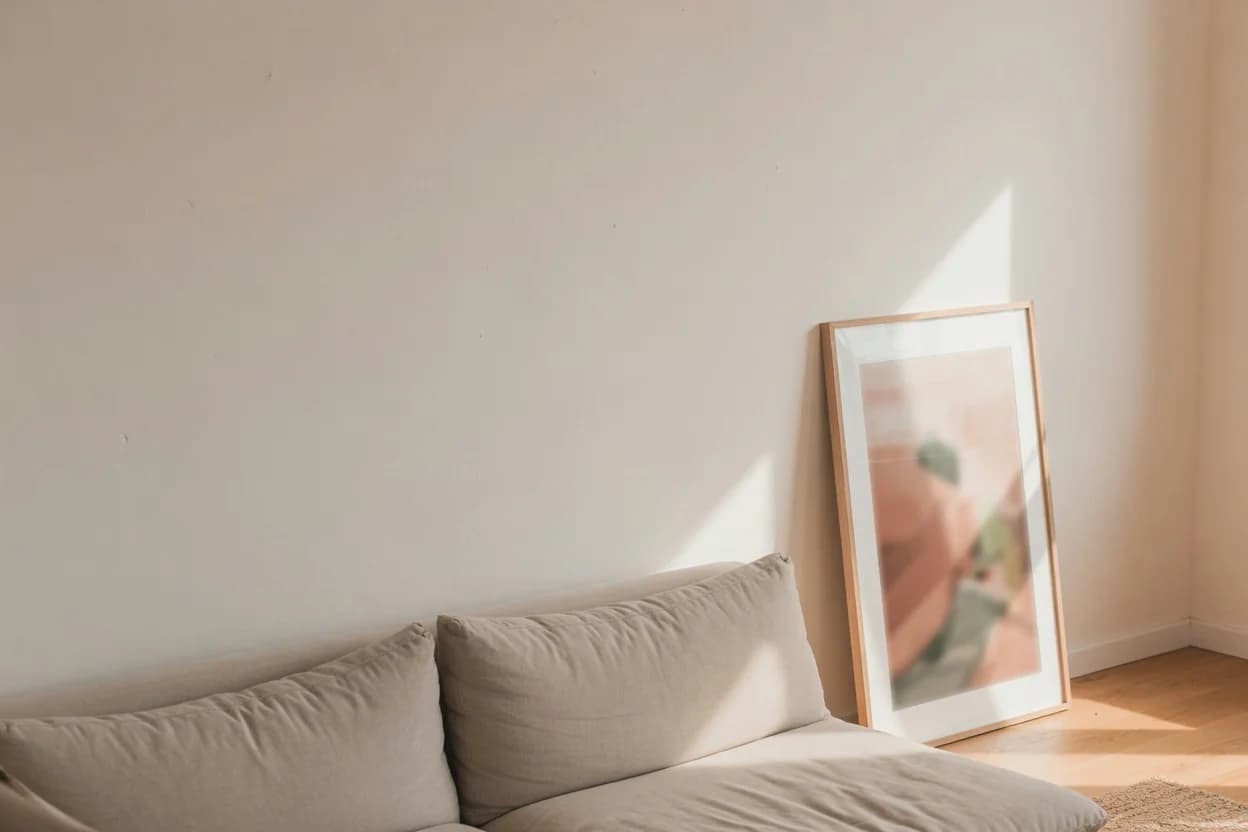
Some of the most saturated color in a rental room comes from objects that never make contact with drywall. Curtains hung from tension rods, colored glass vases on windowsills, a bright area rug, a gallery of framed prints leaned along a console table. These methods bypass the wall-texture problem entirely and require zero restoration on move-out.
The fifth-wall approach—treating the ceiling as a color field—works in rentals where ceilings are smoother than walls. A tension-mounted fabric panel overhead, a collection of paper lanterns at varying heights, or peel-and-stick tiles on a flat ceiling can shift a room's color temperature without touching a single vertical surface. Ceilings in older apartments are often less textured than walls, which makes this viable where wallpaper fails.
If you ignore the wall-texture variable and commit to a method that fails, the consequence isn't just a wasted Saturday. You'll be staring at peeling corners for months—or rushing a removal that takes paint with it, turning a color project into a deposit negotiation you'll probably lose. A HUD-aligned landlord is entitled to deduct for damage beyond normal wear, and paint stripped down to bare drywall qualifies[1].
Your Color Calendar
Start today by testing your wall texture—palm test, one sample square of removable wallpaper, 48 hours. If it holds, you've unlocked the highest-impact option. If it lifts, skip to fabric and tension rods without wasting money on a full roll.
By this weekend, pick one method that matches your wall type and buy the materials for a single accent area. One wall, not the whole room. The accent-wall approach limits your financial exposure and gives you a clean removal test before you scale up.
Before your lease renewal hits your inbox, photograph your installations and locate the paint-match information for your walls. Most landlords repaint between tenants with a standard color—ask for the brand and sheen while you're still a tenant in good standing. That piece of information alone is worth more than any product you can buy.