A friend put a handsome oak dining table in the corner of her open-plan apartment, set it with ceramic dinnerware and linen napkins, and spent six months wondering why the room felt wrong. The table wasn't the problem. The styling was — but not the way most advice would tell you.
Styling a dining table that shares the corner of a living room is a different assignment from styling one in a dedicated dining room. This isn't a tablescaping guide — there are hundreds of those, and they're fine for dinner parties. This is about the other 95% of the time, when the table is just furniture your living room has to look at. The table lives in two worlds: a surface for meals, and a piece of furniture your living room sees all day. Those functions pull in opposite directions, and most styling advice only addresses the first.
Here's the tension: a fully set table reads as clutter from the sofa. A bare table reads as abandoned. The corner itself — already the most visually compressed zone in the room — amplifies every mistake. Get the sightline, the scale, and the zone separation right, and the corner stops fighting the room. Get them wrong, and no centerpiece saves you.
The Sightline Problem
Before you pick a single decorative object, figure out where the table gets seen from. In a shared corner, the answer is rarely the dining chair.
Most people style a table as though guests are about to sit down. That works in a dining room, where the primary view is from the table itself. In a living room corner, the primary view is from the sofa, the armchair, or the kitchen pass-through — 10 to 15 feet away and at a different angle. What looks balanced from two feet above a plate can read as chaos from across the room.
Walk to the spot you spend the most time in the living area. Turn toward the dining corner. That's your styling view. Not the dining chair. Not the entrance. The sofa.
Everything on that table registers from there first. Tall centerpieces that block the sightline fail. Clusters of small objects that read as visual noise from 12 feet away fail. A single low, substantial object — a wide bowl, three candlesticks under 10 inches, a tray with one or two pieces — succeeds because it reads as a composed moment, not clutter. Skip this step and you'll keep rearranging objects on a table that registers as visual noise from the one seat in the room you actually use.
Scale and Clearance
A dining table in a corner needs breathing room. The National Kitchen & Bath Association recommends at least 32 inches of clearance from the table edge to any wall when no traffic passes behind diners, and 36 to 44 inches when it does.[1] In a shared living room corner, you're usually working with less. That's why many setups feel cramped before anyone sits down.
That framing misses something. The clearance problem in a corner isn't just about chair pull-back. It's about visual weight. A rectangular table pushed into a corner creates two dead wall-sides and one exposed face. A round or oval table distributes mass more evenly and softens the corner's geometry. If you're buying for this space, a 36-to-42-inch round pedestal table with a central base does more for the room than any styling trick. The pedestal eliminates leg-vs-chair conflicts, and the round profile reads as intentional — not squeezed-in.
A dining table in a living room corner gets seen from the sofa far more often than from a dining chair — and that flips the entire styling priority.
If the table is already rectangular, create visual clearance: pull it at least 6 inches from each wall, use armless chairs or a bench on the wall sides that tucks under when not in use, and keep the surface 70 to 75 percent clear when not set for a meal.
Lighting as Zone Boundary
Lighting separates the dining corner from the living room more effectively than any other single move. It tells the eye: this spot has a different job.
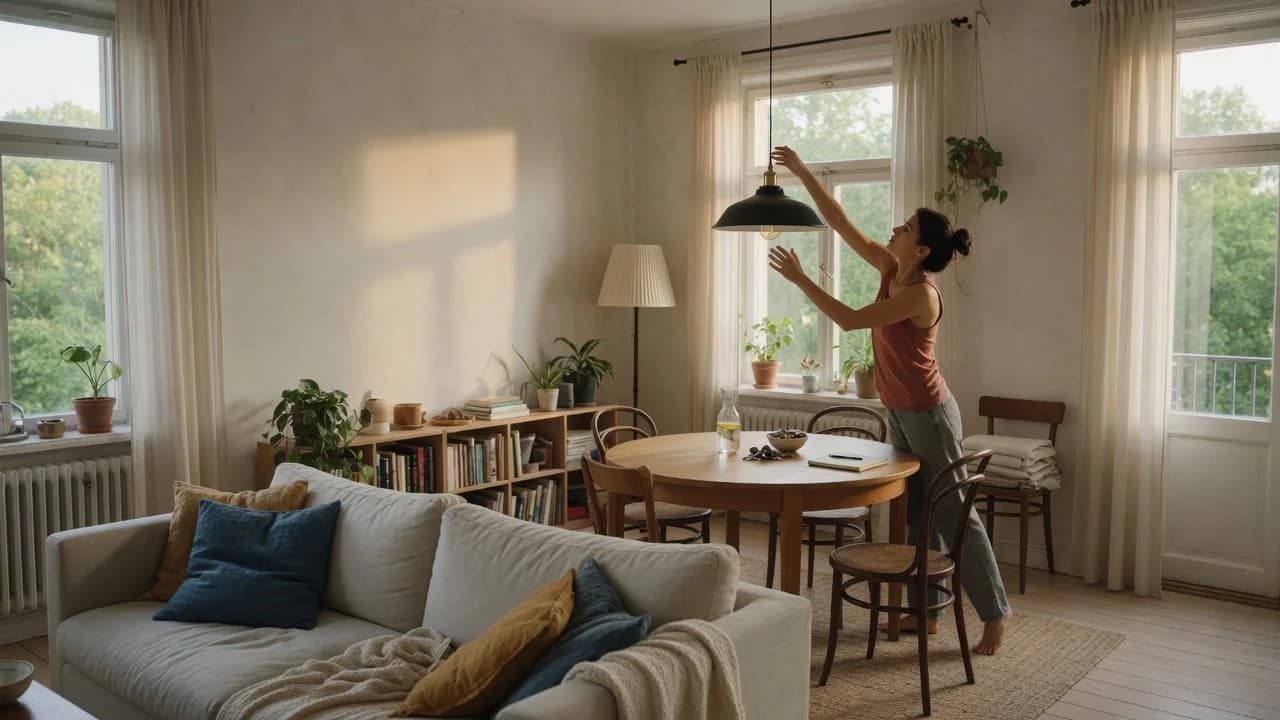
A pendant or semi-flush fixture centered over the table creates a vertical anchor that defines the zone without walls or dividers.[2] In a rental where hardwiring isn't an option, a plug-in pendant swagged with a ceiling hook and cord cover does the same thing for under $80. Center the fixture over the table, not the corner, and hang it 30 to 36 inches above the surface.
The light should operate independently from the living room's lamps. Put it on a separate switch, a smart plug, or a dimmer. A warm 2700K bulb at low output keeps the corner feeling intentional when the table isn't in use. Brighten it when you're eating. The shift in lighting is the shift in function. And the most overlooked.
Don't match the dining pendant to the living room ceiling fixture. A distinct shape and finish reinforces the separation. A simple dome pendant over the table, with the living area lit by floor and table lamps, reads as two rooms without a single wall between them.
Styling for the Living-Room View
When the table isn't set for a meal, it's a piece of living-room furniture. Treat it like a console or coffee table: one anchor object, one supporting object, negative space.
Corner Dining Table Styling: Three Approaches
| Approach | Best For | Sofa View | Clear Speed |
|---|---|---|---|
| Single anchor object | Tables under 42 inches; modern rooms | Clean and composed | Under 10 seconds |
| Tray-based vignette | Tables 42 to 60 inches; transitional rooms | Reads as one unit from distance | 15 to 20 seconds (grab tray) |
| Everyday functional | Tables used 2+ times daily; families | Lived-in but deliberate | Zero — it is the setup |
The single anchor works for most people. A wide low bowl, three pillar candles on a narrow tray, or a sculptural vase with dried branches — nothing over 12 inches tall. The tray vignette gives flexibility (fruit bowl, small plant, candle) but the tray must be large enough to read as one object from the sofa: a 16-to-20-inch round tray on a 42-inch table. The everyday functional display is the family-workhorse option: a fruit bowl, salt and pepper in attractive vessels, a small potted herb. Useful, cleared in one motion, honest about how the table actually lives.
Skip the table runner. On a corner table visible from the sofa, a runner creates a strong horizontal line that fights the round table's softening effect and pulls the eye to the corner's geometry. Use a placemat-sized textile or a tray under objects instead.
When the Table Actually Gets Used
Everything above assumes the table is seen more than it's eaten at. That holds for plenty of households — couples, solo dwellers, people who eat at the island and use the dining table on weekends.
But if this is the family dinner table every night with young kids in the mix, the "always styled" approach becomes a nuisance. You'll clear the vignette at 6 PM, set for dinner, clear dinner at 7, and either rebuild or leave the table bare. Bare, in a living room corner, reads as unfinished.
For daily-use households, skip the decor-first approach. Invest in the table surface and the chairs instead. A table with a genuinely good-looking top — warm wood, honed stone, or a matte laminate that doesn't read as laminate — holds its own when bare. Chairs with upholstered seats and open backs do more for the room than any centerpiece, because they're what the sofa actually sees: chair backs, not tabletops. When you entertain, pull out a tablecloth and one dramatic centerpiece. The rest of the week, the table earns its keep as a surface.
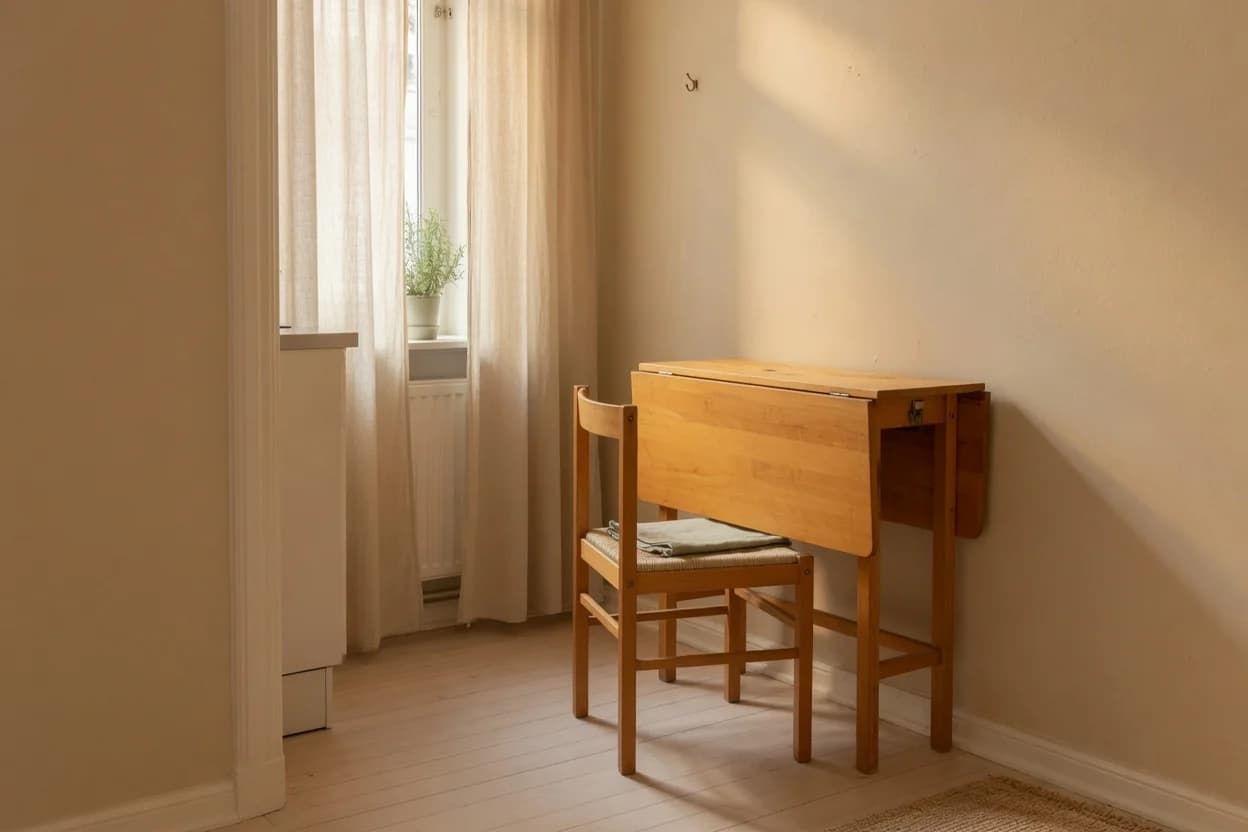
The realistic alternative is abandoning the dining corner — eating at the sofa or kitchen island. A fold-down wall-mounted table or a lift-top coffee table eliminates the spatial problem. But you lose a gathering surface. A well-styled corner table does something a coffee table can't: it says someone sits down here, even if that's only on Sundays.
Style the table for the view from your sofa, not the view from a dining chair.
Check three things first. Walk to the sofa and look at the corner: can you see most of the table surface, or is it blocked by tall objects? Measure behind the chairs: at least 32 inches to the wall? Turn on the dining light independently from the living room lights. If any answer is no, fix that before you buy a single decorative object.
The bowl, the candle, the tray — those are secondary. Get the sightline, the clearance, and the light right, and the corner stops being the awkward part of the room. It becomes the part you notice second, which is exactly where a dining corner in a living room belongs.