
Renters in the United States put down an average of $750 in security deposits, and fewer than half get the full amount back when they leave.[1] Wall damage from hanging decorations eats into that refund faster than most people expect. Hanging holiday lights and garland without nails isn't just about finding the right hook. It's about matching the method to your wall surface, your paint condition, and the weight of what you're hanging.
What rental listings don't tell you is that clean removal depends far more on your wall's paint age and texture than on the brand of hook you buy. A strip that peels off a smooth, well-cured painted wall without a trace can rip a sheet of drywall paper off a textured surface in the same apartment. That's the gap between what packaging promises and what your deposit statement might reflect.
The three variables that actually determine success are surface type, paint condition, and humidity exposure. Paint needs at least 7 days to cure before any adhesive touches it. Skip that wait and you'll peel the paint off with the strip, regardless of how carefully you remove it. You'll also need to know whether your walls are smooth drywall, orange-peel texture, or popcorn — because not every method works on every surface. And if you're decorating a bathroom or kitchen, humidity changes the game entirely.
The Surface Problem Most Advice Skips
Most articles about renter-friendly decorating jump straight to product recommendations. That's the wrong starting point. The first thing you need to do is identify what kind of walls you have, because the answer determines which methods will work and which will cost you money.
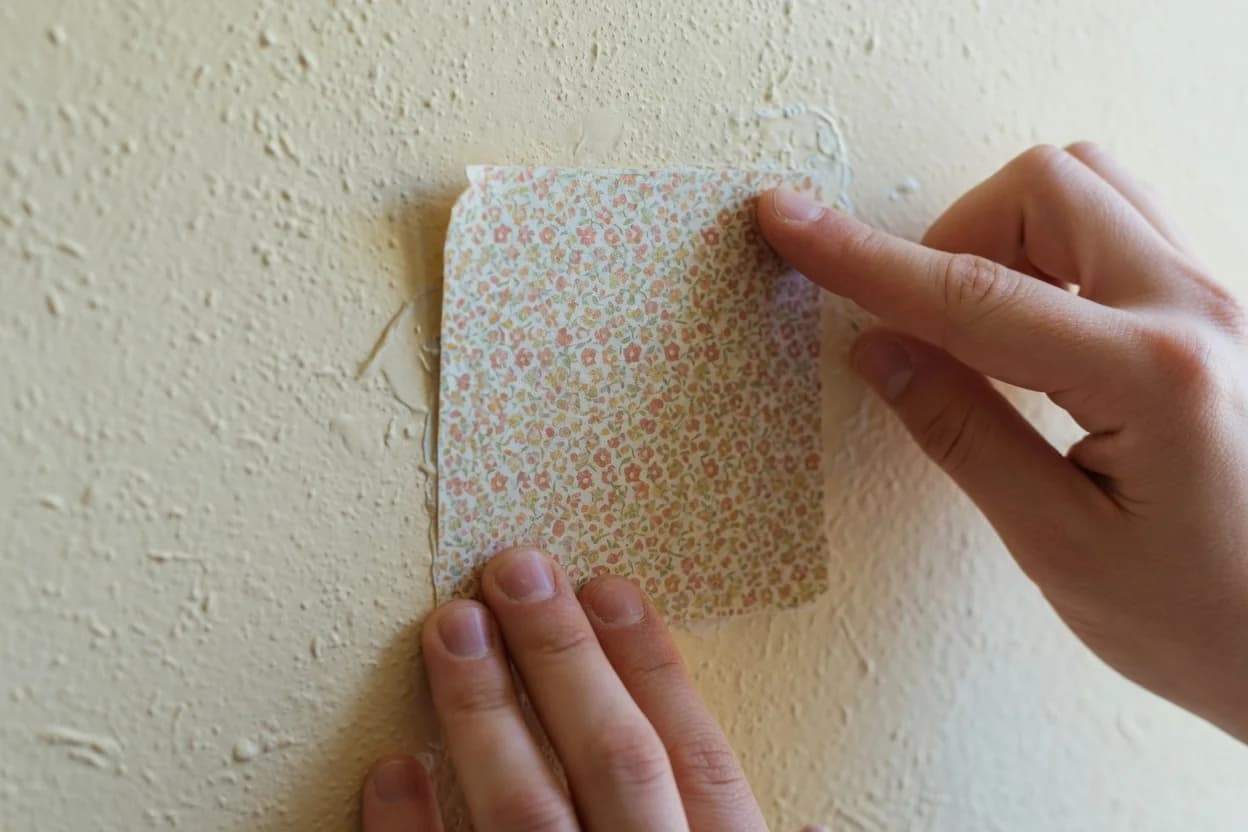
Smooth painted drywall is the ideal surface. Adhesive hooks, clips, and putty all perform well here, assuming the paint job is decent and fully cured. But many apartments, especially older ones, have textured walls. Orange-peel and knockdown textures create uneven contact between the adhesive and the surface. When you pull the strip, the adhesive grips the raised portions of texture and can tear them away, leaving visible patches that require resanding and repainting to fix.
Popcorn ceilings and walls are worse. The bumpy surface makes any adhesive solution unreliable. If you have popcorn texture, skip adhesives entirely and use tension rods or free-standing decorations instead. Flat or matte paint finishes also present a risk — many adhesives can pull the paint's top layer or leave an oily residue that shows as a darkened patch. Semi-gloss and satin finishes hold up better under adhesive removal.
Before you buy anything, test your wall. Pick a hidden spot — behind a door, inside a closet, near the baseboard — and apply one adhesive strip. Leave it for 24 hours, then remove it using the stretch-pull method. If the paint stays intact, you're good. If it doesn't, you just saved yourself from discovering the problem across an entire wall of holiday decorations.
Adhesive Hooks and Clips: What Actually Works
The real decision isn't which product to buy. It's which wall surface you're working with. Once you've confirmed your walls can handle adhesive, the product choices are straightforward. 3M Command dominates this category for a reason: their stretch-release adhesive strips are designed to remove cleanly when pulled straight down parallel to the wall surface.[2] But clean removal only works if you match the product to the weight and follow the prep instructions exactly.
The weight ratings on the package assume a clean, prepped surface. Or rather: those numbers are best-case figures, and skipping the rubbing alcohol wipe-down before applying the strip cuts them by half or more. Dust and grease are the real reasons adhesive hooks fail, not the adhesive itself.
Here is how the main options compare for hanging holiday lights and garland:
| Method | Weight Capacity | Best For | Surface Risk |
|---|---|---|---|
| Command Indoor Light Clips | ~0.3 lb per clip | String lights, fairy lights on smooth walls | Low on cured paint |
| Command Outdoor Light Clips | ~0.5 lb per clip | Outdoor lights, rope lights on siding/windows | Low; UV and water resistant |
| Command Medium Hooks | 3 lb | Garland, wreaths on smooth painted walls | Moderate; needs full strip contact |
| Command Large Hooks | 5 lb | Heavy garland, multiple light strands | Higher; weight increases peel risk |
| Scotch Removable Mounting Putty | Up to 1 lb | Lightweight decor, paper, small ornaments | Low; may stain flat paint |
Those are the numbers. Here is what they don't tell you: the removal technique matters as much as the installation. Pull the stretch-release tab straight down along the wall, slowly. Never pull outward. Pulling outward is the motion that tears drywall paper and peels paint.[3] If the tab breaks, grab the exposed adhesive with needle-nose pliers and continue stretching. If it resists, a hair dryer on low heat for 20 to 30 seconds softens the adhesive enough to release.
Command strips work on smooth, sealed surfaces. They are not designed for brick, textured drywall, wallpaper, or freshly painted walls. Using them on the wrong surface and then blaming the product is like blaming a sedan for getting stuck in mud. Check sq footage, surface type, and paint age before you peel open the package.
When Adhesives Fail: Tension Rods, Putty, and Other Options
Adhesive hooks are not the universal answer. If your walls are textured, if you're hanging something across a doorway or window, or if the weight exceeds what a strip can hold, you need a different approach. This is where the recommendation breaks down for a lot of renters — and where the alternative methods actually outperform the adhesive solutions.
Tension rods solve the garland problem with zero adhesive contact. A spring-loaded rod placed inside a doorframe or window frame uses pressure alone to stay in place. Wrap your garland around the rod, add lights or ornaments, then tighten it into the opening. The rubber-capped ends protect painted surfaces. This method works for doorways, archways, between cabinets, and across windows. Standard tension rods handle 28 to 48 inches. Heavy-duty versions extend further. For garland across a doorway, this is genuinely the best method — no adhesive, no removal anxiety, no deposit risk.
For lightweight decorations on smooth surfaces, removable mounting putty is the cheapest option. Scotch's version holds up to 1 pound, and museum-grade putties are acid-free and won't stain porous surfaces. Tear off a small piece, knead it until pliable, press it onto the back of your decoration, then press the decoration against the wall. To remove, peel slowly and roll the putty off with your fingers. Putty works for paper decorations, small ornaments, and lightweight string lights. It will not hold garland.
What you should not do: use double-sided foam tape, hot glue, or packing tape on painted walls. These adhesives cure hard and bond aggressively to paint. Removal typically peels off the paint layer or leaves residue that requires solvent to clean. Solvents can damage the paint further. If your lease says no nails, assume it also means no permanent adhesives.
And if you ignore all of this and hammer nails anyway, here is what happens. Each nail hole requires spackling, sanding, and paint matching. A landlord who spots nail holes during a move-out inspection can deduct $50 to $150 for wall repair — sometimes more if the paint color is hard to match. Multiply that by a dozen holes around windows and doorframes, and you've handed over a significant chunk of your deposit for something that took five minutes to hang. But pull the strip straight down, test the surface first, and use a tension rod where adhesive won't work, and you leave the walls exactly as you found them.
Right now, before you open any boxes: walk through your apartment and note every wall surface type. Smooth drywall, textured, popcorn, tile, wood. Write it down. Test one adhesive strip in a hidden spot on each surface type you plan to use, and wait 24 hours before removing it.
Same day, when you're buying supplies: get rubbing alcohol, a roll of Command light clips matched to your surface type, and a tension rod if you have a doorway or window to decorate. Do not buy foam tape or permanent mounting products. If your walls are textured, skip the adhesive aisle entirely and go straight to tension rods and magnetic hooks.
When you take everything down in January: pull every strip straight down, not out. Keep a hair dryer nearby for stubborn ones. Take a photo of the clean walls after removal. If your landlord disputes the condition, you'll have timestamped proof that you left the walls intact.