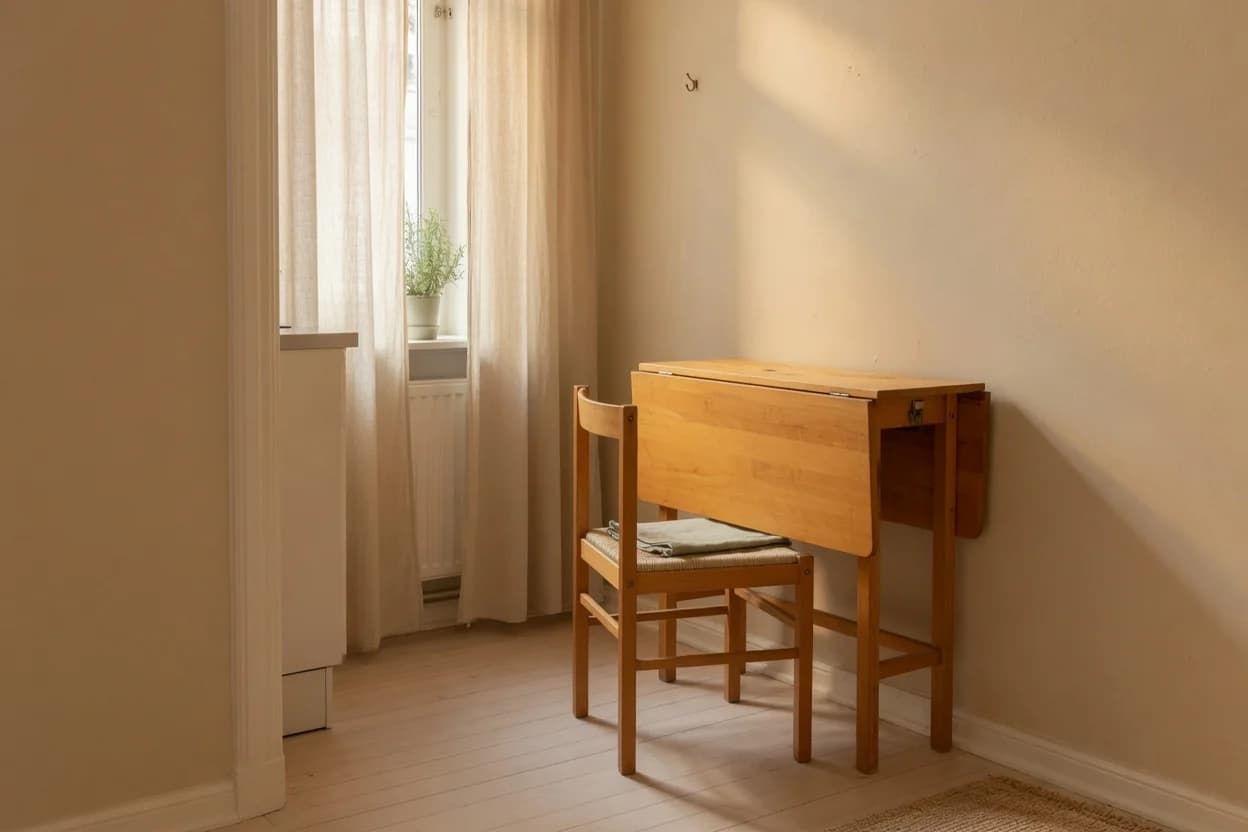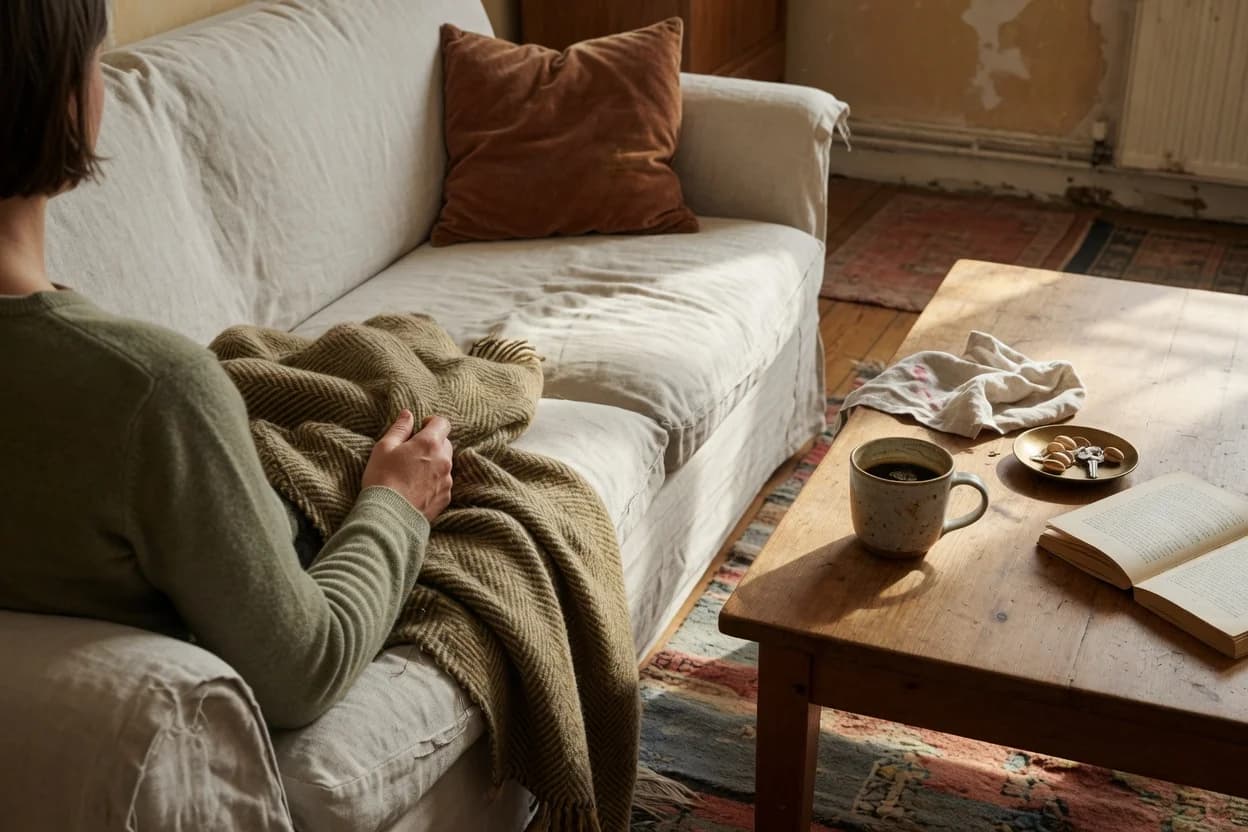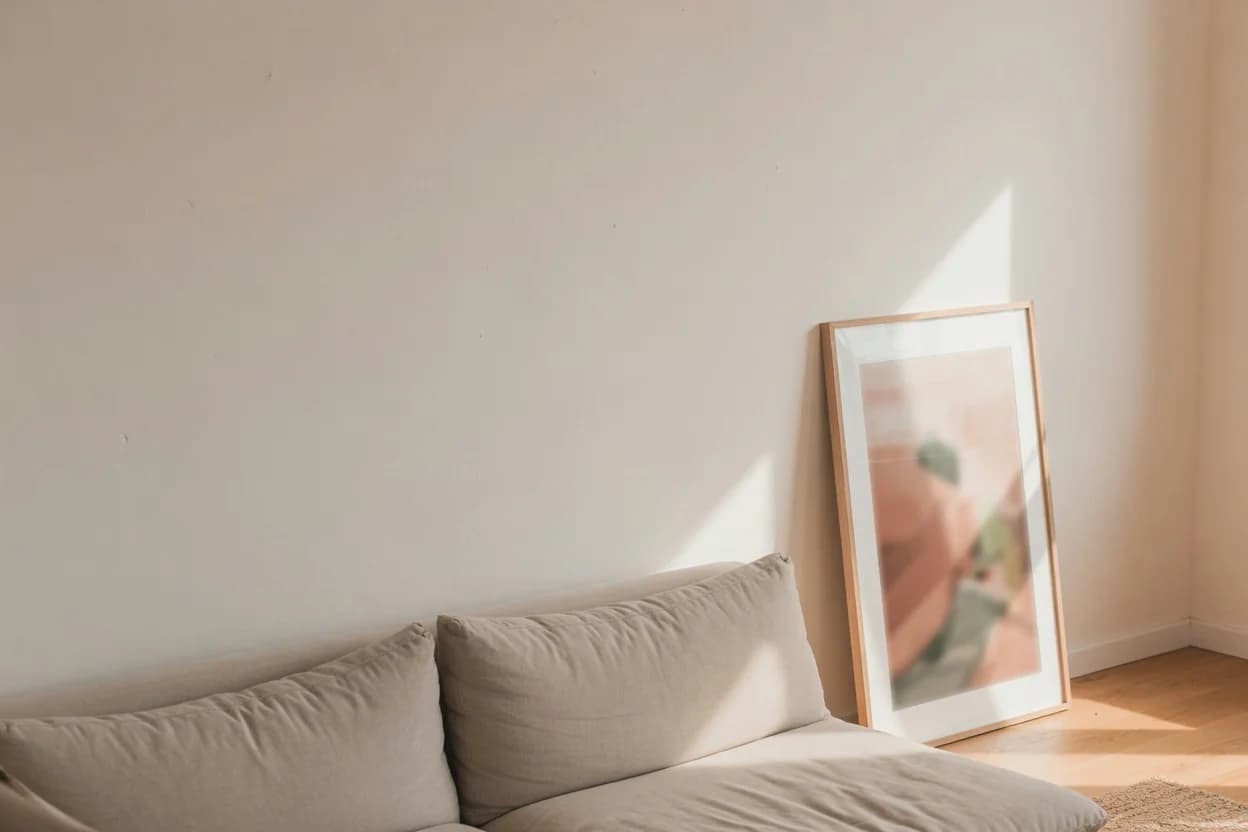
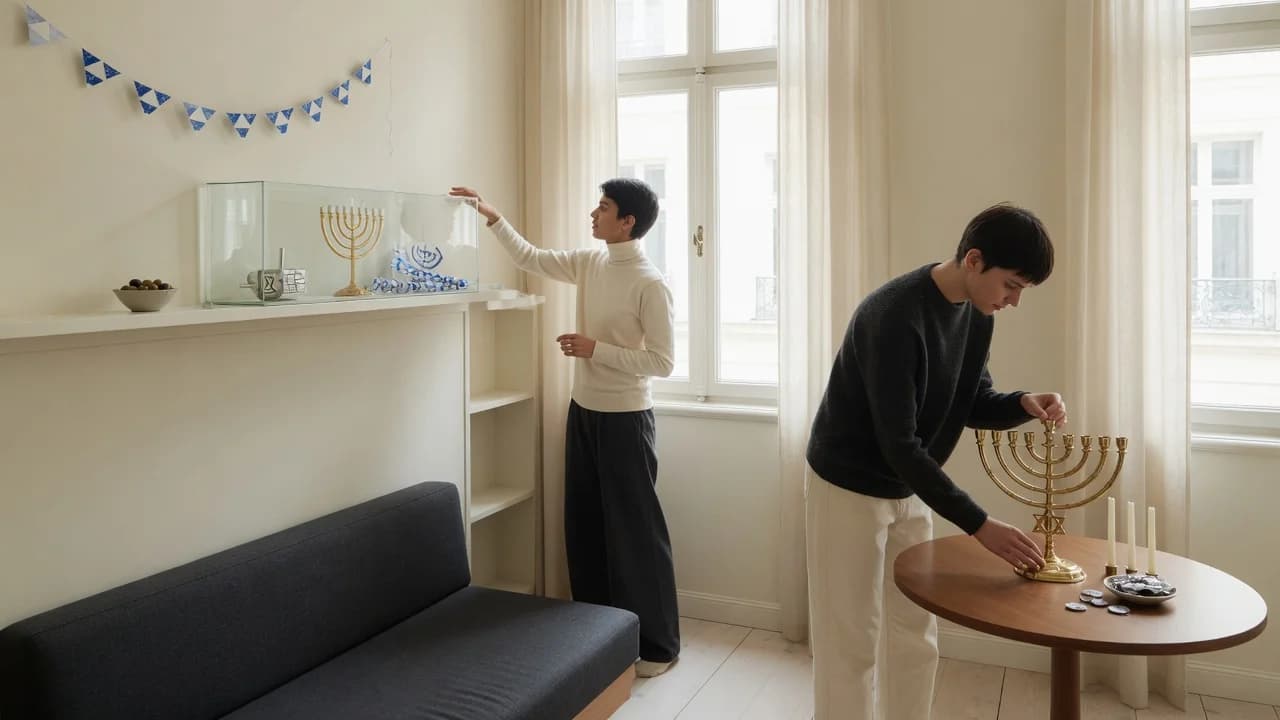
Since 2020 turned every apartment into an office, gym, and dinner party venue simultaneously, adding seasonal decor to already-stretched square footage went from nice to impossible. The default Hanukkah decorating playbook still assumes you have a mantel, a dining room sideboard, and a front hall begging for a banner. You don't. That's the actual gap: the problem isn't taste and it isn't budget. It's surface real estate. Put more precisely: nobody gave you a surface budget, so you treated every flat plane as fair game. Three surfaces, decorated with discipline, read as more festive than twelve surfaces decorated with anxiety. Most Hanukkah decor advice treats blue-and-silver as non-negotiable, as if the holiday came with a Pantone contract. In a 600-square-foot apartment with warm grey walls, that palette reads less as tradition and more as a birthday party that got the theme wrong. If you ignore the surface-count problem, you'll buy pieces you like individually and hate together. The menorah fights the garland, the throw pillows argue with the table runner, and the whole place feels like a storage unit with candles.
The Three-Surface Rule
Most apartments have about a dozen horizontal surfaces: counter, coffee table, dining table, nightstand, windowsill, bookshelf, entry ledge, desk, dresser. The instinct is to spread Hanukkah across all of them. That instinct is what wrecks small-space holiday decorating.
The three-surface rule works like this. Choose exactly three surfaces to decorate. Leave everything else untouched. A 24-inch windowsill counts. A console table top counts. You pick three and you stop.
Why three? Designers use odd-number groupings because the eye finds them complete but not static.[1] Two surfaces feels like an accident. Four feels like clutter creeping in. Three reads as intentional composition. It's the same reason a vignette on a shelf uses three objects of varying heights: your brain registers a pattern, then moves on.
The three surfaces you pick should sit at different heights, forming a loose triangle through the room. A windowsill in the living area, the dining table center, and a wall-mounted shelf near the entry. That triangular distribution pulls the eye through the apartment and makes the holiday presence feel distributed without occupying every flat inch.
This is the decision that controls everything else. Before you buy a single dreidel or candleholder, walk your apartment and pick your three surfaces. Write them down. If you can't settle on three, pick two and add a wall. The rule is the rule.
Palette: Why Blue-and-White Is Working Against You
The Hanukkah color palette everyone defaults to is blue, white, and silver. It's easy to find, it's obvious, and in a small apartment with neutral walls, it often looks cheap.
Or rather: it looks cheap when the materials carrying those colors are plastic, polyester, or painted tin. A deep navy velvet pillow can be stunning. The blue metallic dreidel garland from the seasonal aisle at Target usually isn't.
The more reliable palette for a minimal apartment is brass, cream, and charcoal. Brass reads as warm and ceremonial without screaming holiday aisle. Cream keeps things light and airy, which matters in small rooms where dark colors shrink the space visually. Charcoal anchors the palette and gives the eye somewhere to rest. Together they signal winter celebration without requiring a single blue candle.
A cobalt glass candleholder set against a brass tray and cream linen works beautifully. What you're avoiding is the all-blue-all-the-time approach that treats Hanukkah decor like a sports-fan display.
This palette also solves the cohesion problem. Cream throw pillows, a charcoal table runner, and brass candleholders don't stop being useful in January. They slide into your regular decor without a seasonal hangover, which matters when you have exactly one closet.
Materials That Earn Their Footprint
The fatal error of small-space holiday decor is treating every item as disposable. When storage counts and every object has to justify its shelf space eleven months a year, material quality stops being a luxury and becomes a filtering mechanism.
| Material | Why It Works | What to Avoid |
|---|---|---|
| Glass | Transparent, visually disappears, lets candlelight through | Frosted or painted glass that reads as bathroom decor |
| Brass (unlacquered) | Warms up neutral palettes, patinas with age, works year-round | Shiny lacquered brass that looks like hotel lobby hardware |
| Raw wood / stone | Grounds metallic elements, adds texture without adding color noise | Stained or painted wood in holiday-specific colors |
Glass is the MVP. A clear glass display box with a few dreidels, a string of warm micro-LEDs, and a sprig of eucalyptus reads as a curated object, not holiday decor. When Hanukkah ends, swap the dreidels for a small sculpture or leave it empty. The box stays. That's the test: would this object look intentional on March 15th? If the answer is no, it probably shouldn't be in a small apartment in December either.
Brass does the warmth work. A single brass menorah on a cream linen runner makes the table feel dressed without layering five pieces. Unlacquered brass develops a natural patina over years. The $15 lacquered version from the seasonal section will flake by year three and look terrible doing it.
Wood and stone anchor everything. A small marble tray under the menorah catches wax, defines the surface zone, and adds texture contrast. Function hiding in plain sight.
The Disappear Rule: Storage as a Design Constraint
Here's where most small-apartment decorating advice goes quiet: storage. Not the cute kind where you buy matching bins. The real kind where you open your only hall closet in January, stare at a menorah, three throw pillow covers, a table runner, and a dreidel garland, and wonder where your vacuum goes.
The disappear rule: every Hanukkah-specific decor item must fit inside one standard shoebox or it doesn't come into the apartment. A shoebox is roughly 14 by 8 by 5 inches. That's your allocation.
This forces a discipline that aesthetic advice can't. A ceramic dreidel set plus a fabric banner easily eats half the box. Now you choose: the banner or the dreidels? Throw pillow covers or the special tablecloth? The constraint makes the decisions for you.
Hanukkah decor in a small apartment isn't about buying less. It's about making fewer surfaces work harder.
Wall-mounted pieces complicate the math. A wall-hung shelf with candleholders avoids the surface-count problem and the shoebox problem at once. Command strips rated for 15 to 20 pounds let you mount without drilling, which matters in rentals.[2] The strips remove cleanly, the shelf comes down in January and slides behind a bookcase. The shoebox still applies to whatever sat on the shelf.
When This Approach Fails
The brass-cream-charcoal palette and three-surface rule work beautifully in apartments with white, grey, or cool-neutral walls. They fail in spaces with warm-toned fixed elements: orange-toned oak floors, beige walls, terra-cotta accents, or honey-colored cabinetry.
In those rooms, brass reads as more warm-on-warm and disappears into the background instead of providing contrast. Cream, instead of feeling crisp, looks dingy against beige walls. The whole setup goes muddy.
If your apartment has warm undertones throughout, shift the palette. Swap cream for crisp white, brass for brushed nickel or pewter, and charcoal for deep navy. Same principle, different color temperatures. The three-surface rule still holds. The shoebox rule still holds. The palette adjusts to the room.
The other failure condition is simpler. If you can't commit to three surfaces and keep stopping yourself from adding just one more, you'll end up at four or five, and the whole system breaks. The three-surface rule only works if you treat it as a hard boundary, not a suggestion. If that kind of restriction feels suffocating rather than freeing, this approach probably isn't for you. Some people genuinely enjoy dense, layered holiday decor, and in a small apartment that means accepting visual chaos as the tradeoff for abundance.
Before You Buy Anything:
- Pick your three surfaces and write them down. Different heights, loose triangle.
- Test your palette: hold a brass object, a cream textile, and a charcoal item together in your actual apartment light.
- Empty one shoebox. That's your storage allocation. Measure it.
Do this today: clear your three chosen surfaces completely. Not a candle, not a book, not a phone charger. Empty surfaces are your canvas. If you can't clear them because they're permanently occupied, they're not surfaces you can decorate. Pick different ones.
Same day: buy one brass or glass object that passes the March 15th test. A clear SAMMANHANG display box from IKEA costs under $10 and works on a shelf, a table, or a windowsill without declaring a holiday allegiance. Put it on surface one. Light a candle next to it. That's your anchor.
By night three of Hanukkah: the menorah is out on surface two, the textiles are swapped on surface three, and your shoebox has room to spare. Nothing on surfaces four through twelve. The apartment reads as intentional, not crowded. The holiday registers without shouting. When the eight nights are over, the shoebox closes and slides back onto the shelf, and your apartment returns to being an apartment, not a storage unit with candles.