A lighting contractor will ask you one question before anything else: "Where's the nearest outlet?" The answer shapes everything that follows, and for a renter, it's the difference between a fixture you love and one that costs you part of your security deposit.
Battery sconces and plug-in sconces both solve the same problem: you want wall-mounted lighting but cannot cut into drywall or hire an electrician. Your lease forbids it, or the cost doesn't make sense for a place you might leave in eighteen months. These two options look similar from across the room. They are not the same thing, and picking the wrong one for your specific walls creates a daily annoyance, not a one-time mistake.
The standard advice says plug-in sconces are the serious choice and battery models are the backup plan. But that advice assumes you have an outlet within cord reach of every wall you want to light. In older US apartments, particularly prewar buildings and converted units, you frequently don't. The real decision is not about which technology is better. It's about which constraint you'd rather live with: a visible cord or a recharge cycle.
What you won't find in most guides is a straight comparison of what actually matters after the first week: brightness drop-off, cord-concealment cost, and the battery-replacement cadence that determines whether you abandon the fixture by month three.
Here's the reality most rental lighting discussions skip: according to Zillow's 2024 data, the average US security deposit runs about $750.[1] A few poorly placed screw holes or peeled paint from adhesive removal, and you've handed your landlord a reason to deduct. The right sconce choice doesn't just light the room. It keeps your deposit intact.
The Two Technologies, in Plain Terms
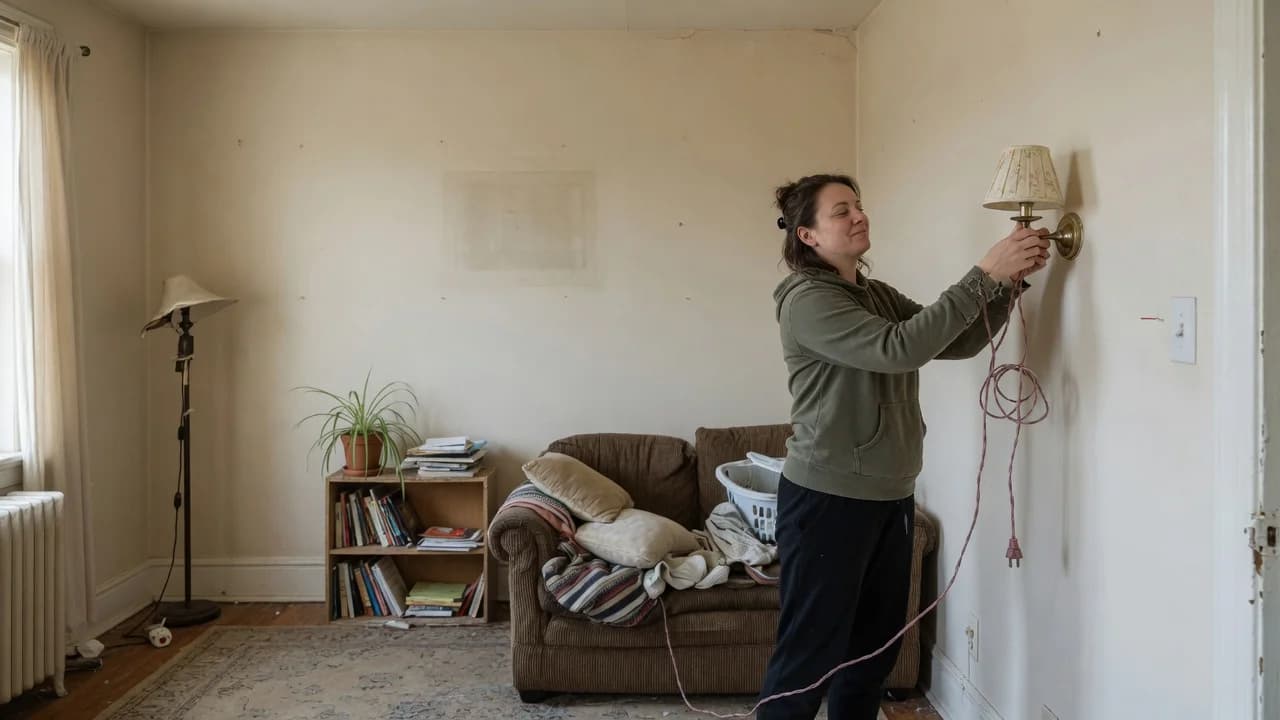
A plug-in sconce is a wall-mounted light fixture with a cord that runs to a standard wall outlet. The fixture attaches to the wall with two small screws (the holes are thumbtack-sized and spackle in seconds), and the cord drops from the backplate to the nearest outlet. You plug it in, flip the switch, and it works exactly like any lamp. No electrician. No permit. No lease violation.
A battery-operated sconce uses either disposable cells (AA or AAA) or a built-in rechargeable lithium-ion pack, typically charged via USB-C. It mounts with adhesive strips, a magnetic backplate, or small screws. There is no cord at all. You charge it when the light dims, which is anywhere from twice a week to once every two months depending on the model and your usage.
This article is not about which sconce looks better. Styling preferences will not settle this decision, and chasing the prettiest fixture before you've mapped your outlets is the fastest way to waste money. The realistic alternative to both sconce types is the floor lamp you probably already own, which costs nothing new but claims three square feet of floor space in a rental where every inch counts. The difference between these two sconce technologies sounds trivial on paper. In practice, it determines whether you'll still be using the light six months from now or whether it'll sit dead on the wall while you reach for the overhead switch you hate.
Side-by-Side: What the Specs Actually Mean
Here is the head-to-head comparison, stripped of marketing language.
| Factor | Battery Sconce | Plug-In Sconce |
|---|---|---|
| Brightness (lumens) | 80 to 250 lm typical | 400 to 800 lm typical |
| Installation | Adhesive or magnetic. Under 5 min. Zero wall damage. | 2 small screws plus cord route. 20 to 30 min. Spackle at move-out. |
| Outlet required | None | Within cord length (6 to 15 ft typical) |
| Ongoing cost | Battery replacement or electricity for recharging (roughly $5 to $15/yr disposables) | Electricity only (under $2/yr) |
| Light quality | Softer; good for ambient and accent | Stronger; handles task and reading |
| Maintenance cadence | Charge every 4 to 30 days (rechargeable) or replace AAs every 2 to 8 weeks | None |
| Rental deposit risk | Near zero (adhesive removal may pull paint on older walls) | Low (two screw holes, easily patched) |
The lumen spread is where the real fork in the road sits. Data from side-by-side product testing shows battery sconces clustering between 80 and 250 lumens while plug-in models routinely deliver 400 to 800 lumens.[2] A battery sconce at 150 lumens gives you roughly what a 15-watt incandescent bulb produces: enough for a hallway or a soft bedroom glow. It is not enough to read by. A plug-in sconce at 600 lumens provides actual task light, the kind you'd want above a chair or beside a bed where you read for an hour before sleep.
This isn't a lighting decision. It's a wall-to-outlet matching puzzle with a deposit on the line. Once you accept that framing, the choice gets simpler.
When the Outlet Map Decides for You
Before you compare lumens or browse finishes, walk your apartment with a measuring tape. Note every wall where you'd want a sconce and measure the distance to the nearest outlet along the most sensible cord path. (Not as-the-crow-flies; cords don't travel through air.)
If that distance exceeds 12 feet on any wall, a plug-in sconce becomes impractical unless you're willing to run an extension cord, which looks terrible and violates most lease agreements' prohibitions on daisy-chained cabling. That wall belongs to a battery sconce by default. So the outlet map decides.
The inverse holds too. If the outlet sits within 8 feet and you need reading-quality light, a plug-in sconce wins. The cord is short enough to conceal cleanly, and you'll never touch a charger.
The hard case is the middle zone: 8 to 12 feet from an outlet, where a plug-in cord can reach but only with a visible diagonal line across the wall. That's where cord management stops being cosmetic and becomes the deciding factor. And most guides never mention this.
Cord Management Isn't Cosmetic
The most common mistake renters make with plug-in sconces is treating the cord as an afterthought. A beautiful brass fixture with a cheap white cord dangling diagonally across a painted wall reads as unfinished. It's the lighting equivalent of leaving the tag on a shirt.
The fix costs under $15 and takes half an hour.[3] Adhesive cord raceways (available at any Home Depot or Lowe's) come in white, beige, and black. You route the cord straight down from the backplate to the baseboard, then horizontally along the baseboard to the outlet, secured inside the channel. Paint the raceway to match your wall and it disappears. Guests will assume the sconce is hardwired.
For fabric-wrapped cords in linen, braided black, or aged brass, leaving the cord deliberately visible can work. But it only works if you style it: pin the cord along a bookcase edge, coil it on a shelf, or route it behind a piece of furniture. A loose cord is never the aesthetic. A deliberately placed cord can be.
Battery sconces skip this problem entirely. No cord, no raceway, no styling. That's their single largest advantage, and for renters with only one or two accessible outlets per room, it's decisive.
The Battery Budget Nobody Accounts For
Rechargeable battery sconces look like the obvious winner on paper: no cord, no outlet hunt, no deposit risk. And for accent lighting in hallways or above bookshelves, they genuinely are.
Put more precisely: the convenience of a battery sconce is only as durable as your tolerance for charging it. A model advertising "up to 30 hours" typically delivers 6 to 10 hours at full brightness. If you use it three hours an evening at max output, you're charging it twice a week. After month two, most people stop charging regularly. The sconce becomes wall decor.
That's the mechanism most reviews skip. Battery sconces fail not because the technology is bad but because the maintenance cadence exceeds what most people will actually sustain. And most people won't. The counterfactual is worth staring at: you buy a $60 battery sconce, use it enthusiastically for six weeks, miss one charge cycle, then another, and by month four you're back to the overhead light you hated. The plug-in alternative, for all its cord hassle, would still be working.
Disposable-battery models are worse. At two hours of daily use and 200 lumens, a set of three AA batteries lasts roughly two to four weeks. Over a year, that's $30 to $60 in batteries for a single sconce. A USB-C rechargeable model pays for itself against disposables within the first year.
Battery Sconce Reality Check
- Full-brightness runtime: 6 to 10 hours typical, not the "30 hours" on the box
- Recharge cadence with daily use: roughly 2x per week at full output
- Disposable AA cost per year: $30 to $60 per sconce
- Abandonment risk: high after 2 to 3 months if charging isn't routine
- Best use: accent and ambient only; not primary task light
If reliably charging a light fixture twice a week sounds like something you'll do for years, battery sconces work beautifully. If that description fits most people you know, treat battery sconces as accent lights only and put your reading nook on a plug-in.
Tonight, walk your apartment and map every outlet against every wall where you'd place a sconce. That fifteen-minute exercise answers more than any guide can.
This week, buy one sconce for your highest-priority wall: plug-in if the outlet sits within 10 feet and you need task light; battery if it doesn't and you're lighting a hallway or accent zone. Install it. Live with it for a month before buying more.
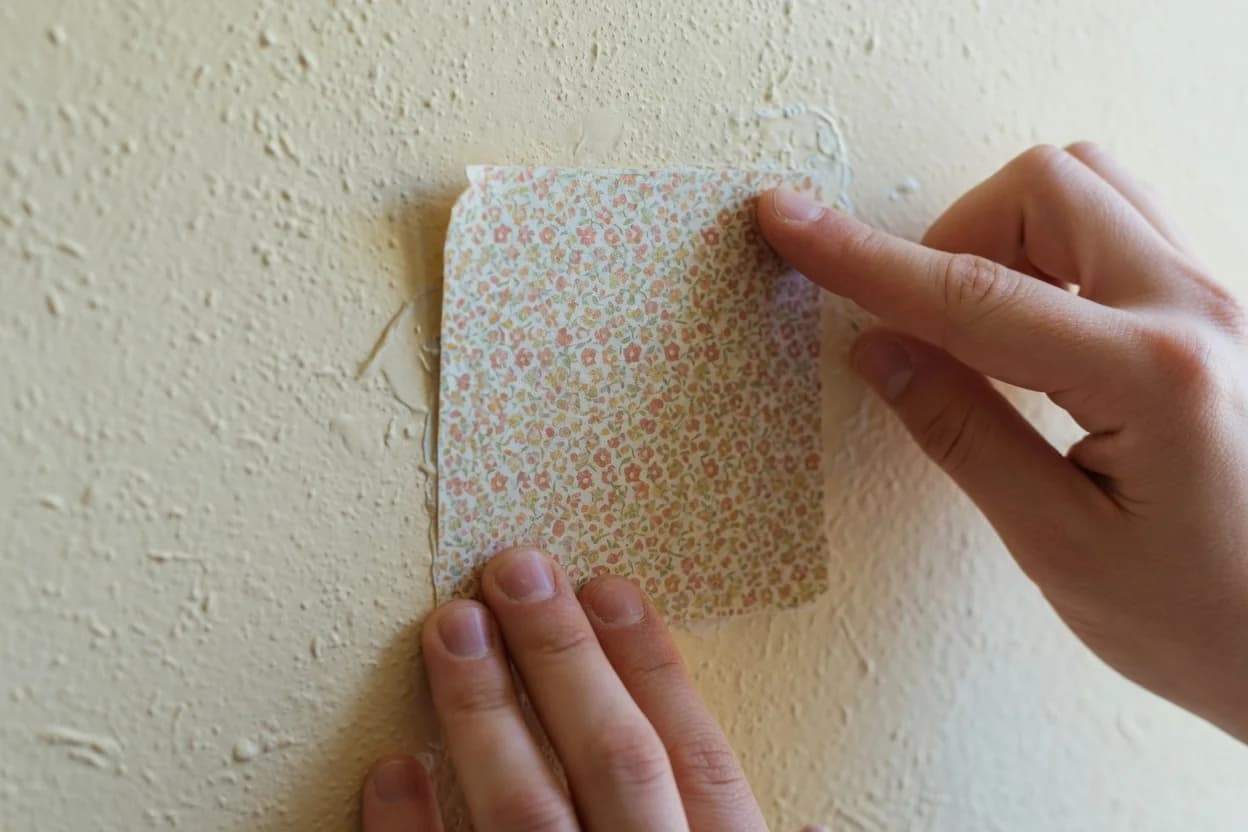
Before your lease ends, remove adhesive mounts with a hair dryer (heat loosens the bond without peeling paint) and fill any screw holes with a $3 spackle stick. Photograph the wall. That's your deposit protection.
No single sconce type wins everywhere. The wall you're standing in front of determines the answer, and now you know how to read what it's telling you.