Standard advice says every living room needs a ceiling fixture first. In a rental with no overhead wiring, that advice means nothing. Set aside the wiring problem for a moment. A single ceiling light is the least interesting way to light a room, and once you understand why, you'll stop wishing for one.
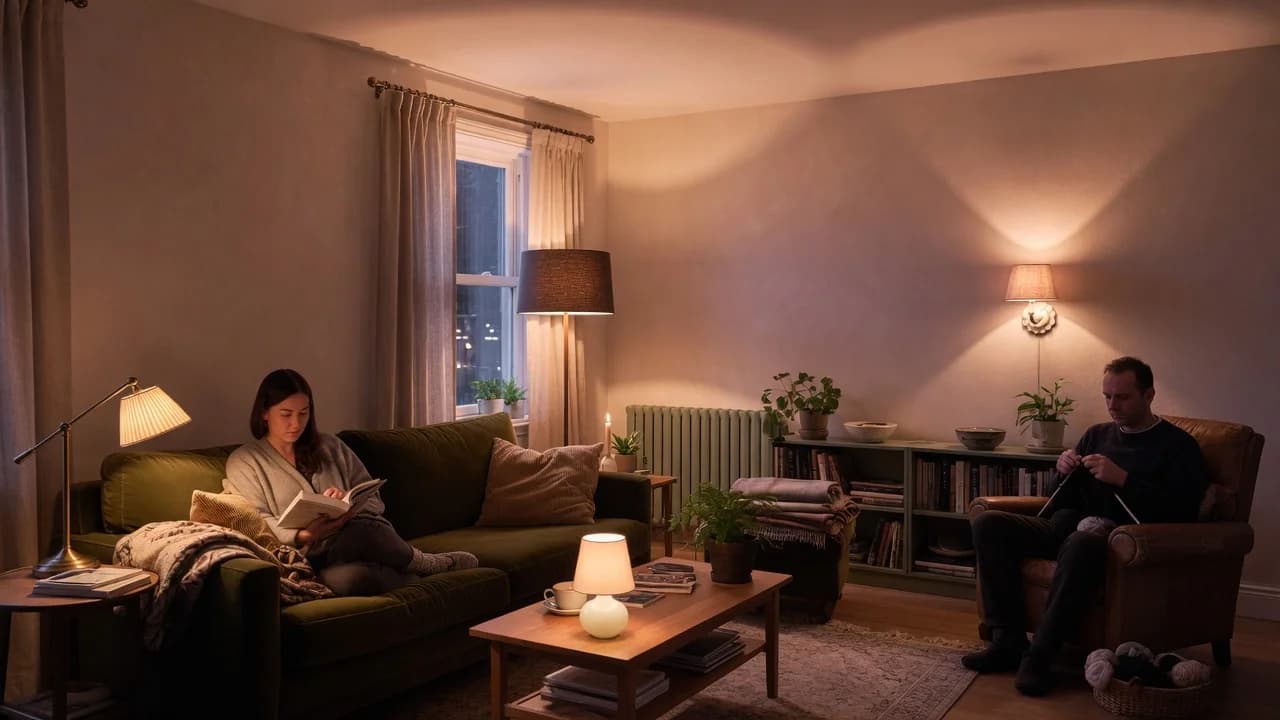
A lone overhead fixture throws light from one direction: straight down. It flattens faces, makes shadows harsh, and turns every corner into a dim cave. Interior designers avoid this by layering: they use three distinct types of light at different heights, and none of them require a junction box in the ceiling. The gap most rental lighting advice misses is this. Layered lighting doesn't just compensate for absent ceiling fixtures. Done right, it makes a room look better than a ceiling light ever could.
You need ambient light that fills the whole space, task light that makes reading and working comfortable, and accent light that gives the room depth after dark. All three layers are achievable with plug-in hardware you can pack up and take to your next apartment. The only thing you're losing is a phone call to the landlord.
Overhead Light Is Overrated Anyway
Here is what nobody tells you when you move into a rental with no ceiling lights. You didn't lose a lighting layer. You lost the least useful one. Overhead fixtures provide ambient light, yes. But they deliver it from the worst possible position: directly above, casting shadows downward onto faces and furniture. That is why a room lit only by recessed cans or a single flush-mount feels institutional. Good lighting comes from multiple directions.
The Department of Energy defines three functional lighting categories: ambient for general illumination, task for specific activities, and accent for drawing attention to features.[1] What the DOE doesn't say, but every designer practices, is that ambient light doesn't need to come from the ceiling. A pair of torchière floor lamps bouncing light off the ceiling and walls produces softer, more even ambient coverage than most overhead fixtures. The room feels brighter because the light is diffused before it reaches your eyes.
And here is the part that flips the whole conversation. Once you stop treating the missing ceiling fixture as a deficit, you realize every other option gives you more control. You can move a floor lamp. You can adjust a plug-in sconce. You can dim an LED strip from your phone. A hardwired ceiling fixture gives you exactly one position and one switch, and you are stuck with both.
The Three Layers, Translated for Renters
Layered lighting is a formal design technique codified by the Illuminating Engineering Society in its residential lighting standard, ANSI/IES RP-11-20.[2] The standard organizes light into ambient, task, and accent roles. Each role gets its own fixtures at different heights, so no single source carries the whole visual load. For a rental living room with no ceiling wiring, the translation is straightforward. You replace overhead ambient with floor-level and wall-level sources, then add task and accent layers exactly as you would in any other room.
Here is the quick-reference breakdown:
Three layers for a no-ceiling-fixture rental living room:
- Ambient: 2 torchière floor lamps (opposite corners) or 1 plug-in pendant hung from a ceiling hook. Target: 1,500 to 3,000 total lumens at 2,700K to 3,000K CCT.
- Task: 2 to 3 directional sources at seating areas. Floor lamp with articulated arm behind the sofa, table lamp on a side table, plug-in swing-arm sconce by a reading chair.
- Accent: 1 to 2 low-output sources highlighting a feature. Battery-operated picture light over art, adhesive LED strip under a shelf or behind a console, plug-in up-down sconce on a feature wall.
These are functional categories, not product picks. Every item in them plugs into a standard wall outlet. The ambient layer does the heavy lifting. Task and accent are what make the room feel finished rather than merely functional. And most renters stop at ambient, then wonder why the room still looks flat.
The IES residential standard recommends 10 to 20 footcandles for living room general lighting, which translates to roughly 1,500 to 3,000 lumens for a 150-square-foot room depending on wall color and fixture placement.[2] Two 1,500-lumen torchière lamps in opposite corners hit that range comfortably and produce softer shadows than any single overhead fixture can manage.
Getting Ambient Light to Fill the Room
Ambient light is the layer most renters try to solve with a single bright floor lamp next to the sofa. That creates a hot spot, not ambient coverage. The goal is even light that lets you move through the room without dark zones.
Torchière floor lamps are the workhorse here. They fire light upward, where it hits the ceiling and walls and bounces back down diffused. A 2,000-lumen torchière placed in one corner can light most of a small living room. Add a second in the opposite corner and the room fills evenly. If your space is under 150 square feet, one may be enough. Between 150 and 250 square feet, you want two. Above 250 square feet, you need a third source: either another torchière or a plug-in pendant hung from a ceiling hook.
You don't need a ceiling fixture. You need light at three different heights, and every height can be powered by a standard outlet.
That ceiling hook is worth a moment. A lightweight plug-in pendant with a fabric cord and a simple shade, hung from a small screw hook in the ceiling, gives you something no floor lamp can: light that starts high and spreads down. At move-out, you remove the hook, fill the pinhole with spackle (the $4 tub from any hardware store), and your deposit is intact. If even a pinhole makes you nervous, use a tension rod across the room near the ceiling and hang a plug-in pendant from that instead.
Dimmers matter as much as placement. A torchière on full blast at 9 PM feels like a waiting room. The same lamp dimmed to 40 percent feels like a living room. Buy torchières with built-in dimmers or add a plug-in dimmer switch between the lamp and the wall outlet. That single addition, roughly $12 to $20, changes the room more than switching lamp styles ever will.
Task Lighting: Light Where Your Eyes Need It
Here is the pattern I see over and over. Someone moves into a rental with no ceiling lights, buys two floor lamps, turns them on, and the room is brighter but still feels wrong. The missing piece is task light. Ambient light alone is functional in the way a waiting room is functional. Add task light and the room starts to feel like someone planned it.
Task lighting puts focused light where your eyes need it. The armchair where you read needs a directional source: a floor lamp with an articulated arm, or a plug-in swing-arm sconce mounted on the wall behind the chair at about 60 inches from the floor. The side table next to the sofa needs a table lamp at roughly seated eye level. These are not decorative decisions. The Department of Energy recommends 30 to 50 footcandles for reading and close work.[3] Your ambient layer is giving you 10 to 20 fc. Task lamps close the gap.
A quick rule: every seat in the room gets its own task source. If three people can sit down, you need three task lights. They don't all need to be on at once. But when someone wants to read, they shouldn't have to rearrange the room to get light on the page. I'd start with the seat you use most and add task lights outward from there.
Accent Lighting: The Layer That Makes It Look Expensive
Accent lighting is the layer that makes a room feel like it cost more than it did. It highlights one or two features: a piece of art, a textured wall, a bookshelf, the space behind the TV. The simplest renter-safe options are battery-operated picture lights (adhesive mount, no screws, $25 to $40) and adhesive LED strip lights run behind a console table or along the underside of a shelf. Keep accent sources dimmer than your ambient and task layers. If accent light outshines the room, it stops being accent and becomes glare.
Watch out for cord management here. Plug-in sconces and LED strips both trail wires. Painter's tape is not a long-term solution. Use adhesive cord channels, the kind you can paint to match the wall and peel off clean at move-out, or route cords behind furniture. A visible cord dangling from a well-placed sconce undercuts the whole effect.
The better question is not "how many lights can I add" but "which two surfaces in this room deserve attention after dark." Pick those two. Light them. Stop.
When Layering Makes Things Worse
Layering has real limits, and ignoring them produces a cluttered room with hot spots and tangled cords. The most common failure happens in small rooms. Under roughly 100 square feet, three full layers create visual noise. Three light sources competing in a tight space makes the room feel busy, not designed. In a studio or micro-apartment living area, stick to two layers: one ambient source and one task source. You can add accent when you have more square footage.
The second failure is outlet poverty. Some older rentals have one duplex outlet per wall, and half the receptacles end up behind the sofa. If you're running extension cords across doorways to power a third lamp, layering has crossed into hazard territory. The right move in that situation is a single bright, dimmable torchière plus a rechargeable table lamp for task light. These exist now with USB-C charging and 8 to 12 hours of battery life. It's not the ideal three-layer setup. It's better than tripping over a cord every evening.
A quick gut check before you buy anything:
- Is the room under 100 square feet? Skip accent. Ambient plus task is enough.
- Do you have fewer than three accessible outlets in the room? Skip the third ambient source. Use a rechargeable task lamp.
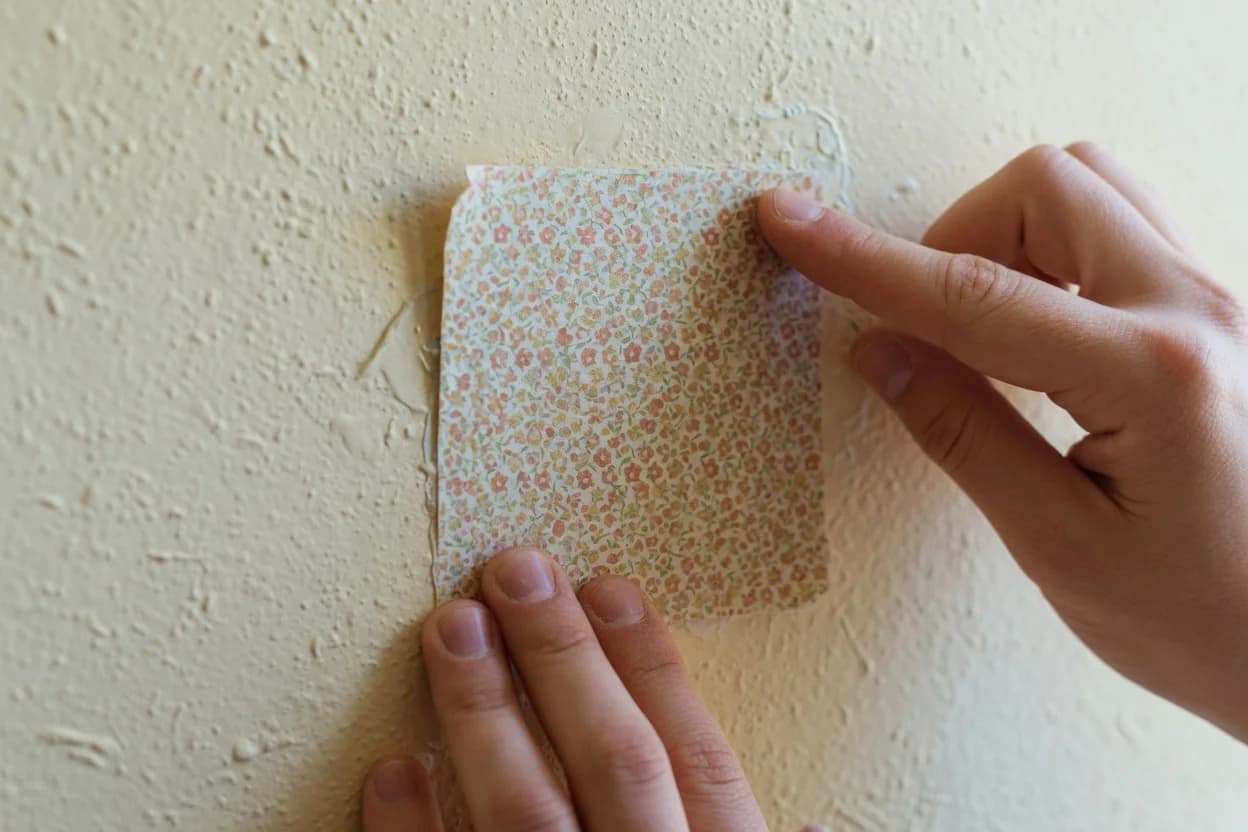
- Are your walls textured with a heavy knockdown finish? Adhesive LED strips and stick-on sconces may fail. Test a small piece of mounting tape first.
- Does the room get strong direct sun during the day? Position lamps so they fill the walls the sun abandons first, not the walls already getting blasted at 4 PM.
And ignore anyone who tells you that more lamps always equals better light. Three well-placed sources in the right positions outperform six scattered fixtures every time. If you're on lamp number five and the room still doesn't feel right, the problem isn't how many you have. It's where they're pointed.
Start with two dimmable torchière floor lamps in opposite corners. Those two lamps alone, dimmed to the right level, will change how the room feels more than any other single purchase you make for that space. Add task light at every seat: an adjustable floor lamp by the reading chair, a table lamp on the side table, a plug-in sconce above the sofa. Finish with one accent source and stop. Three layers. Four to six fixtures total. All plug-in. Nothing in the ceiling.