Since LEDs took over the light bulb aisle around 2015, the simple act of buying a bulb got weird. You're not just grabbing a 60-watt anymore. You're staring at a wall of numbers. 2700K. 800 lumens. CRI 90. And if you rent, there's an extra problem: the ceiling fixture you can't change came with a bulb the color of a hospital corridor.
The cozy glow you want for your living room isn't hard to get. But it does depend on three things most packaging won't tell you in plain English: color temperature, how your rental's fixed lighting limits your options, and a number called CRI that matters more than Kelvin for how your space actually feels.
Most renters I talk to say the same thing: they bought a warm bulb, screwed it in, and the room still felt off. That's because the overhead fixture is working against you. A single ceiling light, even with the right bulb, can't make a room feel warm by itself.
What the Numbers on the Box Actually Mean
LED packaging throws three numbers at you. Only two of them matter for the cozy-living-room question.
Kelvin (K) is color temperature. Lower number equals warmer, yellower light. 2700K looks like the old incandescent bulbs you grew up with. 3000K is still warm but a touch whiter, a little cleaner. 4000K and above goes cool and blue-white. The EPA's ENERGY STAR program defines 2700K to 3000K as "Soft White" and "Warm White" — the range for living spaces where you want to relax.[1]
Lumens measure brightness. A standard 60-watt-equivalent LED puts out about 800 lumens. For a 150-square-foot living room, you want somewhere between 1,500 and 3,000 total lumens spread across multiple light sources, not blasted from one ceiling fixture.
Then there's CRI, the Color Rendering Index. This is the number most people skip, and it's the one that explains why two 2700K bulbs can look completely different in the same lamp. CRI measures how accurately the bulb renders color compared to natural sunlight, on a scale of 0 to 100. Below 80, your couch fabric and wall paint start looking slightly wrong in ways that are hard to name. For a living room, aim for CRI 90 or above. Cree Lighting and Philips both build CRI 90 into their residential bulbs as a standard spec.[2]
Or rather: CRI is what makes warm light feel warm instead of just yellow. A low-CRI 2700K bulb casts a sickly amber that flattens everything. A high-CRI 2700K bulb makes the room glow. The Kelvin number sets the mood. The CRI number makes it believable.
Why Renting Changes the Lighting Rules
If you own your place, you swap the ceiling fixture to something that takes three bulbs and call it done. If you rent, that fixture is staying put. And the landlord probably put a 4000K bulb in it because cool white looks "clean" in listing photos.
The bulb temperature isn't your real problem. It's that you're using one light source when you need at least three.
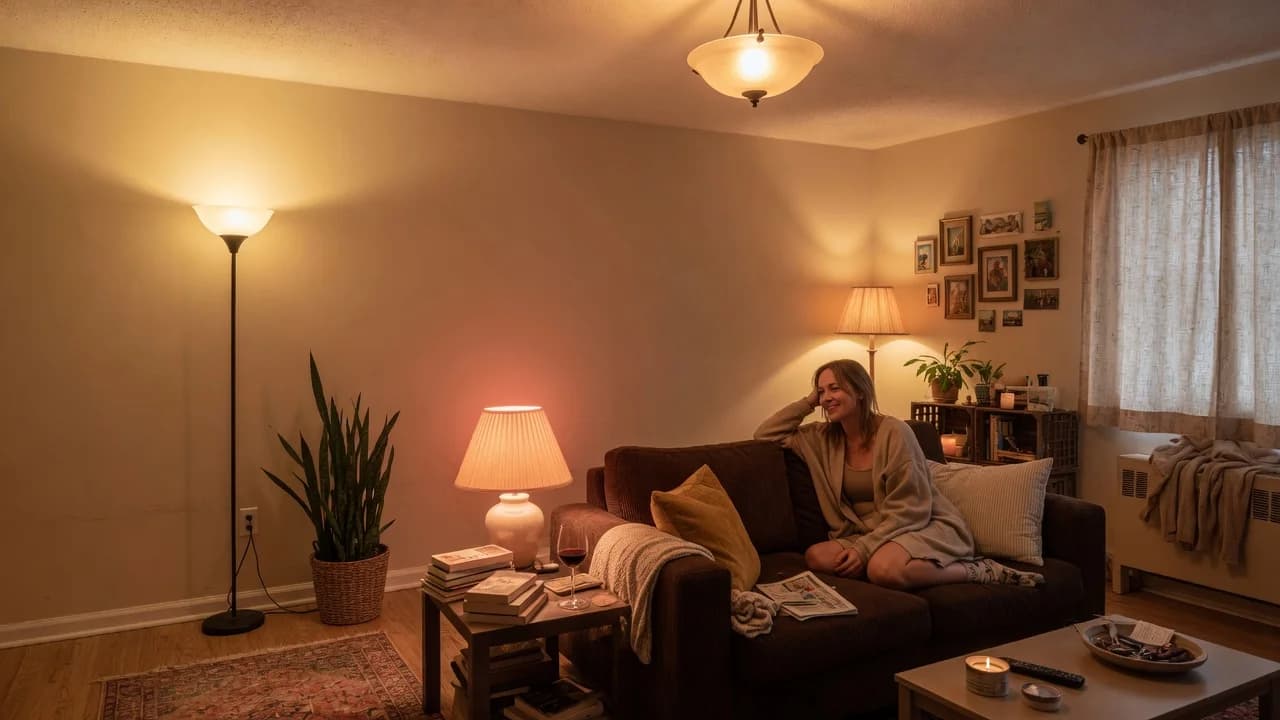
Interior designers call this layering. You need ambient light (the general glow that fills the room), task light (focused brightness for reading or working), and accent light (small sources that highlight corners or art). One overhead fixture can't do all three. In a rental, your overhead fixture is ambient light by default, and it's probably placed dead center where it casts the worst shadows.
The fix costs less than you'd think. A plug-in floor lamp in the corner, a table lamp next to the sofa, and the right bulb in the existing ceiling fixture give you three distinct light sources. Total cost: under $60 if you shop smart. No hardwiring, no lease violation, no security deposit drama. Put the landlord's original bulbs in a drawer and swap them back when you move out.[3]
Warm vs Cool: Which One Goes Where
For the living room, the answer is straightforward: 2700K to 3000K for every bulb in the room. Don't mix temperatures. A 2700K floor lamp next to a 4000K ceiling light creates what designers call lighting dissonance — the room feels unsettled and you won't know why.
Here's how the two warm options compare in a real living room:
| What You're Evaluating | 2700K (Soft White) | 3000K (Warm White) |
|---|---|---|
| Closest old-school match | Standard incandescent bulb | Halogen |
| Best for | Evening lounging, TV watching, ambient lamps | Reading corners, multi-use spaces, daytime use |
| Skin tone rendering | Very flattering, golden warmth | Flattering, slightly more neutral |
| Works with cool wall colors | Can make grays and blues look muddy | Better with grays, blues, and whites |
| Feels too dim? | At 800 lumens, no — but pair with task lamps | Perceptually brighter at same lumen output |
| Typical price per bulb | $2.50 to $5 (ENERGY STAR certified) | $3 to $6 |
| CRI recommendation | 90+ | 90+ |
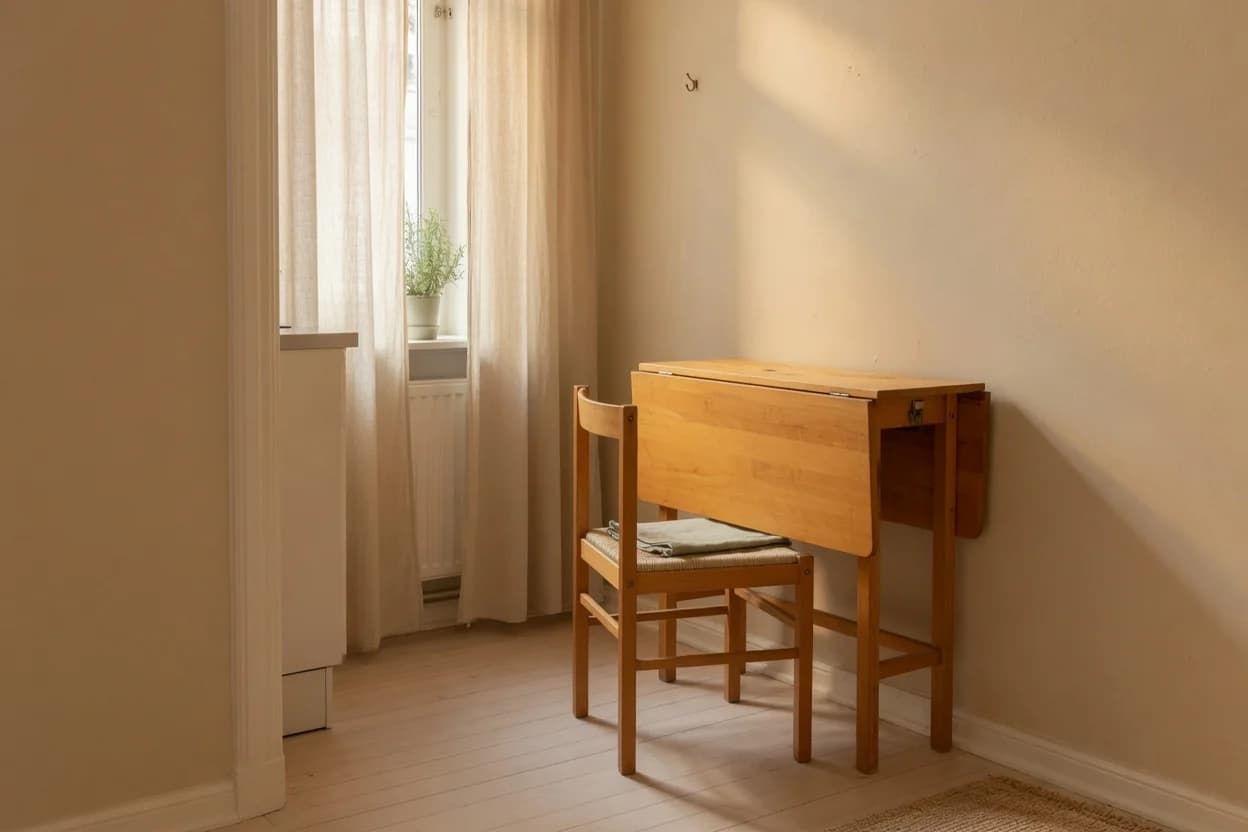
If your walls are warm-toned — beige, cream, terracotta, wood trim — 2700K makes those colors richer. If your rental has gray walls or white everything, 3000K keeps the space from feeling dingy while staying warm.
I'd start with 2700K in the floor and table lamps, then try 3000K in the ceiling fixture if the room gets used during the day. The ceiling light at 3000K gives you a more versatile baseline that still reads as warm.
When Warm Light Falls Short
A living room that's only warm light can feel flat and sleepy by 3 PM. This is the downside nobody mentions when they tell you to buy 2700K for everything.
If your living room doubles as a workspace, or if you have dark walls that soak up light, sticking exclusively to 2700K can make the room feel dim even with enough lumens. The fix isn't switching to cool white. It's adding one task light with a 3000K or 3500K bulb — positioned where you read or work, not overhead — and putting it on a separate switch or smart plug so you only use it when you need clarity.
Another edge case: rooms with zero natural light. A windowless living area lit only by 2700K lamps can start to feel like a basement bar. A single 3000K bulb in a torchiere floor lamp aimed at the ceiling lifts the whole room without killing the cozy vibe.
The wrong move here is swapping your ambient bulbs to 4000K. That gives you brightness at the cost of warmth, and your living room starts looking like a break room. Add targeted clarity. Don't trade away the glow.
If your living room is mostly for evenings, movies, and unwinding, put 2700K bulbs in every socket — ceiling, floor lamp, table lamp, all of them — with CRI 90 or higher. Keep all bulbs within 300K of each other. If your space pulls double duty as a daytime workspace, use 3000K in the ceiling fixture and 2700K in the lamps, and add a dedicated task light at 3000K to 3500K that you can turn off when work ends.
If you're not sure, buy two bulbs at different temperatures, try them in the same lamp at 8 PM when you're actually using the room, and return the one that feels wrong. The box can't tell you what your walls and your eyes will agree on.
Do nothing, and you're stuck with whatever the landlord installed — typically the cheapest 4000K bulb that fits. That light will keep your living room feeling temporary, like a waiting room you're just passing through. A $15 set of warm bulbs changes that tonight.