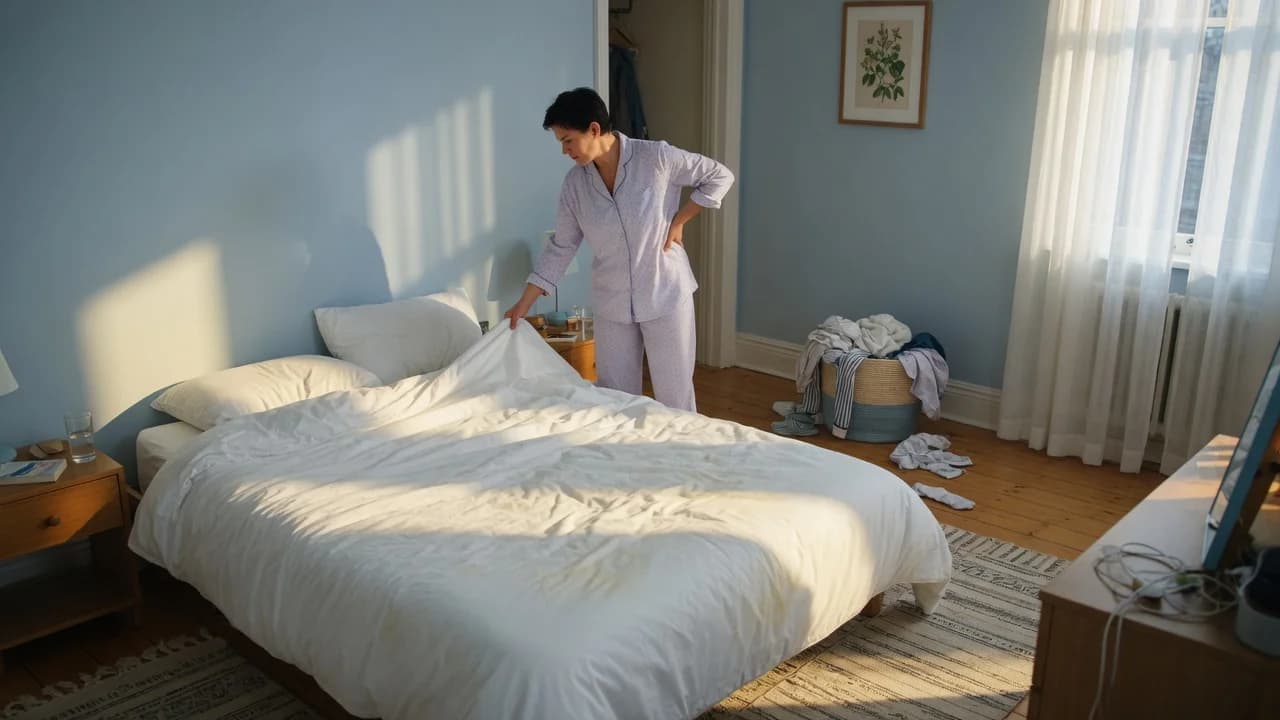
Since 2020, the number of American households that eat dinner in bed, navigate potty-training phases, and own a dog convinced the duvet is personal napping territory has quietly reshaped what matters in a bedding purchase. White hotel bedding and colored duvet covers look like an aesthetic choice. They aren't.
This article isn't about thread count, folding techniques, or which brand makes the softest percale. It assumes you already know a stain is coming and you want the bedding strategy that handles it with the least grief. The variables that control the outcome aren't the ones most articles lead with. Thread count doesn't matter here. Neither does whether the duvet cover has corner ties. What does matter: your home's wash temperature ceiling, how fast you can get a stained cover into the laundry, and which bleach chemistry your fabric can tolerate without degrading.
Hotels make white bedding look effortless, and the internet is full of articles telling you to copy them. Their laundry rooms operate at 60°C to 75°C (140°F to 167°F), using oxygen bleach as a maintenance tool and inspecting every sheet under bright light before it touches a bed.[1] Your washer, fed by a water heater typically set between 120°F and 140°F, operates in a different league entirely. That gap is the reason a white duvet cover that stays pristine at a hotel turns dingy and yellowed in your home within months.
Detect-and-Treat vs. Conceal-and-Extend
The first thing to understand is that you aren't choosing between white and colored fabric. You're choosing how you'll discover stains and what you'll do about them. White bedding forces detection. Every drop of coffee, smear of makeup, and midnight nosebleed announces itself immediately. That visibility is either your best quality-control tool or your biggest frustration, depending on what happens next.
Colored and patterned duvet covers take the opposite approach. They buy you time. A navy cover hides the hot chocolate spill from Tuesday until Saturday's laundry day. A busy floral print camouflages the spot where your kid wiped a jam-covered hand. The trade-off is straightforward: you trade immediate awareness for scheduling flexibility. The risk is that you'll sleep under soiled bedding for weeks without realizing it. Open your duvet cover right now and look at the inside fabric near the top edge. If you haven't washed it in three weeks and you have kids or pets, what you find might change your mind about which strategy you actually need.
The mechanism that makes this choice consequential is bleach chemistry. There are two kinds of laundry bleach, and they do fundamentally different things. Chlorine bleach (sodium hypochlorite) whitens, disinfects, and destroys color. It also degrades polyester fibers over time and reacts with protein stains in ways that can yellow fabric rather than whiten it.[2] Oxygen bleach (sodium percarbonate, sold in the US under brands like OxiClean) is color-safe, works on all washable fabrics, and maintains existing whiteness rather than restoring lost brightness.[2] The American Cleaning Institute puts it plainly: oxygen bleaches work best in maintaining whiteness, not in restoring it.[2]
That understates it. The practical difference is that oxygen bleach prevents dinginess when used regularly in warm-to-hot water, but it won't rescue a duvet cover that's already turned gray. Chlorine bleach will strip the gray but at the cost of weakening the fabric and, on polyester-cotton blends, often producing a yellowish cast that gets worse with each cycle. Neither option matches what a commercial laundry can do at 75°C with industrial dosing systems and high-G centrifugal extraction. And that's the point. White isn't cleaner. It just tells you sooner.
What Hotels Get Right That Home Laundry Can't Match
Hotels use white bedding for reasons that are operational, not decorative. Housekeeping staff can spot a stain that didn't wash out before the sheet goes back on a bed.[3] White linens can be washed at temperatures that would destroy colored fabric, and they tolerate the full range of commercial laundry chemistry, including periodic bleaching for deep sanitation.[3] A hotel with hundreds of beds also benefits from interchangeability: every king sheet matches every other king sheet, no color-lot matching required.
But here's what the copy-the-hotels advice skips. Hotels replace their duvet covers every two to three years under normal commercial laundering conditions, and sheets every 12 to 24 months. At home, you might wash your duvet cover every two to four weeks. That's 13 to 26 cycles per year compared to 150 to 200 cycles in a commercial setting. By wash-cycle math alone, a home duvet cover should last 6 to 12 years. The fact that most home duvet covers don't reach year five tells you something: chemical damage from the wrong bleach and low-temperature washing is doing more harm than mechanical wear. If you ignore the bleach distinction and pour whatever's under the sink into every white load, you'll watch your duvet cover yellow and thin within a year, no matter how carefully you treat individual stains.
This is where the downside of white bedding becomes unavoidable. White works when you can treat stains within hours. Blood, a protein-based stain, begins bonding to cotton fibers immediately. Heat sets it permanently; cold water and enzyme cleaners can remove it even after drying, but success drops with every hour that passes.[4] If someone in your house gets a nosebleed at 3 AM and you don't discover it until after work the next day, that white duvet cover now has a project attached to it. For households where bedding changes happen on a weekend schedule rather than an as-needed basis, white bedding converts every accident into a stain-treatment emergency. That's not a cleaning system. That's a second job.
When Colored and Patterned Covers Win
If the previous section made you tired just reading it, colored or patterned duvet covers are probably your answer. They don't solve stains. They defer the problem until a time you've actually scheduled to deal with it. For a household with two working parents, young kids, and a laundry routine that happens when it happens, that deferral has real value.
But not all colored bedding is equal. Solid dark colors like navy, charcoal, and chocolate brown hide stains effectively, but they reveal every speck of lint, pet hair, and dust. A solid black duvet cover in a home with a golden retriever looks dirty within 24 hours for reasons that have nothing to do with stains. Light solids like blush, sage, and sky blue hide lint better but show oil-based stains from skin and hair products as dark patches that get larger with every week of use.
The comparison below lays out the practical differences across the three main approaches.
| Factor | White Duvet Cover | Solid Colored Cover | Patterned/Printed Cover |
|---|---|---|---|
| Stain visibility | Immediate | Delayed (varies by color) | Camouflaged |
| Bleach options | Oxygen and chlorine (with risks) | Oxygen only | Oxygen only |
| Lint and pet hair visibility | Low | High on darks, moderate on lights | Low (pattern disrupts contrast) |
| Wash temperature ceiling | High (fabric permitting) | Moderate (colorfastness limits) | Moderate |
| Stain-treatment urgency | Hours | Days | Days to a week |
| Replacement signal | Yellowing, gray cast | Fading, oil-darkened patches | Pattern wear, fading |
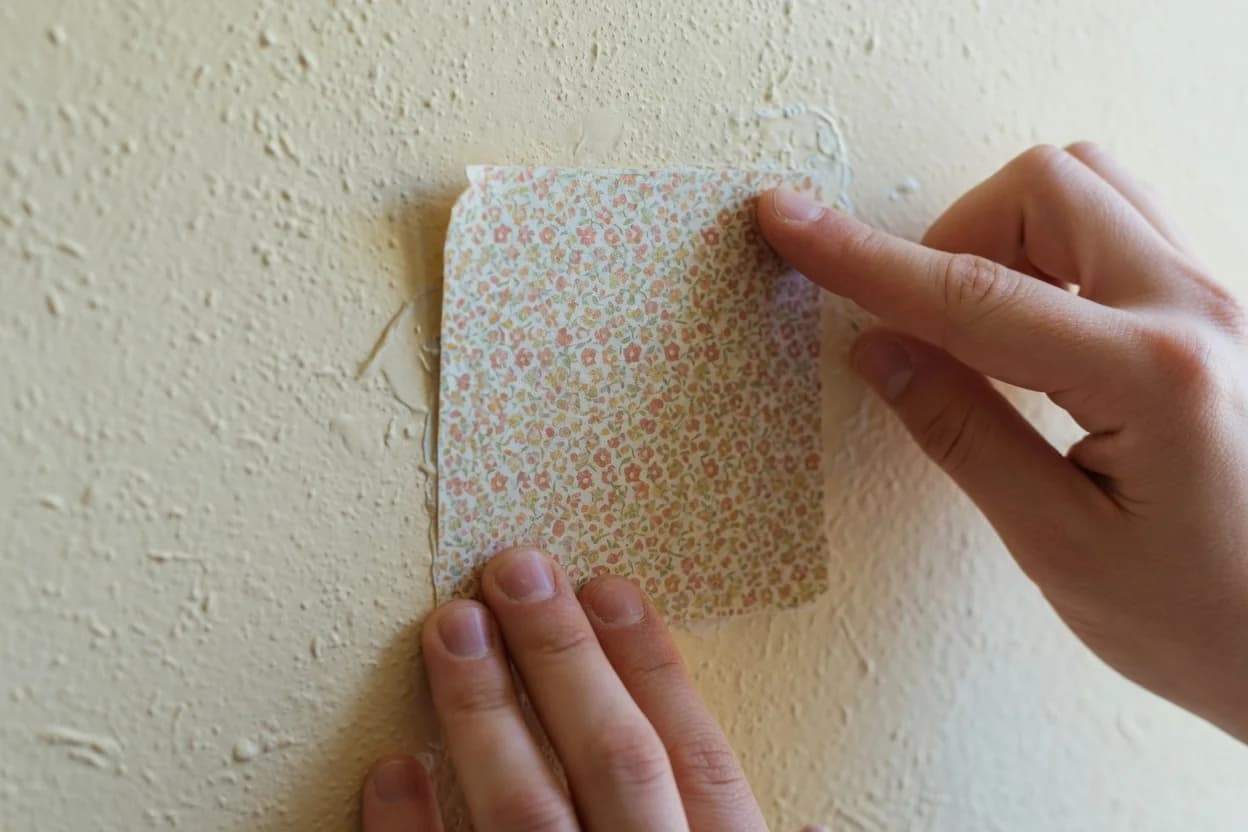
Patterned covers occupy a sweet spot that most guides miss. A medium-density print (tone-on-tone damask, small-scale geometric, or botanical with varied color values) hides both stains and lint. You still can't use chlorine bleach, but oxygen bleach in warm water maintains the fabric without stripping the pattern. And because the print breaks up the visual field, a small residual stain that didn't fully wash out reads as part of the design, not a flaw. But it won't rescue you forever. After 18 to 24 months of regular washing, even the best pattern fades enough that replacement becomes the better option.
The Option Most Articles Overlook
You're not choosing a color. You're choosing your stain-management system. Once you accept that framing, the most practical setup for a stain-prone household isn't a single duvet cover at all. It's two covers in rotation and a strategy that matches your actual laundry rhythm, not the one you wish you had.
Decision checklist for stain-prone households:
Can you treat a stain within 12 hours of it happening? If yes, white is viable. If no, go patterned or colored.
Is your water heater set to at least 120°F and does your washer have a heavy-duty or sanitize cycle? If no, white will gradually lose brightness even with oxygen bleach.
Do you own a pet that sheds? If yes, avoid solid dark colors unless you're willing to lint-roll weekly. Patterned covers in medium tones handle both stains and fur.
Are you willing to keep two duvet covers and swap them while one is being treated? If yes, you can make any option work. If no, patterned is the lowest-maintenance path.
I'd point most stain-prone households toward a patterned cotton or cotton-blend duvet cover as the primary set, with a white cover as the backup. The patterned cover handles day-to-day life. The white cover goes on when you want the hotel look for guests or when you're between pet-shedding seasons. That two-cover rotation costs more upfront but eliminates the binary choice that makes this decision feel harder than it is.
If you can get a stained duvet cover into the wash within 12 hours and your water heater delivers at least 120°F, white bedding with a regular oxygen bleach routine will stay bright and give you complete visibility into what needs cleaning. If your laundry schedule runs on weekends and stains sometimes sit for days, choose a patterned duvet cover in a medium-density print. If you're unsure, buy one of each and treat the white cover as your accountability tool: if it stays clean for a month, reward yourself by keeping it on. If it doesn't, you'll know exactly why the patterned option exists.
The hotel industry didn't choose white because it's the most stain-proof color. They chose it because they have industrial laundry infrastructure that makes stain detection and removal a same-day process. Your home isn't a hotel. Matching your bedding to your actual laundry capabilities, not the ones you see in lobby photos, is the difference between bedding that looks clean and bedding that actually is.