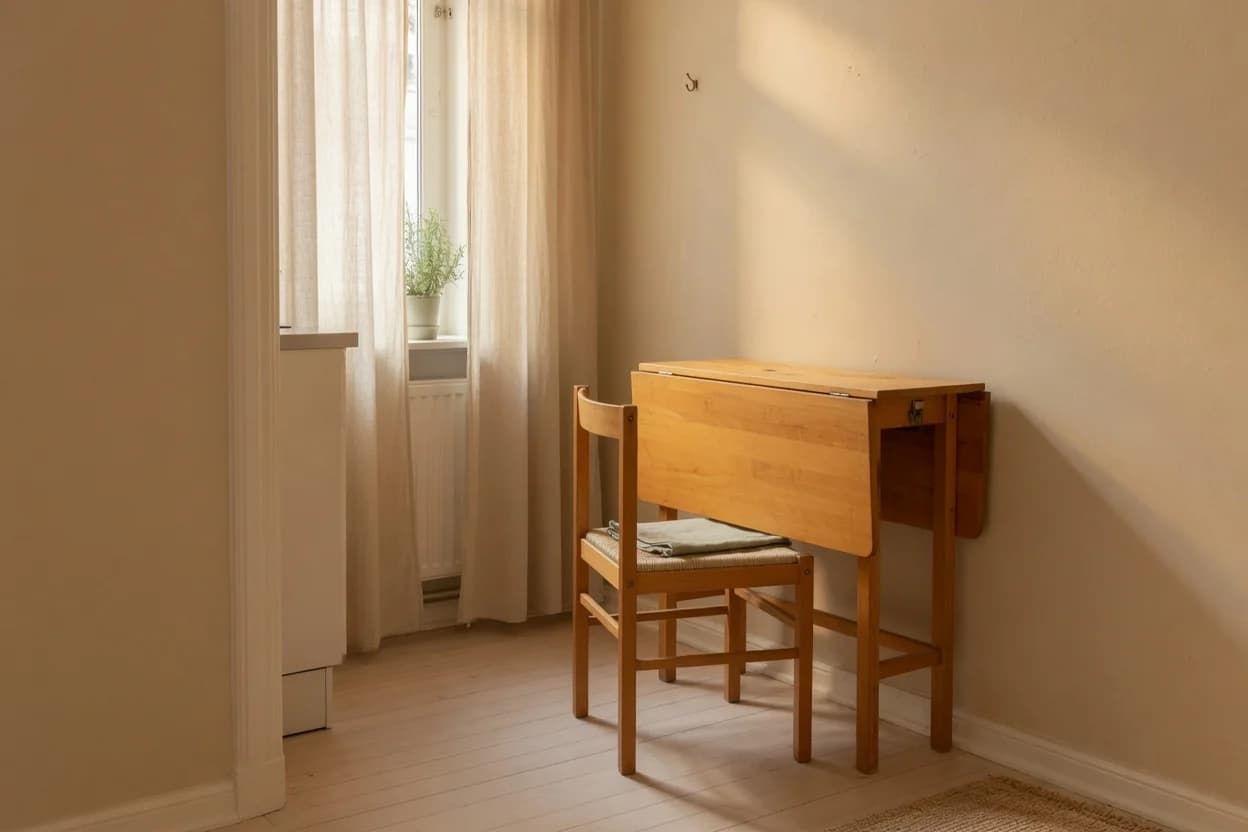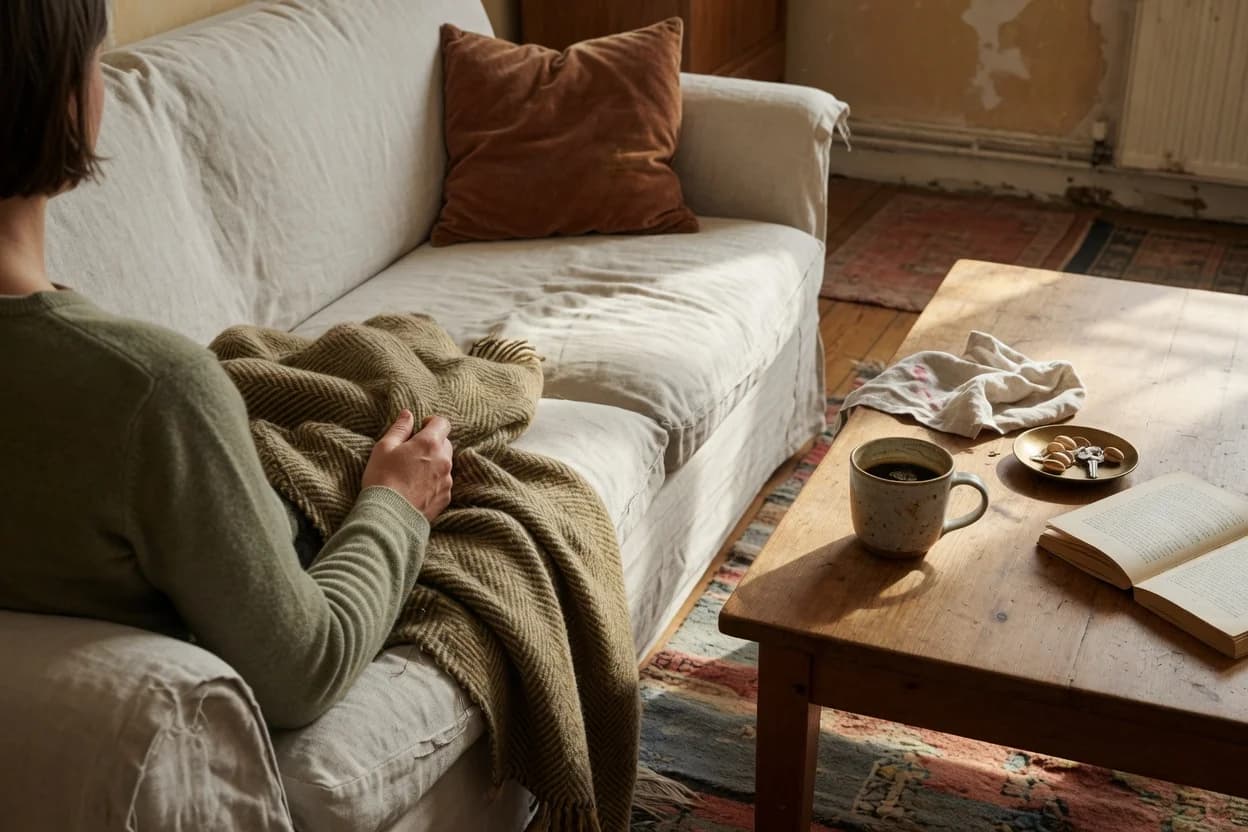
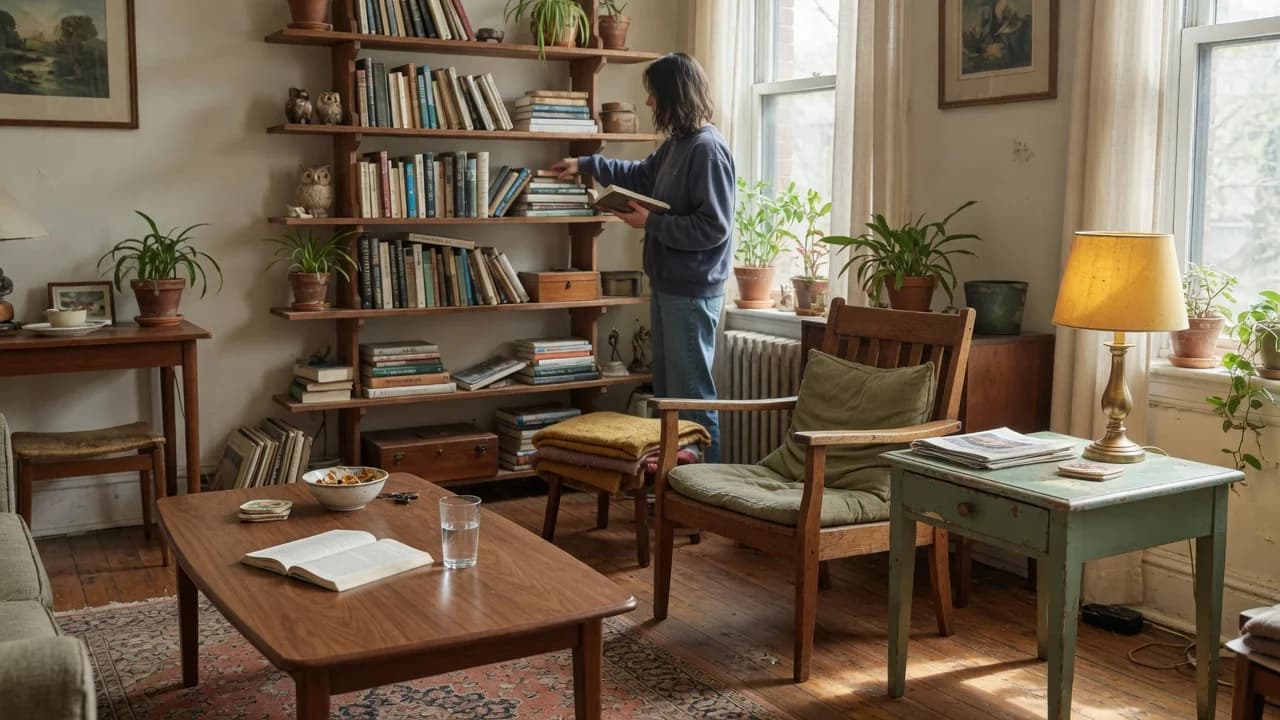
The average thrifted wood coffee table in the U.S. runs $25 to $85 depending on where you shop. The price tag is the easy part. The hard part is what happens when you get it home and nothing works together. You've got a walnut end table from an estate sale, a pine bookshelf from Goodwill, and oak-legged chairs from Facebook Marketplace, and the room feels like a furniture showroom after an earthquake.
Most advice about mixing wood tones assumes you're buying new and can pick matching pieces. That falls apart when your furniture arrives one estate sale at a time. You don't choose what's available. You choose from what you find.
The real tension isn't between light wood and dark wood. It's between warm and cool undertones, and most thrifters don't know the difference until their living room looks wrong and they can't say why. The fix isn't buying more furniture. It's learning to see what you already have.
The Real Problem Isn't the Color
Your wood pieces don't need to match. They need to share a temperature. That's the rule most thrifters learn too late. This isn't about matching stain colors. A stain-matching chart won't fix what's actually wrong.
Every piece of wood furniture carries an undertone: warm (red, orange, yellow, amber) or cool (gray, ash, blue-brown). Oak and cherry lean warm. Ash and gray-stained maple lean cool. Walnut sits somewhere in the middle, which is why it shows up in every design magazine. Sunset Magazine quotes designer Sarah Akbary: "If all the woods are within the same undertone family, you have a lot more flexibility and the space will feel cohesive instead of busy."[1]
Warm woods play nice with other warm woods, even when the stain colors differ dramatically. A honey oak floor next to a dark mahogany side table works because both carry red-orange undertones. The same floor next to a gray-washed ash piece fights your eye. That clash is what makes a room feel unsettled, not the difference in lightness or darkness.
The Spruce asked designers the same question. Designer Susan Jamieson put it plainly: "Keeping wood elements within the same temperature family adds depth and distinction while still feeling cohesive: warm with warm, cool with cool."[2] That's the entire game. Get the temperature right and you can mix light, medium, and dark woods without the room feeling chaotic.
Most people test this wrong. They hold two pieces next to each other and ask, "Do these match?" The better question is "Do these share an undertone?" Put both pieces on a white sheet of paper in natural daylight. If one throws yellow and the other throws gray, they'll fight no matter how carefully you arrange them.
Pick Your Anchor, Then Build Around It
Every cohesive room with mixed wood tones has a dominant piece. It's usually the biggest thing in the room: the floor, a large bookcase, the coffee table. That piece sets the undertone for everything else.
Wood Tone Quick Check
Warm undertones: red, orange, yellow, amber. Common thrift finds: oak, cherry, pine, mahogany. Cool undertones: gray, ash, blue-brown. Common: ash, maple, gray-stained oak. Walnut bridges both families and works almost anywhere. Max three wood tones per room. Anchor piece sets the temperature.
Designer Christine Vroom recommends letting one wood tone lead. "I focus on undertones more than light or dark," she told Sunset. "Woods can lean warm, cool, yellow, or red, and that is where clashes usually happen. I also like one wood tone to lead, with others playing a supporting role."[1]
If your anchor is warm (say, honey oak floors you can't change), all your thrifted additions should carry warm undertones. That doesn't mean everything has to be oak. A walnut coffee table, a cherry side table, and pine shelving all work together because they share warmth. Vary the darkness for contrast. A room where every piece matches in both species and stain reads flat, like a hotel lobby nobody wants to sit in.
Limit yourself to three wood tones total. Apartment Therapy calls this the "rule of threes": a base tone, a contrast tone, and an accent. More than three and the room turns into visual noise.[3] This matters especially for thrifters, because the temptation is to grab every beautiful piece you find. Discipline at the thrift store is harder than arranging furniture at home. But that's the work.
You could skip all of this and buy a matching furniture set. That runs $1,500 and up, and the room will look like a catalog page. Some people want that. Most thrifters don't, and that's why you're here.
When the Pieces You Own Just Won't Cooperate
Here's where the undertone rule hits a wall. You might have a piece you love that simply has the wrong temperature for your room. A gray-washed dresser in a warm-oak living room. A cherry-red side table in a cool-toned space. The undertone rule says don't mix these. But you already own them.
Three things actually work when undertones clash. First, paint. A coat of paint on a single piece pulls it out of the wood-tone conversation entirely and makes it a color statement instead. Black paint on wood legs or an entire side table works in almost any room because black functions as a neutral bridge between warm and cool. Second, hardware. Swapping brass knobs for matte black pulls, or vice versa, shifts how the wood reads against the rest of the room. Third, rugs. A large rug with both warm and cool tones in its pattern can mediate between competing wood undertones because the eye reads the rug as the dominant visual anchor, not the wood beneath it.
If you've got a piece that's close but not quite right, the "near miss" problem, designer Raili Clasen explained to Sunset: "When wood tones are too similar but not quite right, that's when things feel off. Mix woods that are clearly different: light with dark, refined with a little character, because it reads more collected and intentional."[1] The near miss is worse than a deliberate clash. If your two pieces are almost the same stain but not quite, make one significantly darker or introduce paint.
The Living Room Test
Thrifted furniture creates a specific problem that new furniture doesn't. According to OfferUp's 2025 Recommerce Report, 54% of secondhand buyers in the U.S. shop used specifically because they want unique, vintage pieces.[4] Those pieces come from different decades, different manufacturers, different finishing standards. A 1970s pine end table and a 2010s maple bookshelf were never designed to coexist. That's the point. And that's also the challenge.
Arrange your room with the undertone rule in mind, then step back and look at it through squinted eyes. Blurring your vision removes detail and leaves only color temperature. If the undertones are consistent, the room will read as calm even with three different wood species. If one piece jumps out as the wrong temperature, that's your problem piece. Move it, paint it, or swap it out.
Place wood pieces so they don't touch directly. A dark walnut coffee table sitting directly on a dark wood floor disappears. Put a light rug between them and both pieces stand out. The rug acts as a visual separator that lets each wood tone read independently. This is the single highest-impact move for under $100, and it works even when undertones aren't perfect.
Ignore undertones and you'll keep bringing home pieces you love individually but can't stand together. The room never settles, and you won't know why. Don't chase perfection. A room where everything matches in wood tone feels sterile. A room where two or three warm woods coexist with deliberate contrast feels like someone lives there who has taste and a budget. The second room is the one people remember.
Start today: pull every wood piece in your living room onto a white sheet and sort them by undertone. Warm pile, cool pile. If you've got pieces in both, pick the pile with the biggest or most permanent piece and commit to that temperature.
Same day: remove the one piece that fights hardest with your chosen undertone. Move it to another room or list it on Marketplace. Even one wrong-temperature piece can throw the whole room, and removing it costs nothing.
This month: add one bridge element. A rug with colors that span both warm and cool, a piece of painted furniture, or new hardware in a consistent finish across multiple pieces. The goal isn't a catalog living room. It's a room where your thrifted finds look like they belong together, even though they arrived years apart. And that's enough.