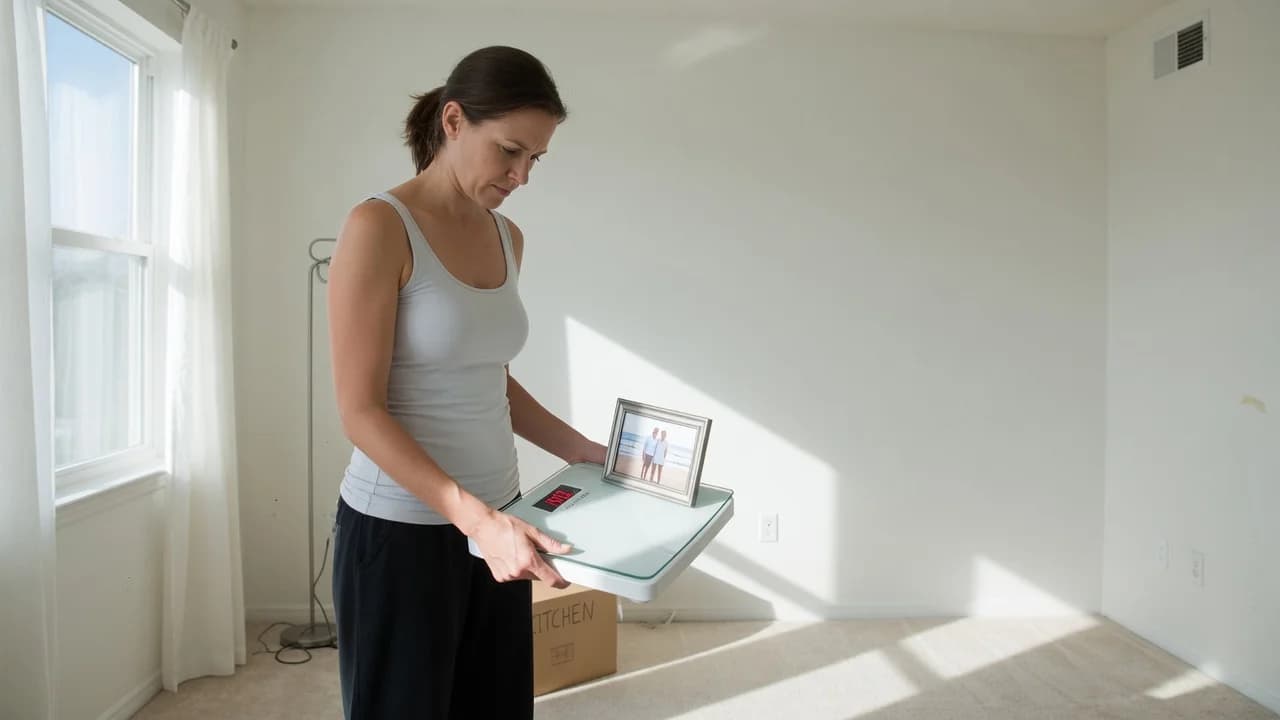
A framed 16×20 photograph with glass weighs 4 to 8 pounds. Most renters guess half that.
The difference between what a frame weighs and what it feels like it weighs is the gap where adhesive strips fail. Command's largest Picture Hanging Strips are rated for 4 pounds per pair. The box says four pairs hold 15 pounds, and that number is doing a lot of reassuring work on the shelf.
It depends on three things most guides skip: the actual weight of your frame on a bathroom scale, the paint on your rental walls, and whether the strip is loaded in shear or peel. Get any of these wrong and the rating on the package means nothing.
What the Package Says (vs. What You Assume)
The Large Picture Hanging Strip, product number 17206, carries two numbers. The first: 4 pounds per pair. That's the limit for any two strips if you read the fine print rather than the front of the box.[1] The second: 15 pounds with four pairs. That's the number on the shelf-facing label.
Most people register the second number and skip the first. But here's the thing: four pairs don't share weight equally. If one pair carries 5 pounds because the frame is slightly bottom-heavy or the strips weren't pressed perfectly flat, that pair exceeds its 4-pound limit. Once one pair fails, the load transfers instantly to the remaining three. They fail in a cascade.
The X-Large Picture Hanging Strips bump the per-pair rating to 5 pounds and the four-pair maximum to 20 pounds. That helps. It doesn't help as much as you'd hope once you factor in what frames actually weigh.
3M's own instructions carry warnings worth reading slowly. The company says: do not hang valuable or irreplaceable items, do not hang anything over beds, and wait a full 7 days after painting before applying strips.[2] These are not legal disclaimers. They're engineering admissions. Adhesive bonds are probabilistic, not guaranteed.
This article isn't about whether Command strips work at all. They do, within their limits. The question is whether your specific frame falls inside those limits.
How Heavy Is "Heavy"?
Grab the bathroom scale. Here's the math most articles skip.
A typical 11×14 frame with standard glass and a midweight wood molding weighs roughly 2 to 4 pounds. A 16×20 with the same materials: 4 to 8 pounds. Step up to 20×30 with solid wood and glass, a common size for a statement piece, and you're holding 8 to 14 pounds. A 24×36 poster frame with glass can land anywhere from 10 to 20 pounds.[3]
Notice what just happened. A 16×20 frame already brushes against the 4-pound per-pair rating if you use just two pairs. You need four pairs, and the frame has to stay under 15 pounds to meet the spec. Most 16×20 solid-wood frames with glass clear that. A 20×30? You're on thin ice.
And weight climbs fast when you didn't pick the frame. That gallery-wrapped canvas from the art fair: light, probably under 3 pounds. That ornate solid-oak frame with museum glass your mother-in-law gave you: 12 to 18 pounds, easily. If you haven't weighed it, you're guessing. Guessing with glass suspended over your floor.
A 20×30 solid-wood frame with standard glass sits around 10 to 14 pounds. That puts it inside the 15-pound four-pair rating on paper but with zero margin for uneven loading, textured walls, or humidity swings.
The table below lays out where common frame sizes land against adhesive strip ratings.
| Frame Size | Typical Weight (wood + glass) | Large Strips Needed | Safe with Adhesive? |
|---|---|---|---|
| 11×14 | 1.5–4 lbs | 2 pairs | Yes |
| 16×20 | 4–8 lbs | 4 pairs | Marginal |
| 20×30 | 8–14 lbs | 4 pairs of XL | Risky |
| 24×36 | 10–20 lbs | 4 pairs of XL | No |
If your frame lands in the Marginal or Risky column, keep reading. Every additional variable works against you.
The question isn't whether strips can hold weight. It's whether your wall can hold the strip. And that depends on paint quality, texture, and preparation, which the next two sections address.
Why Strips Fail Even Within the Weight Limit
Command strips hold weight through shear loading: the force pulls downward, parallel to the wall. The adhesive is strongest in this direction. Peel loading, where force pulls outward away from the wall, is dramatically weaker. That's why a strip that holds a frame flat against the wall for years will release in seconds if you pull the bottom of the frame outward.
And here's the thing about those shear strength numbers: they come from pristine surfaces under controlled conditions. Or rather: those ratings assume a perfectly clean, smooth surface free of dust, oil, and moisture. Your rental wall has been painted three times since 2009. The top coat is flat builder-grade paint. There's probably a thin film of cooking oil and settled dust from the previous tenant.
Here's the failure chain that takes down most frames. The strip bonds to the outermost layer of paint, not to the drywall beneath. Over weeks or months, the combination of weight, slight humidity shifts, and the frame's own expansion and contraction gradually peels that paint layer from the surface below it. You don't see it happening because the strip hides the failure. Then one night the paint gives way and the whole thing drops.
Temperature matters too. Command strips are rated for indoor use between 50°F and 105°F.[2] If your apartment's exterior wall drops below 50°F in winter, the adhesive stiffens and loses tack. If direct afternoon sun hits the frame and heats the strip above 105°F, the adhesive softens. Both conditions eat into the bond.
Consumer Reports tested multiple brands including Command, Gorilla, and Scotch. Their conclusion was blunt: none of the tested strips should be used to mount shelves or heavy items, and even when an item fell within the claimed weight limit, failure occurred if the item was too large. A picture frame is the only thing they'd recommend mounting with these products.[4] Not shelves. Not heavy mirrors. Not anything your landlord would notice when it falls.
The Wall You're Sticking To
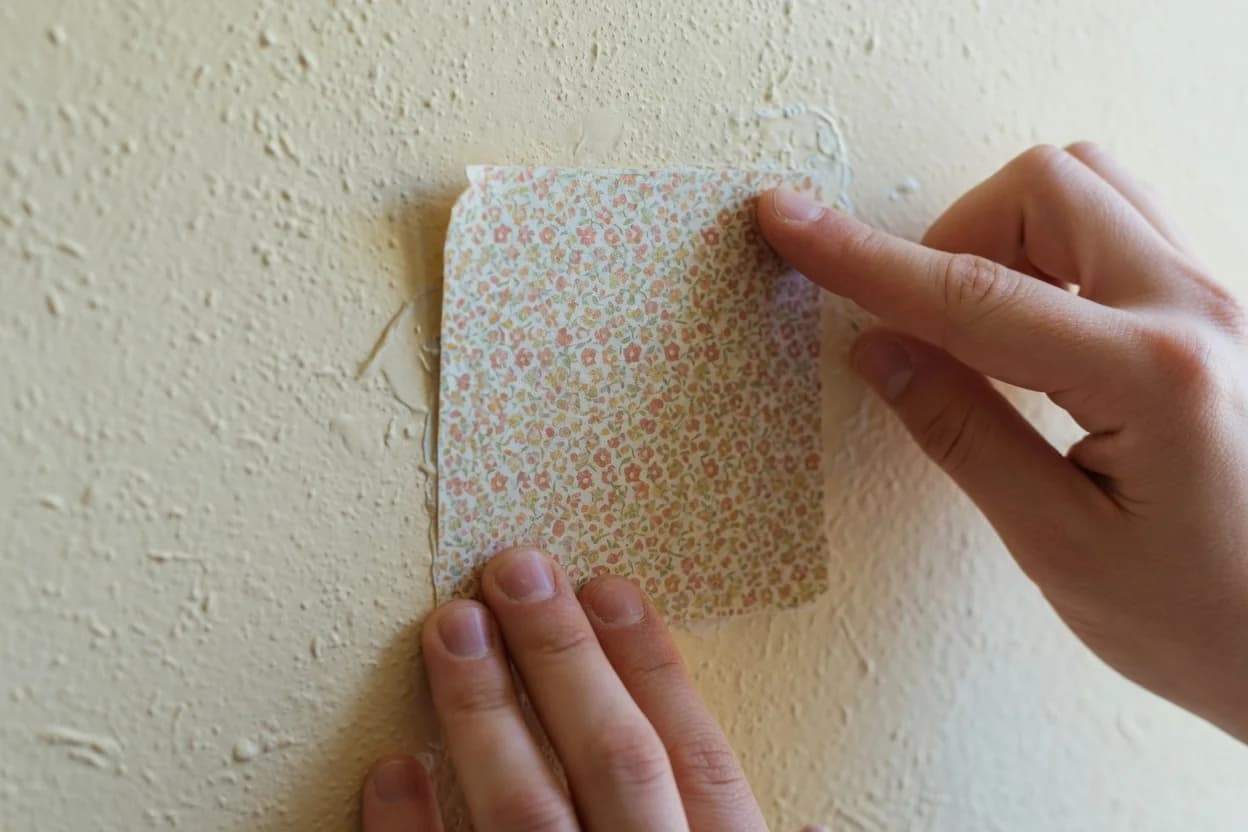
If your rental has textured walls, orange peel, knockdown, anything that isn't glass-smooth, adhesive strips are compromised before you start. Texture reduces contact area between the adhesive and the wall. Less contact means less bond strength. A strip on knockdown texture might hold 50% or less of its rated weight. No package rating accounts for this.
Flat paint, the cheap stuff landlords use between tenants, is the other quiet problem. Flat paint has a chalky, porous finish. The adhesive bonds to it by filling microscopic pores, but flat paint's own bond to the primer underneath is weak. When you pull the strip to remove it, or when gravity pulls on it for months, the paint can separate from the wall before the adhesive separates from the paint. You end up with a strip in your hand and bare drywall where your frame used to be.
Fresh paint needs at least 7 days to cure before any adhesive touches it. Most rental turnover paint happens the day before you move in. Nobody tells you that.
Humidity is a long-term threat, too. Bathrooms, kitchens, and any wall adjacent to a shower accumulate enough ambient moisture to weaken adhesive bonds over 12 to 18 months.
What happens if you ignore all of this and hang heavy art with strips anyway? The worst case is not just a broken frame. It's a frame falling on someone, or shattering glass at 2 a.m., or pulling a chunk of drywall paper that costs more to repair than a dozen nail holes. 3M put those warnings on the package because the engineering team knew the product has boundaries. The boundary is closer than the marketing suggests.
When Strips Are the Right Call
Small frames under 3 pounds on smooth, well-cured paint: go ahead. I'd start with Large strips and always use four pairs, even if the math says you could get away with two. Overkill is cheap compared to broken glass.
Canvas prints without glass are the sweet spot for adhesive strips. They're lightweight, there's no glass to shatter, and the canvas texture often gives slightly better adhesion on the frame side. A 24×36 canvas print usually weighs under 5 pounds, well within range for four Large strip pairs.
Here's the non-negotiable checklist:
Weigh the frame on a scale. Not estimating. Not "it feels light." A number.
Clean the wall with 70% isopropyl alcohol. Let the surface dry completely. Household cleaners leave residue that repels adhesive. Skip this and the rating doesn't apply.
Press each strip firmly for 30 full seconds. Count it out. The adhesive needs that time to flow into the wall's microscopic pores.
Wait at least 1 hour before hanging the frame. Bond strength builds over time. Immediate loading is the most common cause of early failure that nobody connects back to impatience.
Remove by pulling the tab straight down, parallel to the wall. Never pull outward. Never rip it off like a bandage. Outward force is the mechanism that takes paint and drywall paper with it.
What to Use When Strips Won't Cut It
If your frame weighs more than 8 pounds, or has glass, or an irregular back surface, or you're hanging it in a hallway where people brush past it, you need a mechanical solution. The rental-friendly middle ground is Monkey Hooks or Gorilla Hooks. These are curved steel wires that push through drywall by hand. No drill, no stud finder. They curve upward behind the wall and hold up to 50 pounds. The hole they leave is smaller than a standard picture nail.
Property managers routinely classify pinholes that size as normal wear and tear. That means they legally cannot deduct from your deposit for them in most states.[5] One property management guide puts it explicitly: a microscopic pinhole is significantly preferable to a patch of ripped paint from a failed heavy-duty adhesive.[5]
For frames above 20 pounds or anything with substantial glass, find a stud or use toggle bolts. Yes, that leaves a bigger hole. But a properly patched screw hole costs about $5 in spackle and 10 minutes of work. A shattered frame with broken glass is permanent. The cost comparison doesn't favor adhesive strips.
What's the alternative to making this call correctly? Your frame falls. It breaks or damages what's below it. You lose at minimum the cost of the frame and at worst a chunk of your security deposit repairing wall damage that adhesive removal caused. Compared to a $5 drywall patch that takes ten minutes, that's not a close trade.
Weigh the frame on a scale. If it's under 5 pounds, your walls are smooth and properly cured, and you clean them with isopropyl alcohol before applying, use four pairs of Large Command strips. Wait the full hour before hanging. Remove by pulling straight down, never outward.
If the frame is over 5 pounds, or your walls are textured, or the paint is flat and cheap, or the frame contains glass above a bed or walkway, use Monkey Hooks or a stud-mounted anchor. The hole you leave will be smaller than the damage a failed strip leaves.
3M put 'do not hang valuable items' on their own packaging for a reason. Take the hint.