A contractor walking through your rental unit will spot the wall texture before noticing your decor. That texture, not your lease clause, determines whether your gallery wall ends in a damage charge or a full deposit return.
Here's the uncomfortable fact: the lease says no holes, but small nail holes from picture hanging count as normal wear and tear in every US state under prevailing landlord-tenant law.[1] What actually costs you money at move-out is damage beyond ordinary use. A strip of adhesive that rips off a chunk of drywall face paper does not qualify as routine deterioration. The deposit hit for a single torn drywall patch typically runs $50 to $150 depending on your market.
This flips the standard assumption. Small nail holes are legally safer than failed adhesive in most rental situations. The lease clause is a compliance rule. The wall surface is a physics problem. And the surface is what dictates whether you get your deposit back.
The real question isn't how to avoid nails. It's what is your wall made of, what do your frames weigh, and which fastener releases cleanly at move-out. Answer those three in order, and you'll hang a gallery wall that costs you exactly zero dollars when the lease ends.
The Tool-Wall Match
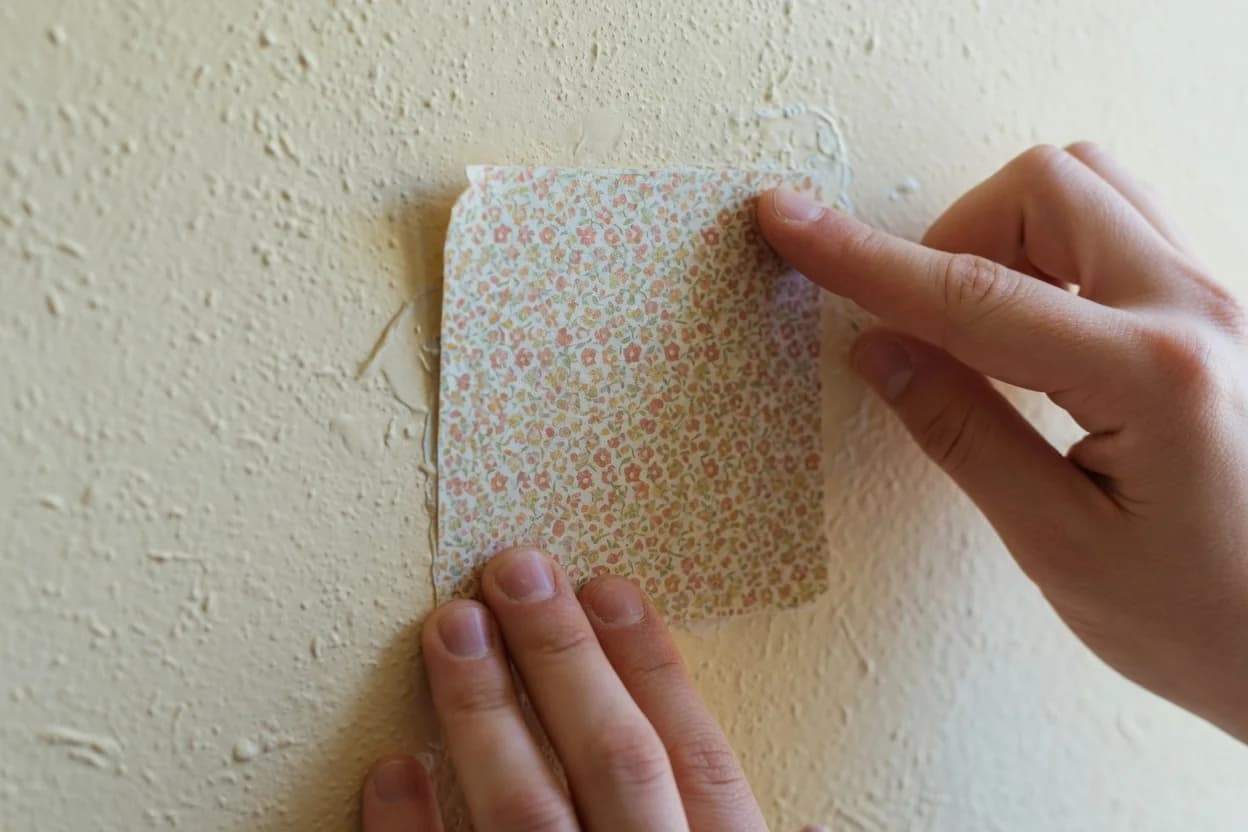
A smooth painted drywall surface opens every option on the shelf. A textured wall eliminates most of them before you even open the package.
The four fastener categories worth your time come down to weight capacity and surface compatibility. The table sorts them by what your wall can actually support.
| Method | Max Weight | Wall Surface | Deposit Risk |
|---|---|---|---|
| Command Large Strips (4 pairs) | 16 lb | Smooth painted drywall only | Low if removed correctly |
| 3M CLAW Drywall Hanger | 15–65 lb | Drywall, any texture | Very low (pinpoint holes) |
| Gorilla Heavy Duty Tape | ~30 lb | Smooth; permanent bond | High (can tear drywall) |
| Small picture nails (1/8 in. or less) | 5–10 lb each | Any surface | Near zero (ordinary wear) |
Command Large Picture Hanging Strips hold 16 pounds when you use four pairs, with a maximum frame size of 24 by 36 inches.[2] 3M's official product instructions state it plainly: do not use on textured walls, brick, or rough surfaces.[3] If your wall has orange-peel texture, knockdown finish, or any raised surface, Command strips are not the answer. The adhesive demands total surface contact to distribute load. Texture reduces contact area, concentrates stress on the high points, and the strip peels off — often taking paint and drywall paper with it.
The 3M CLAW fills the gap for textured drywall. Hardened steel claws lock into drywall without a stud or anchor, leaving holes roughly the diameter of a pushpin. The 15-pound model handles most framed prints. The 25-pound and 45-pound versions manage mirrors and larger pieces.[4] These are not adhesive. They puncture the wall paper, but the hole is so small most landlords will file it under ordinary wear — especially compared to the aftermath of a failed adhesive strip.
Gorilla Heavy Duty Mounting Tape advertises a 30-pound hold on smooth and rough surfaces, but the bond is permanent.[5] Removing this from drywall is not a move-out task you want. Skip it for rentals unless you plan to leave the hardware in place and forfeit the deduction.
Small picture nails, the kind that leave holes under an eighth of an inch, fall squarely into normal wear and tear by legal standards in every US jurisdiction.[1] Multiple legal guides classify small nail holes as ordinary use — the landlord's cost of doing business, not a chargeable deduction. A gallery wall of 10 to 12 small nail holes is cheaper to spackle than repairing a gouge from a failed adhesive product. The lease says no holes. The law says small holes from reasonable use are not damage. Those two things coexist.
The Legal Reality
Security deposit law in the US draws a line between ordinary wear and tear (landlord pays) and excessive damage (tenant pays). Every state follows this distinction. Your lease bans nails, but your wall texture decides your deposit fate. Small nail holes from picture hanging land on the ordinary-wear side of that line in published court rulings and state statutes.[1] Large holes from wall anchors, TV mounts, or shelving brackets cross into damage territory.
The better question is whether the method you chose to avoid nail holes created something worse than nail holes. The legal framework doesn't just protect small nail punctures. It actively makes adhesive failures more expensive than nail holes in most disputes. Here's why: a small, clean nail hole requires a dab of spackle and optionally a touch of paint. Cost to the landlord: negligible. A section of drywall paper torn away by a failed adhesive strip requires cutting, patching, texturing, and painting. That repair is itemizable, receipt-backed, and legally deductible. The lease clause that scared you away from nails may have steered you toward the method most likely to cost you real money.
If you hang nothing and leave the walls bare for the duration of your lease, you've forfeited the right to make the space yours for years in exchange for a theoretical deposit protection that costs you nothing either way. Photograph the walls at move-in and move-out. Request a pre-move-out inspection 30 days before your lease ends. If the landlord tries to deduct for small nail holes, cite your state's security deposit statute. Most states award double or triple damages for wrongful withholding.[1]
Weigh Before You Hang
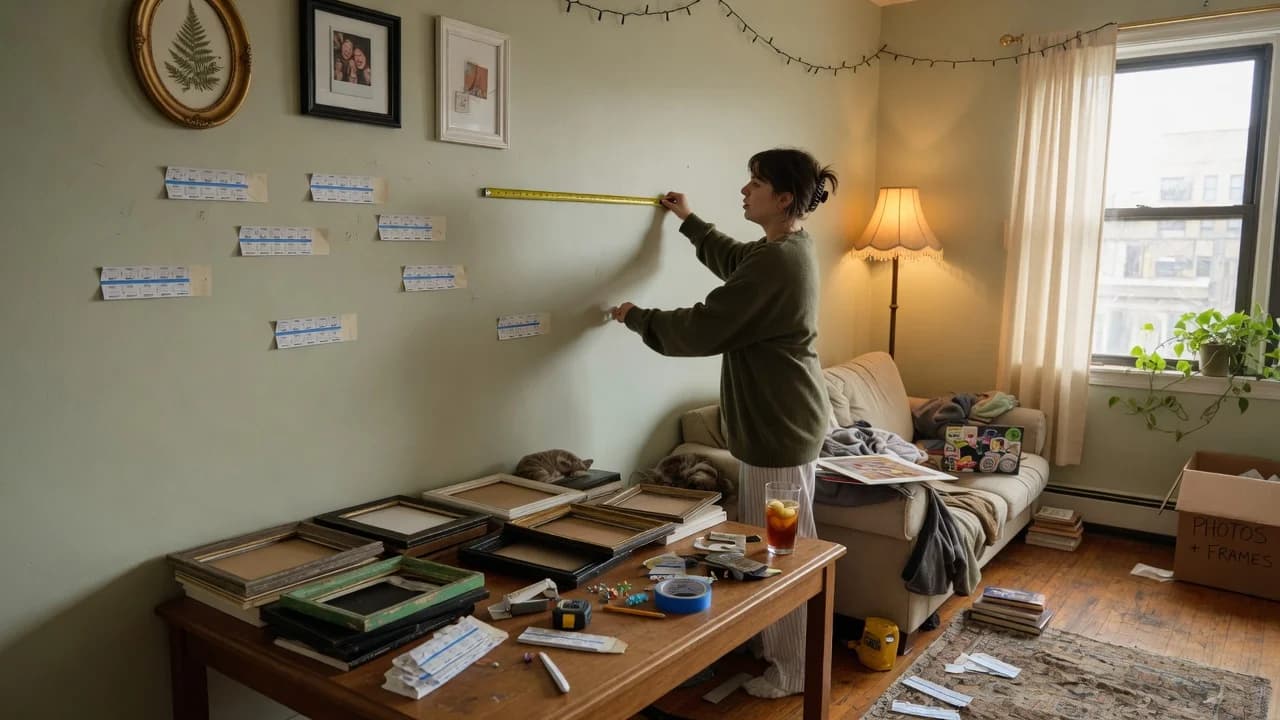
A gallery wall is a layout problem, but it's a weight problem first. The conventional approach — tape paper templates to the wall, shift them until they look right, mark fastener points — works fine. What most people skip is the weight audit. You need to know, for each frame, whether it exceeds the 4-pound-per-pair threshold that separates a single Command strip from a four-pair application or a CLAW hook.
Weigh your heaviest frame with a kitchen scale. That number, not the frame count, dictates your method. A 12-frame gallery wall where the heaviest piece weighs 3 pounds is a Command-strip project on smooth walls and a nail project on textured walls. A 5-frame wall with a 14-pound mirror in the center demands a 15-pound CLAW at minimum. The surrounding lighter frames can hang from nails or strips depending on surface texture.
Check sq footage, device count, Thread support first. If you're staring at a wall you've never really examined, run your hand across it right now. Smooth? Command strips are in play. Bumpy or gritty? You're in CLAW territory or nail territory. Open a pack of strips, test one in an inconspicuous spot behind where a frame will sit, load it to near its rated weight for 24 hours. Only then commit to the full layout. The biggest cause of gallery-wall regret isn't crooked frames — it's discovering your chosen fastener failed the surface test after you've already hung eight of twelve pieces.
Layout and Execution
Layout order matters. Center anchor piece first, outer frames working outward, bottom row last. Check level after each frame. Adjust spacing as you go. Gallery walls fail when people rush the arrangement and skip the surface test.
For smooth walls with Command strips: clean the wall with rubbing alcohol, let it dry, apply the strip, press firmly for 30 seconds, wait one hour before hanging. This curing window is non-negotiable. The adhesive bond develops over time, and loading it immediately cuts the effective hold by more than half.
For textured walls with CLAW hooks: push the hardened steel claws into the drywall until they lock. No stud finder, no anchor, no pilot hole. The hole left behind is smaller than a finish nail. When you move out, remove the hook by sliding a flathead screwdriver behind it and pulling gently. Spackle the pinhole if you want to be thorough.
For nails on any surface: use the smallest nail that holds the frame securely. A 1-inch finishing nail driven at a slight upward angle handles most frames under 5 pounds. Pull the nail straight out at move-out, fill the hole with spackle on a fingertip. Ten seconds per hole. Do not use screws, do not use plastic anchors, do not use toggle bolts. Those cross from ordinary wear into damage.
Hang the heaviest frame with a 3M CLAW or a small nail, match the lighter frames to Command strips if your walls are smooth or nails if they're textured, weigh everything before you mount it, and photograph your walls at move-in and move-out. If the landlord tries to deduct for small nail holes, cite your state's security deposit statute and send the photos. Do not use permanent mounting tape on rental drywall. The deposit deduction for adhesive damage will dwarf anything they could charge for nail holes.